
UDV Núcleo Luz Divina
Researched by The Retreat Safety Project, a 501(c)(3) nonprofit, combining field research with compliance-grade due diligence. Meet the team →
Atmosphere
Features
Atmosphere and feature ratings above are based on Best Retreats research (November 2026). They will be updated if UDV Núcleo Luz Divina submits its own information.
UDV Núcleo Luz Divina: An In-Depth Review of a União do Vegetal Congregation in Governador Valadares, Minas Gerais, Brazil
UDV Núcleo Luz Divina is a congregation of the União do Vegetal, the Brazilian church whose members drink hoasca (ayahuasca) in religious sessions; it opened as an authorized tea distribution on January 13, 1988, held its first session on its own land on January 30, 1989 and inaugurated a temple, with its first tea preparation, on April 17, 1992 in Governador Valadares, Minas Gerais, per its photo gallery on the church’s site. The church names its Mestre Representante and founding mestres, documents three decades of building work and publishes no fees, and the núcleo rates 4.8 from 13 reviews on Google Maps. Against that, no medical screening, contraindications, minimum age, medical staff or emergency plan are published, newcomers join only through a member and a mestre’s interview, the church’s own posts give two different founding years and the latest dated church record is from 2019.
🎯 At a Glance
- Locations: Governador Valadares, Minas Gerais, Brazil, within the church’s 12th Region, per its 2019 anniversary list. Google Maps places it in the Santo Antônio do Pontal area of the city; the church publishes no address.
- Approach: União do Vegetal religious sessions; no schedule is published for Luz Divina. The núcleo also prepares its own tea and holds youth meetings and community festivals, per its gallery (unverified).
- Suitable For: Members of the União do Vegetal and guests they invite who accept a religious commitment, can follow sessions in Portuguese and arrange their own medical clearance. Not suitable for people taking antidepressants or with heart or psychiatric conditions.
- Costs: None published, including member dues. No lodging, meals or transfers.
- Overall Assessment: A long-established congregation with a dated building history since 1988, a publicly named leader, a 4.8 Google Maps rating and no incidents on record, offset by no published screening, medical support or emergency plan, members-only entry, conflicting founding dates and few recent church records. Directory evaluation: C+.
💬 What Guests Are Saying
It rates 4.8 from 13 reviews on Google Maps, where it is listed under the church’s initials, CEBUDV, and the núcleo’s name; 12 of the 13 are five-star. Five-star reviewers describe an enchanted place full of good friends and a place to reunite with old friends and build new experiences (unverified); the newest were posted in late 2025, about 10 to 11 months ago. The only review of 3 stars or lower, a three-star rating posted about five years ago, makes no complaint and only asks whether the núcleo is still operating. It has no booking listing, and we know of no reviews on Tripadvisor, Retreat Guru or other platforms. If you have attended, we encourage you to share your experience through our submission form.
🚩 Incident Report
We searched review platforms and English and Portuguese-language news for reports involving Núcleo Luz Divina, the União do Vegetal in Governador Valadares and the mestres the church names there.
- Deaths and serious injuries: None found.
- Sexual misconduct: No allegations found.
- Theft and fraud: None found.
- Legal action: None found naming the núcleo or its leaders, including zoning, land or environmental disputes over its plantation.
The núcleo is a private congregation, and this record rests mostly on church sources and Google reviews, so it offers limited assurance.
If you have experienced or witnessed an incident with this center, please report it confidentially.
🔍 Critical Notes
Who runs it. The União do Vegetal was founded on July 22, 1961 by José Gabriel da Costa (Mestre Gabriel), per the church’s own site; church-wide findings are in our União do Vegetal listing. Each núcleo’s Mestre Representante and local board are elected every three years and serve as unpaid volunteers, per the church’s organization page. An undated gallery caption from around 2018 names Marcos Damasceno as the current Mestre Representante; given three-year terms, whether he leads it today is unconfirmed (unverified). The church cites no tax registration for the núcleo.
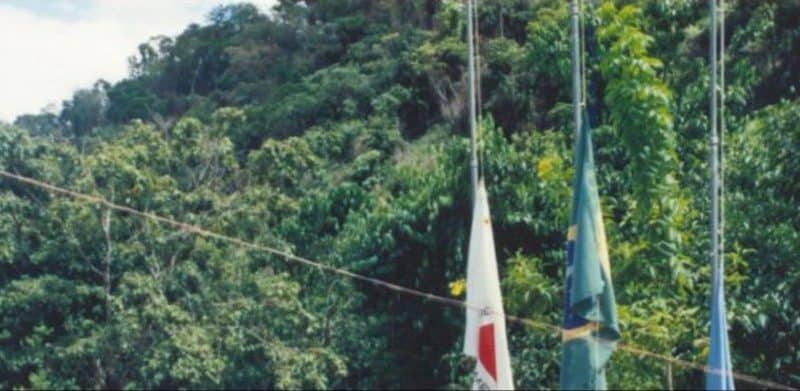
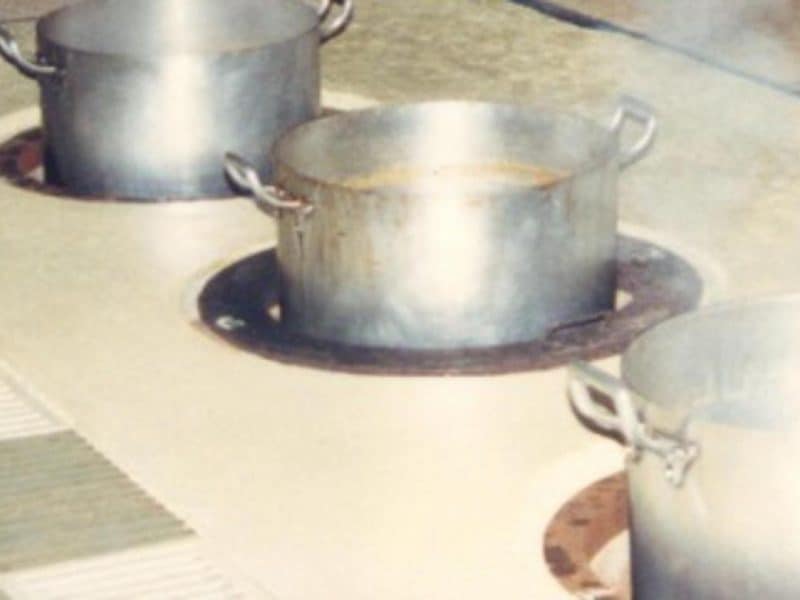
History. The gallery’s captioned photos, credited to the núcleo, trace its growth (unverified). The distribution opened on January 13, 1988, the date of its 30th anniversary party in 2018. Mestre Márcio da Rós led the first session on the land on January 30, 1989. The first temple opened on December 31, 1990, and members built a water intake in 1991. On April 17, 1992 the temple was inaugurated and the first tea prepared at what was then the Pré-Núcleo Luz Divina. Electricity reached the land in 1993, the first youth meeting took place in September 1993 and a work party maintained the temple in October 1994. A preparation house with a gas furnace opened on March 12, 1995, a lake was built on June 5, 1999, the 21st anniversary was celebrated in 2009 and boiler-based tea preparation began in 2014. Undated captions show members at the International Hoasca Congress at the Hotel Glória in Rio de Janeiro, a plaque naming the preparation house for Mestre Euclides, a corner named for Mestre Adonijar and a square named in posthumous tribute to a founding counselor. The founding date is inconsistent: a 2017 church post gives March 27, 1988, the 2019 post gives March 27, 1992, and the 2009 21st anniversary fits 1988. The record follows the sequence seen in other church histories, from distribution (1988) to pré-núcleo (still so in April 1992) to núcleo, but no post says which step March 27 marks or when it became a full núcleo.
Lineage. No church post names the núcleo that Luz Divina’s 1988 distribution came from. The church’s 2016 history of Núcleo Rei Salomão in Belo Horizonte says the arrival of Mestre Valmir Almeida from Núcleo Luz Divina in Governador Valadares expanded Rei Salomão’s cadre of mestres and allowed its elevation to núcleo on November 1, 1990. Its list of 12th Region núcleos that grew out of Rei Salomão does not include Luz Divina, and no offshoot of Luz Divina is named. Núcleo Rosa Divina in nearby Teófilo Otoni, founded on January 6, 2013 in the same region, is a separate congregation, and Luz Divina is a common name for Brazilian Spiritist centers, so confirm the UDV link before relying on anything under that name.
Screening and medical support. No medical questionnaire, contraindications for SSRIs, MAOIs, heart or psychiatric conditions, minimum age, medical staff or emergency plan are published. The only gate on record is the member’s invitation and the mestre’s private interview described by A Tarde, and no published criteria say what that interview covers. No hospital plan is published.
Minors. The church’s adolescence page publishes no minimum age. Luz Divina held its first youth meeting in September 1993 and its gallery shows a 12th Region youth music contest in November 2016 (unverified), but it does not say whether minors drink the tea there.
Status. Likely active. Google reviews posted in late 2025 are the latest public sign of activity, and no closure or move has been announced. The church’s latest dated records are its March 2019 anniversary list and gallery photos of the distribution’s 30th anniversary on January 13, 2018.
Legal context. Brazilian authorities have recognized religious use of ayahuasca since 1987, per the church’s legal page, and CONAD Resolution No. 1 of January 25, 2010 secured its use by hoasca churches, per Wikipedia, under rules the church says treat selling the tea and religious tourism as incompatible with religious use. The US Supreme Court ruled unanimously for the church on February 21, 2006.
🆘 Screening & Mental Health Risks
Ask the mestre who interviews you which medications and conditions exclude a guest, who at the session is trained in first aid and which hospital serves the Santo Antônio do Pontal site, and disclose every prescription in writing before you drink. ICEERS notes that ayahuasca’s MAOI component makes it dangerous with SSRIs and other serotonergic drugs and that it is contraindicated for people prone to psychosis. Never stop a psychiatric medication to qualify for a ceremony without your prescriber’s guidance.
🧪 Brew Substance
Hoasca prepared on site by church members since the first preparation on April 17, 1992, which the gallery says Mestre Euclides of Lagoa da Prata led, and who guided and helped plant mariri and chacrona on the land; a preparation house with a gas furnace opened on March 12, 1995 and now bears his name on a plaque, and boiler-based preparation began in 2014 (unverified). Ayahuasca combines the Banisteriopsis caapi vine with a DMT-containing leaf, as Erowid explains. Its 2023 history of Núcleo Lagoa da Prata says a regional mariri and chacrona planting consortium to supply the region’s núcleos was authorized in March 1988 on land Mestre Euclides offered; whether Luz Divina draws on it is not stated. No harvest size, plantation area or outside plant source is published for Luz Divina.
📍 Location, Setting & Style
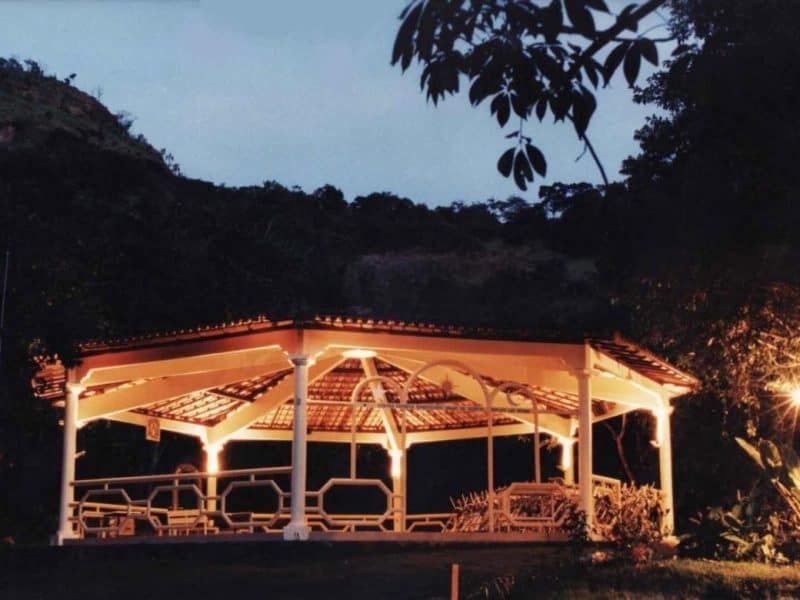
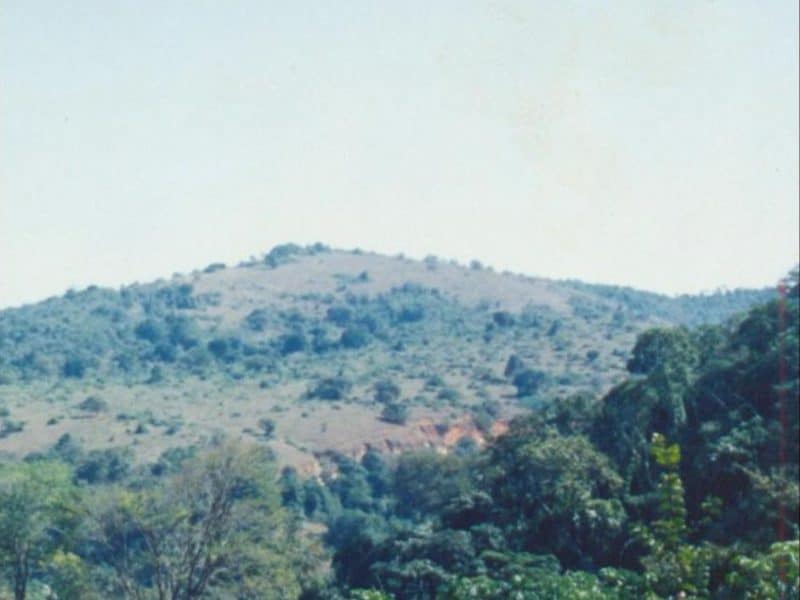
- Setting: Church land in the Santo Antônio do Pontal area of Governador Valadares, per Google Maps, a hot lowland city on the Rio Doce in eastern Minas Gerais. The site holds the temple, the Mestre Euclides preparation house, a lake, mariri and chacrona plantings, a square honoring a founder and a corner named for Mestre Adonijar, known as Jajú. Members built their own water intake in 1991 and brought electricity to the land in 1993, suggesting it then lay outside city services (unverified).
- Rooms: No lodging, meals or transfers; this is a local congregation, not a retreat.
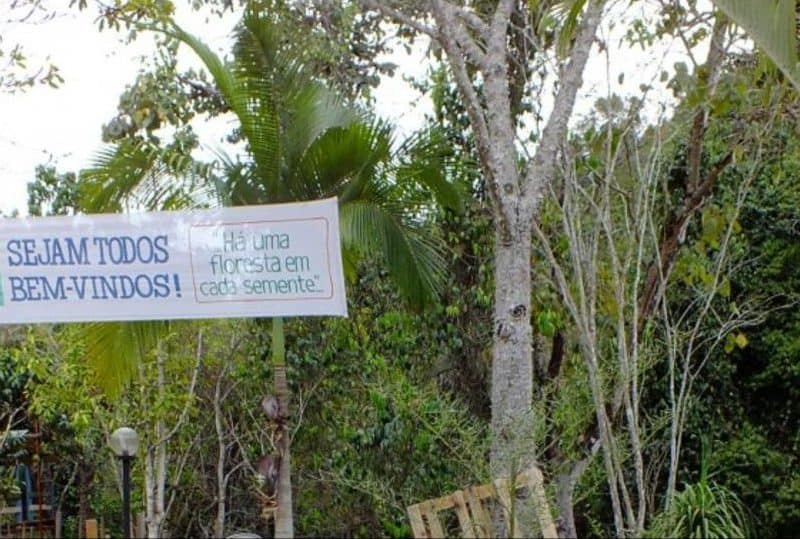
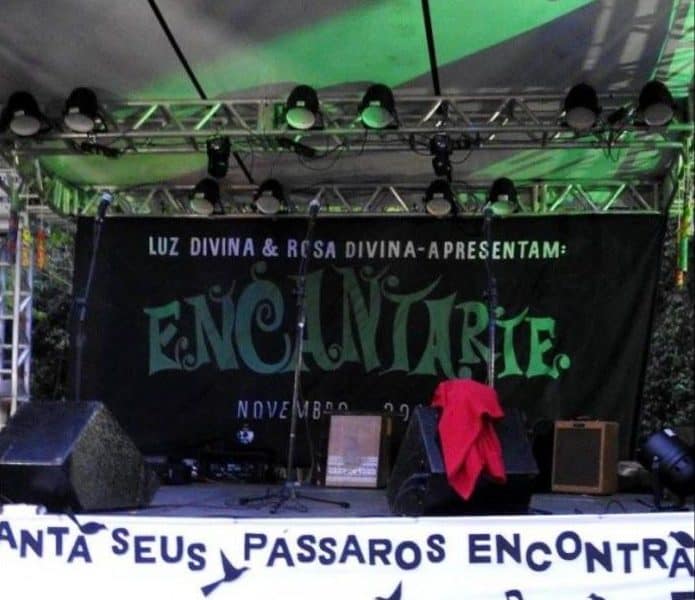
- Style: A members’ church with sessions, tea preparation, youth meetings and community events, per its gallery (unverified): a city march on July 22, 2016, the UDV’s founding date, marking the Municipal Day of Peace and Reconciliation; the first Encontrate, a 12th Region youth music contest presented by singer Flavia Wenceslau, in November 2016; the 12th Holambra Flower Festival in July 2017, with a Pataxó Indigenous performance and support from a local scout group; and the 22nd Spring Festival, on a Japanese culture theme, in September 2017. The captions say these festivals were held, without making clear whether the núcleo organized them.
Practical guidance: There is no booking, lodging or transfer; attendance runs through a member’s invitation and a mestre’s interview, and sessions are in Portuguese. If invited, ask your host for directions to the Santo Antônio do Pontal site and when the session starts and ends, and arrange your own transport and a place to stay in the city. Governador Valadares is a regional city, so hospitals are likely a short drive away, but no plan names one (unverified).
Should You Book?
Only after the gaps are filled. This is a church, not a retreat, and entry comes through a member’s invitation and a mestre’s interview. Ask in writing who leads the núcleo today, which medications and conditions exclude a guest, who on site is trained in first aid, how a medical emergency is handled, which hospital is nearest, whether minors drink the tea and from what age, when sessions start and end, which founding date the núcleo uses, and whether it still prepares its own tea from plants grown on the land. Read our guide to verifying retreat facilitators.
The Team & Story
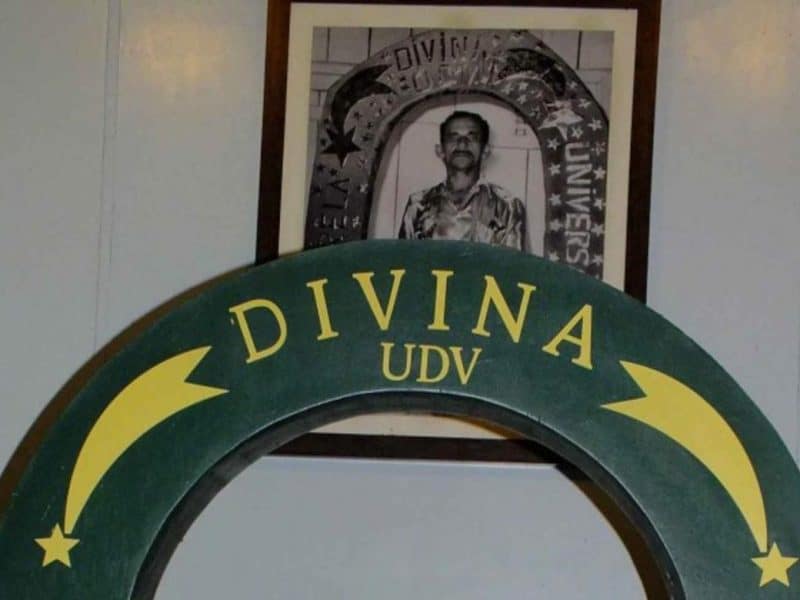
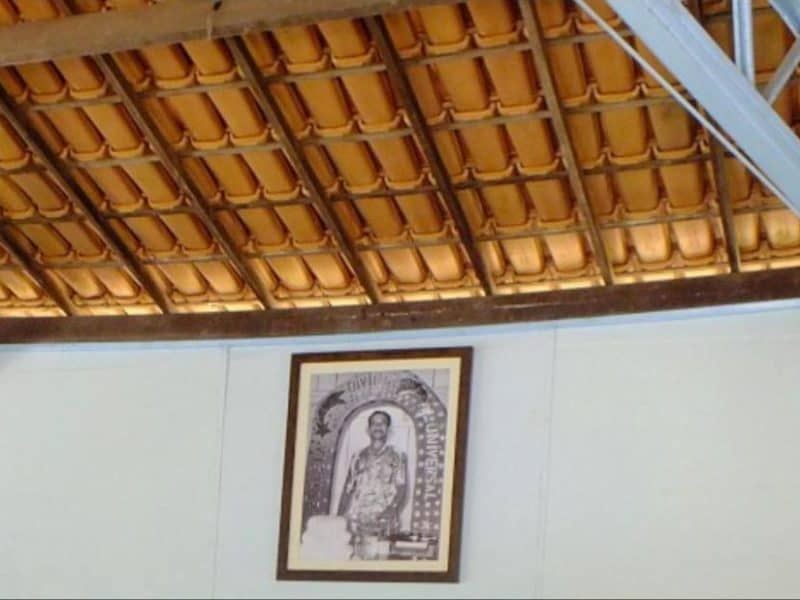
The núcleo presents itself through its gallery as a brotherhood that built its temple, water supply and preparation house through work parties, honors its founding members and early mestres and takes part in city life (unverified). Its most documented figure is Mestre Euclides of Lagoa da Prata: the church’s 2023 Lagoa da Prata history describes a Mestre Euclides (Euclides Silami) who received the Vegetal in August 1981, was called to the church’s Corpo Instrutivo in 1983, was in the Quadro de Mestres by November 1986 and later served as Mestre Representante of Rei Salomão until January 6, 1991; that he is the man the Luz Divina gallery honors is likely but unconfirmed (unverified). A gallery photo shows the group of founding members. We did not independently verify anyone’s training.
Prep & Integration Tips
Before you go: Disclose every medication and condition in writing and plan any change with your own doctor. After you return: Arrange support from a qualified therapist at home. Our guide on how to research ayahuasca incidents can help you check any center.
Pros & Cons
| Pros | Cons |
|---|---|
| Dated building history since 1988 published by the church | No published screening, contraindications or minimum age |
| No fees published; tea not sold and leaders serve as volunteers | No medical staff or emergency plan published |
| Mestre Representante and founding mestres named by the church | Members only, entry by invitation and interview; conflicting founding dates |
| 4.8 on Google Maps from 13 reviews; no incidents on record | Few reviews; no dated church post since 2019 |
Book Your Ceremony
Information is on its website. Best Retreats does not take bookings; learn more about our mission.
Last reviewed November 2026.
This article is for informational purposes only and is not medical advice. Consult a qualified medical professional.