
União do Vegetal (UDV)
Atmosphere
Features
Atmosphere and feature ratings above are based on Best Retreats research (November 2026). They will be updated if the União do Vegetal submits its own information.
União do Vegetal (UDV): An In-Depth Review of the Ayahuasca Church Headquartered in Brasília, Brazil
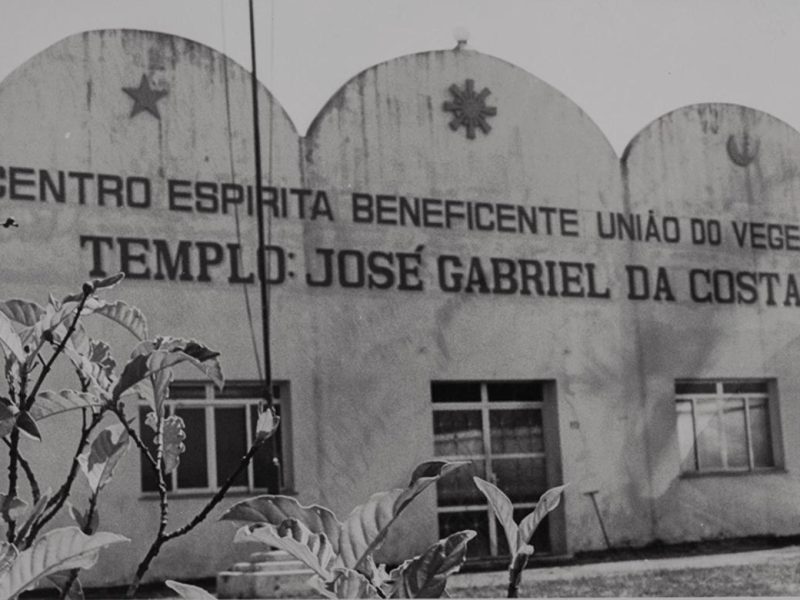
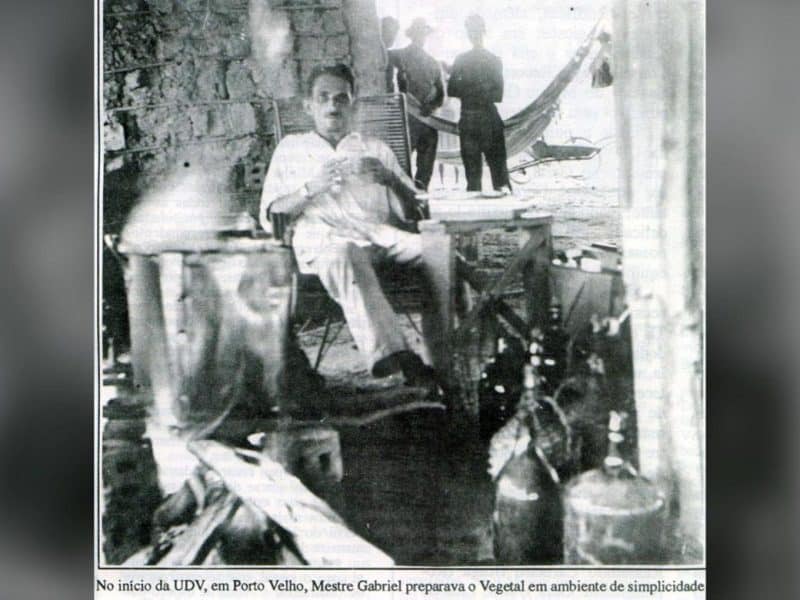
The Centro Espírita Beneficente União do Vegetal (UDV) is a Brazilian religion founded in 1961 by rubber tapper José Gabriel da Costa, “Mestre Gabriel”, whose members drink hoasca (ayahuasca) as a sacrament in sessions of about four hours roughly twice a month at more than 200 temples across every Brazilian state and about ten other countries, including the United States, per its official site. It reports about 25,000 members, is led by unpaid volunteers, does not sell the tea, and won a unanimous 2006 US Supreme Court ruling protecting its religious use, per Wikipedia. It is a church, not a retreat center, and is not open to tourists. Against that, it publishes no medical screening rules, contraindications or minimum age, the safety research it cites was carried out with its own cooperation, and Brazilian press has reported exclusion of gay members and removal of critics, which the UDV denies (unverified).
🎯 At a Glance
- Locations: Headquarters in Brasília, Brazil, since 1982, with temples (núcleos) in every Brazilian state and in the United States, Canada, Peru, Portugal, Spain, the United Kingdom, Switzerland, Italy, the Netherlands and Australia; its US temple is near Santa Fe, New Mexico.
- Approach: Structured religious sessions with hoasca, made from the mariri vine (Banisteriopsis caapi) and chacrona leaf, led by a hierarchy of mestres, with teachings and uniforms. No other substances are used.
- Suitable For: Adults seeking long-term membership in an organized ayahuasca religion, not a one-off experience. Not suitable for people taking antidepressants or with heart or psychiatric conditions.
- Costs: No retreats or fees for sessions are advertised; members pay an unpublished monthly fee and make donations, and the tea is never sold, per its principles.
- Overall Assessment: A long-established, legally recognized church with a non-commercial model, offset by no public screening policy, self-supported safety claims and unresolved reports of discrimination against gay members and critics. Directory evaluation: B-.
💬 What Guests Are Saying
As a members-only church, the UDV has no listings or reviews on Tripadvisor, Google, Retreat Guru, BookRetreats or Trustpilot, and no reviews of 3 stars or lower were found. Accounts from members and former members appear mainly in Brazilian press coverage of its internal disputes, summarized below. If you have taken part in UDV sessions, we encourage you to share your experience through our submission form.
🚩 Incident Report
We searched news in English and Portuguese for reports involving the UDV, its leadership and its temples.
- Deaths and serious injuries: None linked to a UDV session found.
- Sexual misconduct: No allegations found.
- Theft and fraud: None found.
- Legal action: US Customs seized a shipment of hoasca in 1999, leading to the 2006 Supreme Court case the UDV won. A dispute over its Santa Fe County temple permit, denied in 2011, ended in a settlement in 2017. In 2023 a former member asked Brazil’s Supreme Court to suspend its ceremonies, alleging ideological indoctrination; the case was sent to a Federal District court and its outcome is unknown.
Brazilian press reports that a 2008 internal text signed by senior leaders rejected homosexuality and that only married heterosexual men can become mestres, per CartaCapital. In 2023 a gay member said he was removed after speaking publicly about his sexuality and mocked at a session, and long-time members critical of these positions were also removed, per reporting summarized by Bia Labate. The UDV says it does not discriminate (all unverified).
If you have experienced or witnessed an incident with this church, please report it confidentially.
🔍 Critical Notes
Who runs it. A religious association registered in Brazil in 1967, led by a Mestre Geral Representante elected for three-year terms; the founder’s son, Jair Gabriel da Costa, holds the post until January 2027, and a successor was elected in September 2026. A separate board handles administration, and the US branch operates through New Mexico corporations. Leaders are unpaid, per its US FAQ.
Screening and medical support. No medical questionnaire, contraindications for SSRIs, MAOIs, heart conditions or psychiatric history, or emergency protocol are published on its Brazilian or US sites, which describe the tea as harmless. Its cited research, including the Hoasca Project and a study of adolescents, was carried out with UDV-supplied samples or comment from its own medical department. Children of members take part with their families, and no minimum age is published.
Status. Operating, with leadership elections in September 2026 and regular updates on its site.
Legal context. Brazil recognizes religious ayahuasca use, and its 2010 national rules bar selling the tea, religious tourism, therapeutic use and advertising, as the UDV summarizes. In the United States, DMT is Schedule I and the 2006 ruling under the Religious Freedom Restoration Act protects the UDV specifically; other groups need their own exemption.
🆘 Screening & Mental Health Risks
Anyone invited to a session should disclose medications and conditions in advance and ask what the local temple does in an emergency. ICEERS notes that ayahuasca’s MAOI component makes it dangerous with SSRIs and other serotonergic drugs and that it is contraindicated for people prone to psychosis. Never stop a psychiatric medication to qualify for a ceremony without your prescriber’s guidance.
🧪 Brew Substance
Hoasca prepared by the church itself from mariri vine and chacrona leaf and shared only among members. Ayahuasca combines the Banisteriopsis caapi vine with a DMT-containing leaf, as Erowid explains.
📍 Location, Setting & Style
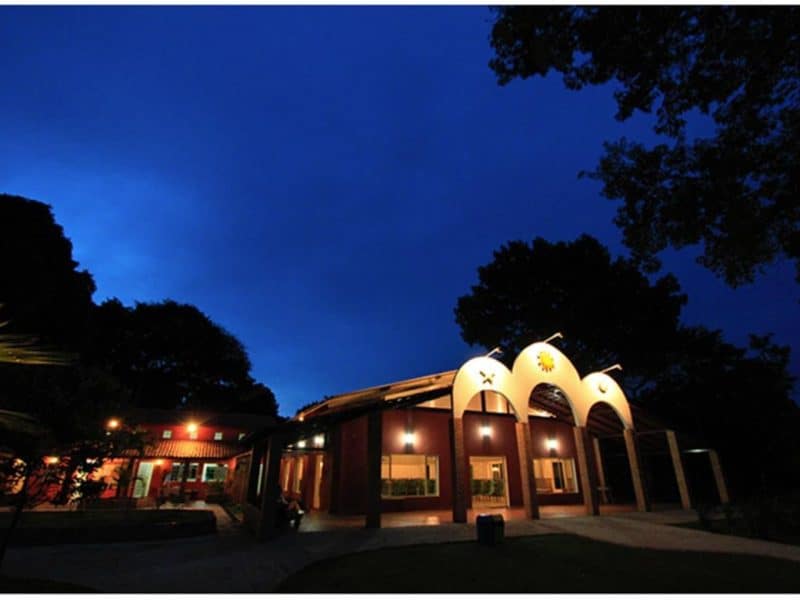
- Setting: Purpose-built temples in cities and towns, from the Amazon to Brasília, New Mexico and Europe.
- Rooms: No lodging; members attend sessions at their local temple.
- Style: A formal, hierarchical Brazilian religion with uniforms, set rituals and families taking part together.
Practical guidance: There are no packages or transfers; contact with a local temple is the only route in.
Should You Book?
There is nothing to book. People interested in membership should ask the local temple in writing about medical screening, emergency procedures, the minimum age for drinking the tea, and its policies toward gay members and critics. Read our guide to verifying retreat facilitators.
The Team & Story
The UDV presents itself as a spiritist (“espírita”) religion that keeps the teachings of Mestre Gabriel, who founded it on the Brazil-Bolivia border in 1961. We did not independently verify anyone’s training.
Prep & Integration Tips
Before you go: Disclose every medication and condition in writing and plan any change with your own doctor. After you return: Arrange support from a qualified therapist at home. Our guide on how to research ayahuasca incidents can help you check any center.
Pros & Cons
| Pros | Cons |
|---|---|
| Long-established, legally recognized church | No published screening or contraindications |
| Tea never sold; unpaid leadership | Safety research carried out with its cooperation |
| No incidents linked to sessions found | Reported exclusion of gay members and critics |
| Structured, consistent ritual | No minimum age published |
Book Your Ceremony
The UDV does not offer bookings; information is on its website. Best Retreats does not take bookings; learn more about our mission.
Last reviewed November 2026.
This article is for informational purposes only and is not medical advice. Consult a qualified medical professional.