
UDV Núcleo Flor Divina

Researched by The Retreat Safety Project, a 501(c)(3) nonprofit, combining field research with compliance-grade due diligence. Meet the team →
Atmosphere
Features
Atmosphere and feature ratings above are based on Best Retreats research (November 2026). They will be updated if UDV Núcleo Flor Divina submits its own information.
UDV Núcleo Flor Divina: An In-Depth Review of a União do Vegetal Congregation in Itaitinga, Greater Fortaleza, Brazil
UDV Núcleo Flor Divina is a congregation of the Centro Espírita Beneficente União do Vegetal in Itaitinga, in the Fortaleza metropolitan area of Ceará, Brazil, founded on March 19, 2005 by young people and members of the church’s Núcleo Fortaleza under its first Mestre Representante, Célio Lessa, where members drink hoasca (ayahuasca) in religious sessions, per its history post. It has a dated history in church records going back to the choice of its land in 2004, a clear lineage from the first UDV núcleo in Ceará, its own tea preparations and an agroforestry plot, long-running sports, capoeira and youth projects, a 4.8 rating on Google Maps and no incidents on record. Against that, the church publishes no medical screening, contraindications, minimum age or newcomer procedure for this núcleo, the last Mestre Representante it named dates from 2020, its town is given two ways in church sources, and the only outside feedback is 19 Google reviews.
🎯 At a Glance
- Locations: Itaitinga, Ceará, Brazil, in greater Fortaleza, per a 2019 UDV anniversary list; Google Maps places it in the Santo Antônio area of Itaitinga. The church’s 2020 history and its gallery describe it as in Fortaleza. No address is published.
- Approach: União do Vegetal religious sessions in which members drink hoasca; the núcleo prepares its own tea, sometimes jointly with other núcleos, and grows its sacred plants in an agroforestry plot shared with Linha de Tucunacá.
- Suitable For: People drawn to a long-term, members-based religious community in Portuguese rather than a one-off retreat. Not suitable for people taking antidepressants or with heart or psychiatric conditions.
- Costs: No fee is published. Brazilian rules forbid selling the tea, and no session charge is on record.
- Overall Assessment: An identifiable congregation with a 21-year documented history, a clear lineage, a strong Google rating and no incidents on record, offset by no published screening, medical safeguards or newcomer rules and no named leader since 2020. Directory evaluation: C+.
💬 What Guests Are Saying
As a members’ church, it does not market itself to guests. On Google Maps, the listing “NÚCLEO FLOR DIVINA UDV” holds 4.8 stars from 19 reviews, 18 of them five-star. The five-star reviews describe a place to meditate and to spend time with wonderful people, and call it a beautiful núcleo (unverified); the newest were posted in late 2025, about a year ago. The UDV’s 2020 history post also carries nine reader comments, posted from March 25 to April 11, 2020 by members and other UDV followers, praising a joyful, harmonious and welcoming community, its surf, sports, capoeira and agroforestry work, and the young people it draws; one recalls attending a session there in 2015 (unverified). Those comments come from inside the church and are not independent. The only review of 3 stars or lower is a one-star Google rating with no text, posted about four years ago. If you have attended, we encourage you to share your experience through our submission form.
🚩 Incident Report
We searched review platforms and English and Portuguese-language news for reports involving UDV Núcleo Flor Divina, its named Mestres Representantes and the União do Vegetal in Itaitinga and Fortaleza.
- Deaths and serious injuries: None found.
- Sexual misconduct: No allegations found.
- Theft and fraud: None found.
- Legal action: None found.
The record for this núcleo rests mostly on church sources and Google reviews, so it offers limited assurance. The church’s own publications describe community projects and no disputes, and no Google review describes harm. Church-wide issues are covered in our União do Vegetal listing.
If you have experienced or witnessed an incident with this center, please report it confidentially.
🔍 Critical Notes
Who runs it. The núcleo belongs to the Centro Espírita Beneficente União do Vegetal, founded in 1961 by José Gabriel da Costa, per the UDV. Its Mestres Representantes and local boards are elected every three years and serve as volunteers, per the church’s organization page. Flor Divina belongs to the church’s 11th Region, which covered Ceará, Piauí and Maranhão in 2018. Its 2020 history post names Célio Lessa as the first Mestre Representante, and a gallery caption shows the Mestre Central, Mestre Sílvio Gomes, handing him his shirt at the founding on March 19, 2005. The founding was supervised by Mestre Eudes Carneiro, then Mestre Representante of Núcleo Fortaleza, and Mestre Sílvio Gomes, then Mestre Central of the 11th Region. Later gallery captions name a Mestre Luciano as Representante at the 12th anniversary flag raising on March 19, 2017, alongside Mestre Vicente as Mestre Central, and a Mestre Mauro as Representante on February 10, 2020. No later appointment is published; under the three-year election cycle, the 2020 name is likely out of date. The UDV’s 2018 post on Núcleo Fortaleza says that núcleo was founded on November 21, 1993 as the first offshoot of Núcleo Tucunacá in Caucaia, and that its own first offshoot, during Mestre Eudes Carneiro’s 2003 to 2006 term, became Núcleo Flor Divina. The history post calls Flor Divina the UDV’s third núcleo in Fortaleza and fifth in Ceará, thanks Núcleo Fortaleza “which gave us origin” and honors Tucunacá, the first núcleo in Ceará and 40 years old in 2020, as its “grandfather” núcleo. In 2017 Flor Divina formed its own first offshoot, Núcleo Linha de Tucunacá, on the same land; a May 2019 UDV anniversary list dates it to May 1, 2017 and places it in Itaitinga. The lineage therefore runs Tucunacá, Fortaleza, Flor Divina, Linha de Tucunacá. No separate tax registration for the núcleo appears in church sources.
Screening and medical support. No medical questionnaire, contraindications for SSRIs, MAOIs, heart or psychiatric conditions, medical staff or emergency plan are published for this núcleo. How first-time visitors are invited, interviewed and admitted is also not published, though the church’s history of Núcleo Fortaleza records a first-timers’ “Sessão de Adventícios” in Fortaleza on May 28, 1994. Flor Divina’s history post mentions new members growing its brotherhood but no admission steps. On young people, the UDV says the núcleo has always drawn many young people of the 11th Region, and its gallery shows a youth meeting in 2011 and agroforestry work with children in September 2019; whether minors drink the tea here is not stated. No minimum age is published for this núcleo or on the church’s Hoasca na adolescência page. Itaitinga lies inside greater Fortaleza, so city hospitals are within road reach, though no distance is stated.
Status. Likely active (unverified). The latest public sign of activity is Google reviews posted in late 2025, which describe the núcleo as a place to meditate among wonderful people. The latest dated church evidence is a gallery photo of a preparation for its 15th anniversary on March 5, 2020, and the history post, last updated on April 30, 2020. The UDV’s site is active in 2026, but no newer post on this núcleo appears in its núcleo blog, including none for its 20th anniversary in 2025. No closure, move or rebrand has been reported.
Legal context. Brazilian authorities have recognized religious use of the tea since 1987, per the UDV’s legalization page, and CONAD Resolution 1 of 2010 allows ayahuasca only in religious rituals and bars its commercial distribution, therapeutic use, tourism and advertising, per a Labate and Feeney paper. In the United States, the church won a unanimous Supreme Court ruling in 2006, per Wikipedia; nothing in the record ties this núcleo to any legal dispute, zoning issue or permit problem.
🆘 Screening & Mental Health Risks
Ask the núcleo’s current Mestre Representante, before you attend any session, how first-time visitors are invited and interviewed, whether a written health questionnaire is used, which medications and conditions exclude you, whether minors drink the tea and at what age, and who is responsible for a medical emergency during a session. ICEERS notes that ayahuasca’s MAOI component makes it dangerous with SSRIs and other serotonergic drugs and that it is contraindicated for people prone to psychosis. Never stop a psychiatric medication to qualify for a ceremony without your prescriber’s guidance.
🧪 Brew Substance
Hoasca made at the núcleo’s own preparations, some held jointly with other núcleos, with sacred plants grown in an agroforestry system it shares with Linha de Tucunacá, per its history post and gallery. Gallery captions record a joint preparation with Núcleo San Francisco directed by Mestre Paulo Afonso on February 19, 2016, a preparation with Mestre Jair on October 1, 2017, a joint preparation with Núcleo Linha de Tucunacá on September 2, 2018, and a commemorative preparation for the núcleo’s 15th anniversary on March 5, 2020. Planting began with a first planting session on September 3, 2006, and a “Plantio Caianinho” planting is recorded on February 25, 2017. The history post says the shared agroforestry system grows the church’s sacred plants alongside organic food, and that its young members created a project called “Sal da Terra: Agrofloresta Valorizando a Vida” (Salt of the Earth: Agroforestry Valuing Life) (unverified). Ayahuasca combines the Banisteriopsis caapi vine with a DMT-containing leaf, as Erowid explains.
📍 Location, Setting & Style
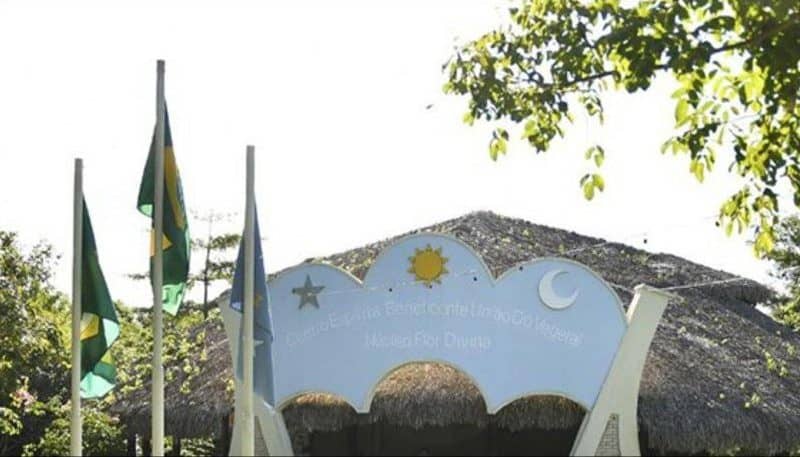
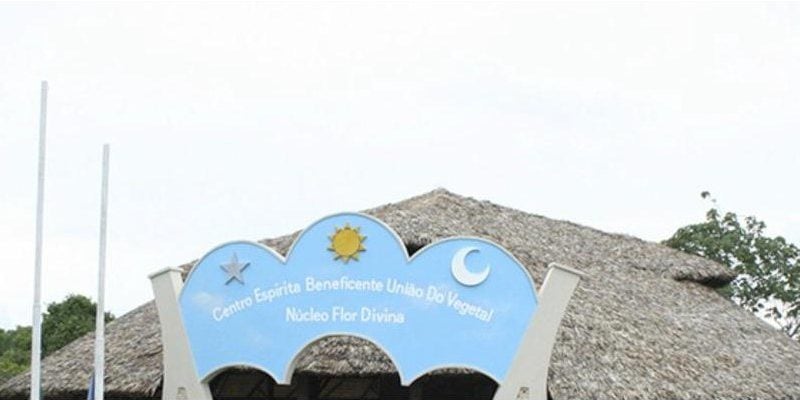
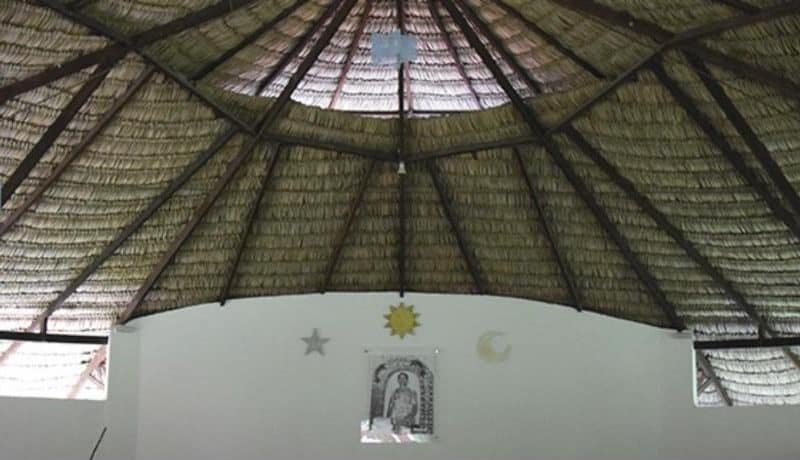
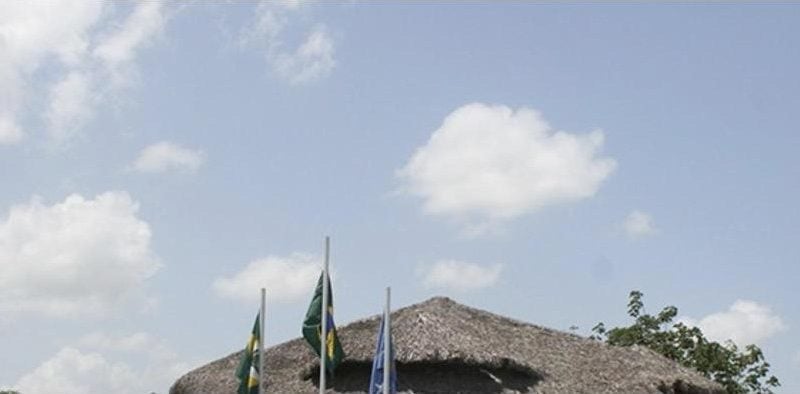
- Setting: Land in the Santo Antônio area of Itaitinga, in greater Fortaleza, per Google Maps. Gallery captions trace the site from a visit to choose the land on February 29, 2004, through a work party to renovate and build the temple on January 7, 2005, the gathering of founding members on March 13, 2005 and the first flag raising on March 19, 2005. Further work parties are recorded in February 2007 and on June 1, 2019, the latter called “Mutirão do Amor.” The plot has hosted planting sessions since 2006 and has been shared with Núcleo Linha de Tucunacá since 2017. The climate is hot and tropical.
- Rooms: None. This is a church temple with a plantation, not a residential retreat; no lodging, meals or transfers are offered.
- Style: A traditional UDV congregation with a strong youth following. It marks its anniversary each March 19, São José’s Day, a public holiday in Ceará, and the gallery records flag raisings and celebrations for its 5th anniversary in 2010, 9th in 2014 and 12th in 2017. Other dated events include a session with a visiting Mestre Florêncio on March 19, 2008, a youth meeting on November 12, 2011, a São João festival on June 27, 2014, a Christmas play on December 21, 2014, a “Movimento Trancelim” event on February 21, 2015, a cultural activity on February 7, 2016 and a talk by Mestre Mitchel Berman on February 19, 2016. Its benefit work, per the history post (unverified), includes “Esporte Unindo,” a fundraising sports event that began as “Surf Unindo” surf contests at Praia da Taíba, and a capoeira project, “Eu, Você, a Escola e a Capoeira,” run with the Caracanga community through its beneficence department.
Practical guidance: There are no transfers or lodging, and no session schedule, admission rules or contact details are published for this núcleo; reach it through the UDV before traveling and confirm that a visitor session is possible. Sessions and church materials are in Portuguese, so arrange an interpreter if you do not speak it. Itaitinga is part of the Fortaleza metropolitan area, so plan to stay in Fortaleza and arrange your own road transport. Expect a members’ congregation rather than a guest program, and do not travel on the assumption that you will be admitted to a session.
Should You Book?
Only after the gaps are filled. Ask in writing who the current Mestre Representante is and when that person was elected, whether first-time visitors are admitted to a newcomer session and what invitation and interview come first, what health screening applies, which medications and conditions exclude you, whether minors take part and from what age, how often sessions are held and how long they last, whether any donation or membership dues are expected, and who is present to handle a medical emergency during a session and how far the nearest hospital is. Read our guide to verifying retreat facilitators.
The Team & Story
The UDV presents Flor Divina as a garden tended by its members, built largely by young people, that honors Tucunacá, the first núcleo in Ceará, as its “grandfather” núcleo. Its 2020 history was written by four members, including the first Mestre Representante, and says the name was suggested by a Conselheira and Mestre Marcilon Maia (unverified); a gallery photo from March 13, 2005, six days before the founding, shows Mestres Marcilon, Eudes and Célio together. The post credits a group of young people and members of Núcleo Fortaleza with founding it, and stresses the strong youth presence behind its surf fundraisers and agroforestry project. The gallery’s 29 photos, from 2004 to 2020, are credited to DMC-Núcleo Flor Divina. We did not independently verify anyone’s training.
Prep & Integration Tips
Before you go: Disclose every medication and condition in writing and plan any change with your own doctor. After you return: Arrange support from a qualified therapist at home. Our guide on how to research ayahuasca incidents can help you check any center.
Pros & Cons
| Pros | Cons |
|---|---|
| Documented history since 2005 and a clear lineage | No published screening, contraindications or emergency plan |
| Legal religious use; tea is not sold | No published newcomer procedure or minimum age |
| Community sports, capoeira and agroforestry projects | Current Mestre Representante not published since 2020 |
| 4.8 on Google Maps and no incidents on record | Only 19 outside reviews; church gives town two ways |
Book Your Ceremony
Information is on its website. Best Retreats does not take bookings; learn more about our mission.
Last reviewed November 2026.
This article is for informational purposes only and is not medical advice. Consult a qualified medical professional.