
UDV Núcleo Estrela Divina
Researched by The Retreat Safety Project, a 501(c)(3) nonprofit, combining field research with compliance-grade due diligence. Meet the team →
Atmosphere
Features
Atmosphere and feature ratings above are based on Best Retreats research (November 2026). They will be updated if UDV Núcleo Estrela Divina submits its own information.
UDV Núcleo Estrela Divina: An In-Depth Review of the União do Vegetal Congregation Named by Its Founder in Plácido de Castro, Acre, Brazil
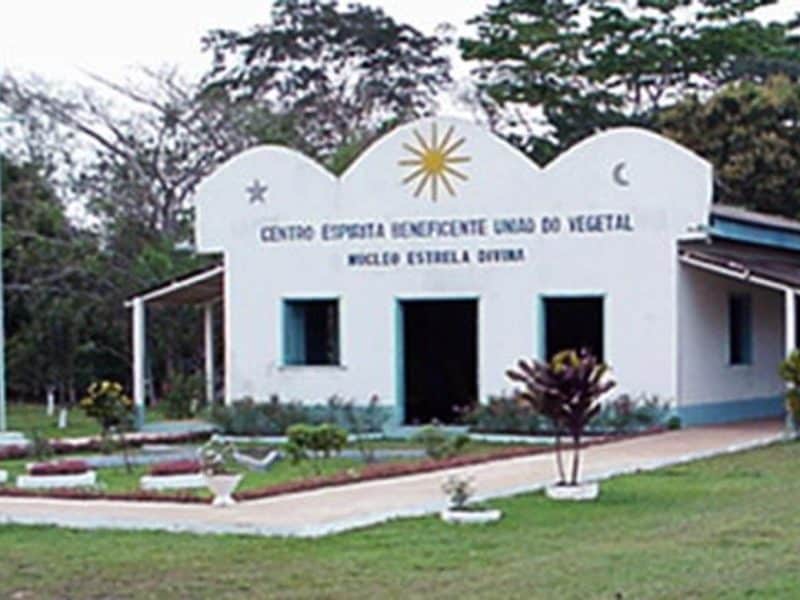
UDV Núcleo Estrela Divina is a congregation of the União do Vegetal in Plácido de Castro, a town on the Bolivian border in Brazil’s state of Acre, where the church’s founder, Mestre Gabriel, led sessions in the early 1960s and named the group, where the work restarted in 1979, became a pre-núcleo on March 27, 1983 and a full núcleo on March 27, 1989, and where 44 members (2017) drink hoasca (ayahuasca), which the church calls Vegetal, in religious sessions under a Mestre Representante appointed by the church, per a 2017 UDV history post. Its story is documented on the church’s own blog, which calls Estrela Divina the first núcleo name Mestre Gabriel ever gave, and the church has named its leaders publicly as recently as 2025. Against that, no screening rules, minimum age, medical staff, emergency plan, contact or visitor procedure are published, and the town is 95 km by road from the state capital, Rio Branco.
🎯 At a Glance
- Locations: Plácido de Castro, Acre, Brazil, on the Abunã River at the Bolivian border, 95 km from Rio Branco by the AC-40 highway; registered in the Centro district and part of the UDV’s 7th Region. No address is published.
- Approach: União do Vegetal sessions in which members drink hoasca; no session schedule is published and no other medicines are mentioned.
- Suitable For: Members of the União do Vegetal and people seeking long-term membership in the church, not visitors looking for a retreat. Not suitable for people taking antidepressants or with heart or psychiatric conditions.
- Costs: No fee is published, and Brazil’s 2010 rules on religious ayahuasca use treat selling the tea as incompatible with religious use.
- Overall Assessment: A small, historic congregation with a well-documented history, leaders named by the church through 2025 and a clean record, with the usual UDV gaps: no published screening, age rule or emergency plan. Directory evaluation: C+.
💬 What Guests Are Saying
No reviews of this núcleo were found on retreat review platforms such as Tripadvisor, Retreat Guru or AyaAdvisors, which is typical for a members-only church. Reader comments under the 2017 UDV post, from 2017 and 2018, are tributes from church members rather than reviews. On Google Maps, the núcleo’s listing, pinned in the Olaria district of Plácido de Castro, holds 4.8 stars from 5 ratings, four five-star and one four-star without text; reviews call it a place of peace and harmony and of “great moments of fellowship”, and the newest is from about 2025 (unverified). No reviews of 3 stars or lower were found. If you have attended, we encourage you to share your experience through our submission form.
🚩 Incident Report
We searched review platforms and English and Portuguese-language news for reports involving the núcleo and the Mestres the church has named as its representatives since 2017, Mestre Pedro Brás de Oliveira, Mestre Arlindo Almeida de Lima and Mestre Emerson Guimarães.
- Deaths and serious injuries: None found.
- Sexual misconduct: None found.
- Theft and fraud: None found.
- Legal action: None found.
No news, police or court record names the núcleo in any wrongdoing, and no land, permit or licensing dispute over its temple plot was found.
If you have experienced or witnessed an incident with this center, please report it confidentially.
🔍 Critical Notes
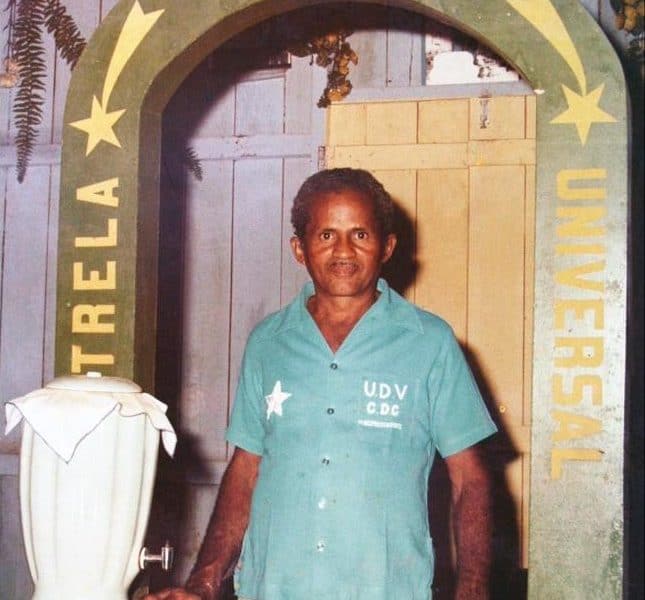
Who runs it. The UDV says it was created on July 22, 1961 in the rubber estates on the Brazil and Bolivia border, per its origin page, and that Plácido de Castro, then the village of Vila Plácido de Castro, lies near the Sunta rubber estate. Mestre Gabriel first led a session in the village in the early 1960s, returned several times and named the group Estrela Divina, per the 2017 post. After he moved to Porto Velho in 1965, those who stayed did not continue the work as he had taught it, and the local distribution of the tea lapsed. It restarted in 1979 with Mestre Pequenina and Mestre José Pereira, known as Mestre Zé Pretinho, and ten people chose to follow the church that year; the 2017 post says he asked her to restart the work, while a 2025 UDV tribute says she invited him. Early sessions moved between a private home and a brickworks; a plot offered by a local landowner was lost when the group’s belongings were thrown into a nearby stream, and the group returned to the brickworks until the city hall donated the 80 by 80 meter plot where the núcleo still stands (2017 post, no date given). On March 27, 1983, Mestre Monteiro, then the church’s Mestre Geral Representante, named Mestre Zé Pretinho as Mestre Representante, a role the 2025 tribute says he held for 17 consecutive years while training Mestres and receiving rubber tappers and rural workers, many of whom were too poor to buy the UDV uniform. Mestre Pequenina visited in 1985, and the group became a full núcleo on March 27, 1989, though the UDV still dates its anniversary to March 27, 1983 in a 2019 anniversary post. Mestre Manoel Gomes also represented it, dates not given. In March 2017 the church named Mestre Pedro Brás de Oliveira as Mestre Representante and Mestre Sidon Silva Feitosa as president, with 5 Mestres, 12 Conselho members, 20 Corpo Instrutivo members and 7 sócios. A 2023 UDV post on the town council’s June 27, 2023 vote naming Mestre Gabriel an honorary citizen of Plácido de Castro named Arlindo Almeida de Lima, a former town councilman who requested the honor, as Mestre Representante, and the 2025 tribute named Emerson Guimarães in that role. It is registered as a religious organization, Centro Espírita Beneficente União do Vegetal, Núcleo Estrela Divina (CNPJ 00.342.962/0001-29, registered 1994), which IPEA’s Mapa das OSC lists as active.
Screening and medical support. Neither the núcleo nor the UDV’s Brazilian website publishes a medical questionnaire, contraindications for SSRIs, MAOIs, heart or psychiatric conditions, a minimum age or an emergency plan, and no medical staff are named. The UDV’s health page calls the tea proven harmless to health, citing its own 1971 rules and a 1996 study (unverified). No hospital in Plácido de Castro is documented in the sources found; Rio Branco is 95 km away by road, per Wikipedia.
Status. Active as far as the record shows: a UDV post from April 2025 names its current Mestre Representante, a March 2023 post said a solar power system would be installed there within days, in a round of solar projects for UDV núcleos in Acre that it credits to state deputies’ budget amendments, per the UDV blog, and its tax registration is listed as active. The 2017 post said it was renovating its buildings with help from other núcleos. No dated item from 2026 was found, and no closure, move or rename is reported.
Legal context. Brazilian authorities have recognized religious use of the tea since 1987, and a January 2010 resolution (CONAD Resolution 1/2010) holds that sale, religious tourism, therapeutic use and advertising of its effects are incompatible with religious use, per the UDV. A bill filed in Acre’s Legislative Assembly on December 8, 2021 would declare the núcleo an entity of public utility; the assembly’s record lists it as still pending, with no resulting law shown. At a November 2025 federal prosecutors’ hearing in Acre, where the UDV spoke, Federal Police said there is no national protocol for stopping people carrying the tea, per O Varadouro.
🆘 Screening & Mental Health Risks
Ask the núcleo’s Mestre Representante in writing whether a first-time guest is interviewed and screened for medications and psychiatric history, whether children of members drink the tea and from what age, and how a medical emergency would be handled 95 km from Rio Branco. ICEERS notes that ayahuasca’s MAOI component makes it dangerous with SSRIs and other serotonergic drugs and that it is contraindicated for people prone to psychosis. Never stop a psychiatric medication to qualify for a ceremony without your prescriber’s guidance.
🧪 Brew Substance
A 2025 UDV post recalls members hunting to feed those preparing the Vegetal in the village, so the tea has been made locally, but no current preparation house or plantation of mariri and chacrona is described. Ayahuasca combines the Banisteriopsis caapi vine with a DMT-containing leaf, as Erowid explains.
📍 Location, Setting & Style
- Setting: An 80 by 80 meter plot donated by the city hall in a lowland Amazon border town of about 20,000 people on the Abunã River.
- Rooms: No lodging; no description of the temple’s size or rooms is published.
- Style: A small members’ congregation rooted in the rubber tapper communities around the village, whose 2017 post shows a 1985 photo of its members and a portrait of Mestre Zé Pretinho.
Practical guidance: Plácido de Castro is reached from Rio Branco by the AC-40 highway. The núcleo publishes no contact or visitor procedure, and Brazil’s rules bar religious tourism, so travel only after the núcleo has agreed to receive you.
Should You Book?
Possibly, if you are seeking long-term membership in the União do Vegetal rather than a one-time ceremony; there is nothing to book, and before attending you should ask in writing about screening, minimum age and its emergency plan. Read our guide to verifying retreat facilitators.
The Team & Story
The núcleo presents itself on the UDV’s blog as a congregation at the origins of the União do Vegetal, named by Mestre Gabriel and rebuilt by rubber tappers and rural workers from 1979. We did not independently verify anyone’s training.
Prep & Integration Tips
Before you go: Disclose every medication and condition in writing and plan any change with your own doctor. After you return: Arrange support from a qualified therapist at home. Our guide on how to research ayahuasca incidents can help you check any center.
Pros & Cons
| Pros | Cons |
|---|---|
| History since the early 1960s documented on the UDV’s own blog | No published screening, contraindications or minimum age |
| No fee published; the tea is not sold | No medical staff or emergency plan published |
| Mestre Representante named publicly by the church in 2025 | 95 km by road from Rio Branco |
| No incidents in news or court records | Members only; no public contact or visitor procedure |
Book Your Ceremony
Information is on its website. Best Retreats does not take bookings; learn more about our mission.
Last reviewed November 2026.
This article is for informational purposes only and is not medical advice. Consult a qualified medical professional.