
UDV Núcleo Estrela Dalva
Researched by The Retreat Safety Project, a 501(c)(3) nonprofit, combining field research with compliance-grade due diligence. Meet the team →
Atmosphere
Features
Atmosphere and feature ratings above are based on Best Retreats research (November 2026). They will be updated if UDV Núcleo Estrela Dalva submits its own information.
UDV Núcleo Estrela Dalva: An In-Depth Review of a União do Vegetal Congregation Founded in 1994, Now in Florianópolis, Santa Catarina, Brazil
UDV Núcleo Estrela Dalva, also written Estrela D’Alva, is a congregation of the União do Vegetal, the Brazilian church whose members drink hoasca (ayahuasca) in religious sessions; it held its first session on January 1, 1994 under Mestre José Florêncio de Carvalho, became a full núcleo on February 19, 1998, and since 2005 has met in the Santo Antônio de Lisboa district of Florianópolis, Santa Catarina, per its 25th anniversary post. It has more than three decades of dated history, a line of nine leaders the church names in public, its own plantings and tea preparation, 153 members in 2019 and no published fees. Its Google Maps listing rates 5.0 from 13 reviews, all five-star. Against that, no medical screening, contraindications, minimum age, medical staff or emergency plan are published, there is no public route for newcomers, its leader was last named in 2019 for a term ending in 2021, and children take part in church life.
🎯 At a Glance
- Locations: Florianópolis, Santa Catarina, Brazil, in the Santo Antônio de Lisboa district on the island of Santa Catarina, about 10 km from downtown, per the church; Google Maps places it in the same district. The church publishes no address. From 1994 to 2005 it met in Timbé, a district of Tijucas, about 60 km away.
- Approach: União do Vegetal religious sessions, plus tea preparation from the núcleo’s own plantings, festivals and regional meetings.
- Suitable For: Members of the União do Vegetal and guests they invite who accept a religious commitment and arrange their own medical clearance. Church materials are in Portuguese. Not suitable for people taking antidepressants or with heart or psychiatric conditions.
- Costs: None published, including member dues. The church says its leaders are unpaid volunteers, per a 2023 church post. No lodging, meals or transfers are offered.
- Overall Assessment: A long-established congregation with a documented history, named leaders and a small but perfect Google rating, offset by no published screening, medical support or emergency plan, closed access and the participation of children in church life. Directory evaluation: C+.
💬 What Guests Are Saying
On Google Maps, its listing under the name CEBUDV Núcleo Estrela Dalva rates 5.0 from 13 reviews, all five-star, and places it in Santo Antônio de Lisboa, Florianópolis, consistent with church sources. The newest review, posted around May 2026, comes from someone who has not attended yet and hopes to join. The others describe friendship, respect, peace and love among those who attend, rich teachings, and a place for people who want to evolve spiritually. The church’s 2019 anniversary post also drew 14 reader comments, mostly congratulations and thanks to the founding mestre and early members, with memories of friendship, learning and spiritual growth; one corrects the date the island land was bought, and one, from 2020, asks how to contact the núcleo. No reviews of 3 stars or lower were found. If you have attended, we encourage you to share your experience through our submission form.
🚩 Incident Report
We searched review platforms and English and Portuguese-language news for reports involving UDV Núcleo Estrela Dalva, the União do Vegetal in Florianópolis and Tijucas and the mestres the church names as its leaders.
- Deaths and serious injuries: None found.
- Sexual misconduct: No allegations found.
- Theft and fraud: None found.
- Legal action: None found naming the núcleo or its leaders.
The public record of the núcleo rests mostly on church sources and 13 Google reviews, so this absence offers limited assurance.
If you have experienced or witnessed an incident with this center, please report it confidentially.
🔍 Critical Notes
Who runs it. The União do Vegetal was founded on July 22, 1961 by José Gabriel da Costa (Mestre Gabriel), per the church’s own site; church-wide findings are in our União do Vegetal listing. The 2019 post says a Florianópolis group invited Mestre José Florêncio de Carvalho to lead its work, and in 1993 he and a conselheira (counselor) left Núcleo Caupuri in Manaus to do so. When the three southern states became the UDV’s 9th Region in 1998, he was invited to serve as its Mestre Central, and by 2019, the post says, he had given more than 50 years to the UDV. Mestre Sérgio Cantóviski helped start the work in its first years.
Leaders since 1998. The church names nine Mestres Representantes, the núcleo’s leaders: Silvio Fernando Bernardes (1998 to 2000), Teodoro Irigaray (2000 to 2002), Olavo de Paula Neri (2002 to 2005), Paulo Afonso Amato Condé (2005 to 2006), who in 2019 held the church’s national post of Mestre Geral Representante, José Mauro Fagundes (2006 to 2009), José Eduardo Trajano (2009 to 2012), Giordano Haut (2012 to 2015), João Fernando Marson (2015 to 2018) and Gabriel Alves Condé (2018 to 2021), who received the mestre’s shirt on February 2, 2014, per a gallery caption. No later Mestre Representante is named. A 2019 church post on Núcleo Arco-Íris adds that one of that núcleo’s former Mestres Representantes then sat in Estrela D’Alva’s Quadro de Mestres.
Lineage and offshoots. Some of the founding group had belonged to the Pré-Núcleo Jardim das Flores in Porto Alegre and to the older distribution in Joaçaba, now UDV Núcleo Arco-Íris, which held its first session on December 24, 1984 and became a núcleo on November 1, 1996, per its 30th anniversary post. The two share regional roots and some members, and a gallery caption shows a tea preparation in Joaçaba on September 18, 2015, but neither grew from the other: Estrela Dalva’s leaders came from Manaus. Estrela Dalva in turn gave rise to Núcleo Aliança in Criciúma, its first split. Per that núcleo’s 2022 post, Mestre José invited Mestre Sérgio in 1993 to found a distribution “in Florianópolis” (the núcleo’s own post places the early distribution in Timbé), and after two years in the capital he began the work in Criciúma; the act authorizing the Criciúma distribution was signed on October 19, 1997, and its founding members were transferred from Florianópolis on November 1, 1997. By 2019 Aliança had its own distributions in São Joaquim and Imaruí. A second split formed Núcleo Luz Abençoada, which the 2019 post ties to the original Timbé grounds and which was then preparing the first distribution in northern Santa Catarina.
Screening and medical support. No medical questionnaire, contraindications for SSRIs, MAOIs, heart or psychiatric conditions, medical staff or emergency plan are published, and the núcleo publishes no session schedule or procedure for first-time guests. The church’s adolescence page says teenagers drink the tea with their families, and no minimum age is published. The núcleo’s gallery shows children who attend, the first children in church life there in 1997 and young people at a tea preparation, and the 2019 post says the first young people born into the núcleo became members in 2014. No newcomer process is published; a reader who asked in 2020 how to make contact was pointed to the church’s national contact page, which lists only a press contact and its Brasília office. The temple lies within Florianópolis, a state capital with full hospitals, about 10 km from downtown, yet no plan for reaching one is published.
Status. Likely active. The latest public sign of activity is the newest Google review, posted around May 2026 by someone hoping to join, and Google Maps still lists the núcleo in Santo Antônio de Lisboa. Among church sources, a November 2022 post refers to it as a current núcleo, the 2019 posts counted 153 members, and its photo gallery runs to August 25, 2018. No Mestre Representante after the 2018 to 2021 term is named, no post in the church’s núcleo blog marks its 30th anniversary in February 2024, and no closure, rebrand or move since 2005 has been reported.
Legal context. The church says religious use of ayahuasca has been recognized in Brazil since 1987 and that a January 2010 government resolution (CONAD Resolution No. 1) treats selling the tea and religious tourism as incompatible with religious use, per its legal page. The US Supreme Court ruled unanimously for the church in 2006. The 2019 history post mentions no conflict with authorities, and its only story about neighbors is a friendly one.
🆘 Screening & Mental Health Risks
Ask the mestre who receives you which medications and conditions exclude a guest, whether first-time guests are interviewed or screened before drinking, whether minors or pregnant women drink the tea and how a medical emergency at the temple would be handled, and disclose every prescription in writing before you drink. ICEERS notes that ayahuasca’s MAOI component makes it dangerous with SSRIs and other serotonergic drugs and that it is contraindicated for people prone to psychosis. Never stop a psychiatric medication to qualify for a ceremony without your prescriber’s guidance.
🧪 Brew Substance
Hoasca prepared by members from the núcleo’s own plantings, which the church says hold more than a thousand mariri vines and about 150 chacrona plants, the first of them planted by a founding conselheira; the 2019 post does not say whether they grow at the Florianópolis seat or on the original Timbé grounds. Gallery captions record the building of a Casa de Preparo (tea preparation house) in 1995, the assembly of its furnace in 1996, a mariri harvest at a member’s home on October 25, 1996 and the núcleo’s first tea preparation in 1997; later captions show women planting under a conselheira’s guidance in October 2011, a preparation held in Joaçaba on September 18, 2015 and an undated preparation with young people. Ayahuasca combines the Banisteriopsis caapi vine with a DMT-containing leaf, as Erowid explains.
📍 Location, Setting & Style
- Setting: Church grounds in Santo Antônio de Lisboa, a district on the island of Santa Catarina about 10 km from central Florianópolis, with a mild subtropical coastal climate. Google Maps places the listing in the same district. The núcleo moved here in 2005 to spare members a trip of about 60 km to its original grounds in Timbé, a district of Tijucas.
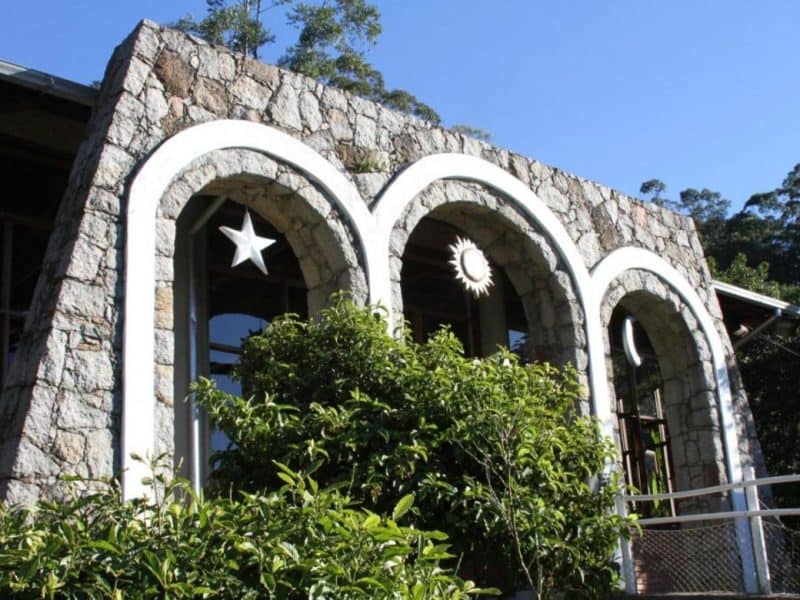
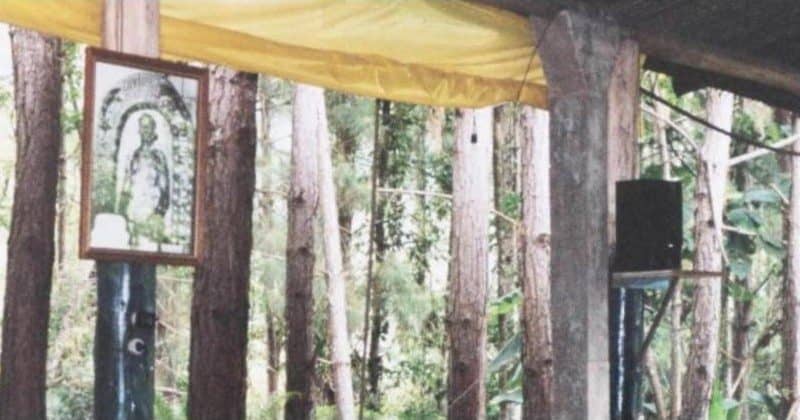
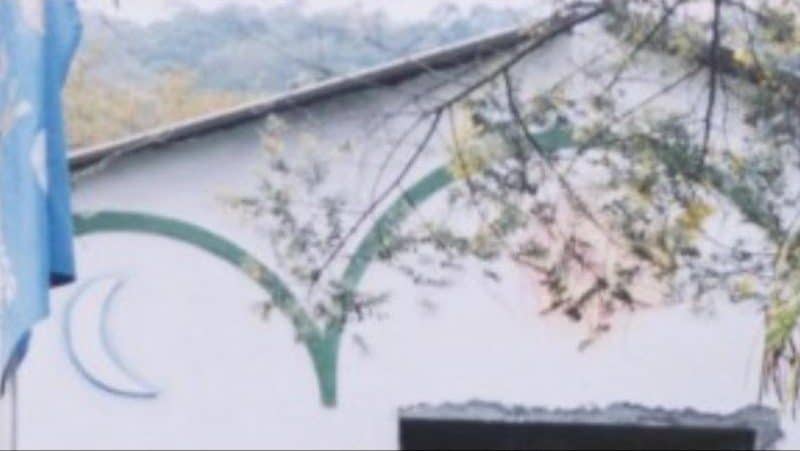
- Rooms: No lodging. The gallery shows the temple facade photographed on August 6, 2016, plus communal lunches, festivals and group gatherings of members.
- Style: A members’ church with regular sessions, tea preparation, planting and a festival calendar. Gallery captions show the UDV’s founding anniversary on July 22 (1994, 1996 and 2002), Mother’s Day lunches (2001 and 2011), a talent show (November 1, 2014), Reisado (January 6, 2015), a celebration honoring Mestre José Carvalho (February 19, 2015), São João (July 12, 2015), the núcleo’s own anniversary (February 19, 2017), an undated Festival das Flores and a meeting of the 9th Region’s instructive body at the núcleo (August 25, 2018).
Practical guidance: There is no booking, lodging or transfer; contact runs through members. Florianópolis has an airport, and the district lies about 10 km from downtown. The church publishes no address or núcleo contact. Church materials are in Portuguese. Arrange your own medical clearance before any visit and bring the questions below to the member or mestre who receives you.
Should You Book?
Only after the gaps are filled. This is a church, not a retreat. Ask in writing who leads the núcleo today and since when, which medications and conditions exclude a guest, whether a first-time guest is interviewed or screened before drinking, what a first session involves and how long it lasts, whether minors or pregnant women drink the tea and from what age, who on site is trained in first aid, which hospital the núcleo would use and how a medical emergency is handled, and what membership asks of you, including any dues. Read our guide to verifying retreat facilitators.
The Team & Story
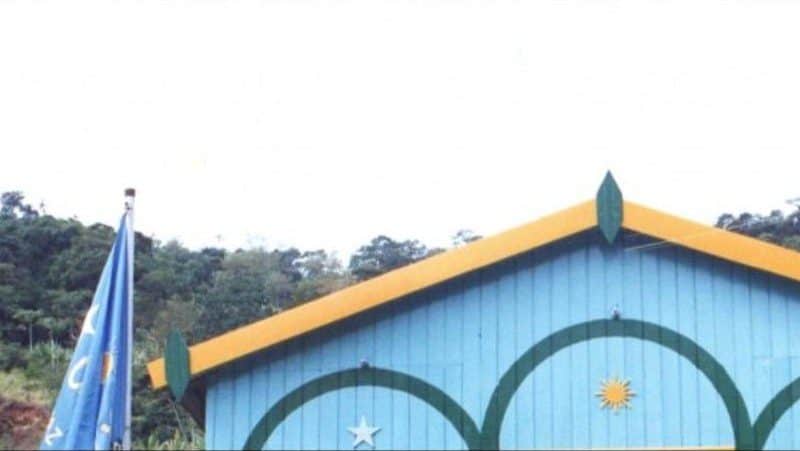
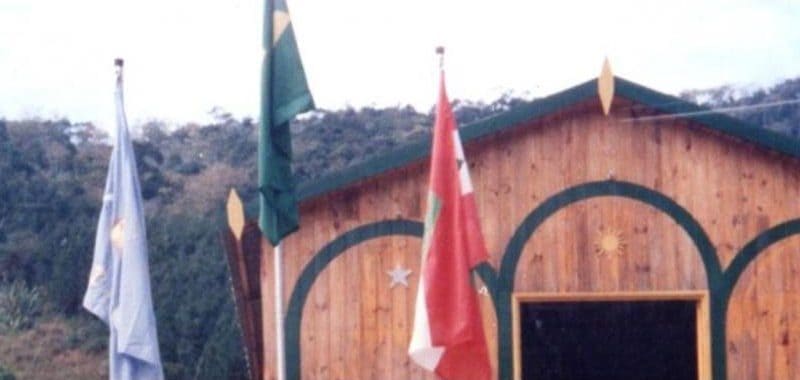
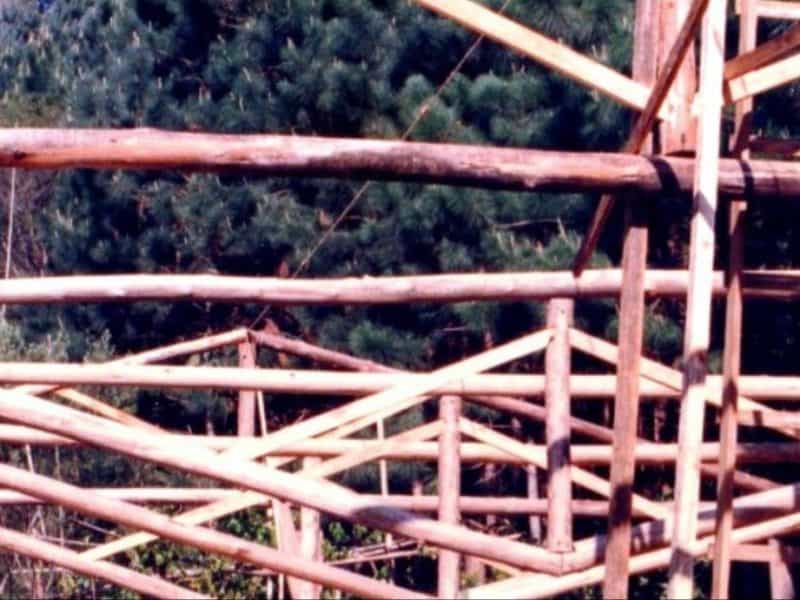
The núcleo presents itself as a morning star that has inspired the church in southern Brazil (unverified); its name refers to Venus, the morning star Mestre José watched after sessions in Manaus, and he also wrote a hymn of the same name, per the 2019 post, written by a founding member who sits on the núcleo’s Council Body with the church’s Memory and Communication Department. Before 1994, visiting mestres led sessions in the region. Gallery captions show Mestre José reinforcing the roof trusses of the first temple in 1993 and building its arch in 1994, and the first session, on January 1, 1994, was held in that unfinished wooden building. The group, then called the DAV da Grande Florianópolis (Distribuição Autorizada de Vegetal, an authorized distribution), was inaugurated in Timbé on February 19, 1994, became a Pré-Núcleo on February 19, 1997 and a full Núcleo on February 19, 1998; the church’s February 2019 anniversary list records the date as 19/2/1994 and places it in the 9th Region. On November 21, 2001, the then Mestre Geral Representante, José Luiz de Oliveira, led an instructive session there. The island land was bought in 2003, per the post (a reader comment gives May 13, 2002), and the seat in Santo Antônio de Lisboa was inaugurated on July 9, 2005. In 2019 the núcleo counted 153 members and marked its 25th anniversary on February 19. We did not independently verify anyone’s training.
Prep & Integration Tips
Before you go: Disclose every medication and condition in writing and plan any change with your own doctor. After you return: Arrange support from a qualified therapist at home. Our guide on how to research ayahuasca incidents can help you check any center.
Pros & Cons
| Pros | Cons |
|---|---|
| Religious congregation with dated history since 1994 | No published screening, contraindications or minimum age |
| No fees published; leaders unpaid and the tea not sold | No medical staff or emergency plan published |
| Founder and nine Mestres Representantes named by the church | Members only; no public newcomer route; leader last named in 2019 |
| 5.0 on Google Maps from 13 reviews; no incidents found | Small review base; children take part in church life |
Book Your Ceremony
Information is on its website. Best Retreats does not take bookings; learn more about our mission.
Last reviewed November 2026.
This article is for informational purposes only and is not medical advice. Consult a qualified medical professional.