
UDV Núcleo Estrela da Manhã
Researched by The Retreat Safety Project, a 501(c)(3) nonprofit, combining field research with compliance-grade due diligence. Meet the team →
Atmosphere
Features
Atmosphere and feature ratings above are based on Best Retreats research (November 2026). They will be updated if UDV Núcleo Estrela da Manhã submits its own information.
UDV Núcleo Estrela da Manhã: An In-Depth Review of a União do Vegetal Congregation in Camaçari, Bahia, Brazil
UDV Núcleo Estrela da Manhã is a congregation of the União do Vegetal, the Brazilian church whose members drink hoasca (ayahuasca) in religious sessions, founded on May 1, 2003 on land in the Abrantes district of Camaçari, in metropolitan Salvador, Bahia, as a split from Núcleo Serenita, and led from 2003 to 2021 by four Mestres Representantes the church names, per its 15th anniversary history. The church publishes a detailed, dated history and a 51-photo gallery, an independent 2008 university study describes the site and how newcomers are received, no guest fees are published and no incidents are on record. Against that, no medical screening, contraindications, medical staff or emergency plan are published, its rules for newcomers and minors are documented only in that 2008 study, and the church has named no leader for the núcleo since 2021.
🎯 At a Glance
- Locations: Abrantes district of Camaçari, Bahia, Brazil, in the Salvador metropolitan region and the church’s 4th Region (Bahia and Sergipe), per a 2008 Federal University of Bahia study; the church lists it only as Camaçari and publishes no address.
- Approach: União do Vegetal religious sessions with hoasca, including tea preparation (Preparo), regular sessions, anniversary sessions, Terno de Reis and flag-raising ceremonies, per its photo gallery; no session schedule is published.
- Suitable For: Members of the União do Vegetal and newcomers introduced by a member who meet the núcleo’s leader first, follow sessions in Portuguese and arrange their own medical clearance. Not suitable for people taking antidepressants or with heart or psychiatric conditions.
- Costs: No fee is published. In 2008 member dues were R$35 a month, adjustable to each member’s means, per the university study; current dues are not published. No lodging, meals or transfers.
- Overall Assessment: A 23-year-old congregation with a dated church history, leaders named through 2021, an independent academic study and no incidents on record, offset by no published screening, medical support or emergency plan, entry rules known only from a 2008 study and no named leader since 2021. Directory evaluation: C+.
💬 What Guests Are Saying
It has no booking listing, and no reviews were found on Tripadvisor, Retreat Guru or other retreat platforms. The church’s 2018 history drew 10 reader comments from May 2018 to June 2019, all congratulations and fond memories from members and friends. On Google Maps, the listing for the Núcleo Estrela da Manhã, placed in Abrantes, Camaçari, holds 5.0 stars from 15 reviews, all five-star; the newest is from about January 2026, and the only one with text says “only gratitude” (unverified). No reviews of 3 stars or lower were found. If you have attended, we encourage you to share your experience through our submission form.
🚩 Incident Report
We searched review platforms and English and Portuguese-language news for reports involving Núcleo Estrela da Manhã, its named mestres and the União do Vegetal in Camaçari.
- Deaths and serious injuries: None found.
- Sexual misconduct: No allegations found.
- Theft and fraud: None found.
- Legal action: None found naming the núcleo, including zoning, land or environmental disputes. Church-wide press reports about the União do Vegetal do not name this núcleo.
The núcleo is a private congregation, and this record rests mostly on church sources and one academic study, so it offers limited assurance.
If you have experienced or witnessed an incident with this center, please report it confidentially.
🔍 Critical Notes
Who runs it. The núcleo is part of the União do Vegetal, created on July 22, 1961 by José Gabriel da Costa (Mestre Gabriel), per the church; church-wide findings are in our União do Vegetal listing. The church names its Mestres Representantes in order: Joel Miguez Sobrinho (2003 to 2009), Magno Cerqueira Reis (2009 to 2012), Augusto Boureau (2012 to 2015) and André Manta (2015 to 2021), who wrote the 2018 history as Mestre Representante. A March 2021 church post lists André Manta among the núcleo’s mestres, and no later leader is named. In 2017 the church named Joel Miguez Sobrinho, of this núcleo, as its regional coordinator for the 4th Region, per its medical department report. A tax registration (CNPJ) in the name of the Centro Espírita Beneficente União do Vegetal Núcleo Estrela da Manhã in Camaçari appears in Brazilian business directories; its current status is unverified.
History. The church’s history, written by the núcleo’s then leader, tells the story from the church’s side (unverified). Mestre Carlos Ribeiro, while leading Núcleo Serenita in Lauro de Freitas from January 2000 to January 2003, began the split that produced Estrela da Manhã, and Joel Miguez Sobrinho, who had already led Serenita for two terms, was chosen to head the new group. The land was bought on February 7, 2002. Planting mariri and chacrona was the first priority, and work parties met almost every Saturday. The núcleo was inaugurated on May 1, 2003 with 65 founding members, in a session directed by Mestre José de Anchieta Torreão de Sá, then the church’s Mestre Central for the 4th Region; the name was proposed by the church’s then Mestre Geral Representante, José Luiz de Oliveira. Sessions were held in the Casa de Preparo, the tea preparation house, for eight years. The temple’s foundation stone was laid in July 2007, Mestre Carmiro Gabriel da Costa, a son of the founder, urged the members to finish it, and the temple opened on November 1, 2011. In 2006 a seven-day Preparo processed mariri brought from Acre by Mestre José Gomes Machado, now leader of Núcleo Porto Alegre. The late Mestre Fernando Hoisel, a naturalist physician the church calls one of its pioneers in Bahia, taught healthy-eating courses whose proceeds bought a mariri and chacrona planting area for the 4th Region. Membership grew from 65 founders to about 180 during 2005 to 2007, per the university study, and to 204 in May 2018, including eight mestres, 24 council members and 69 members of the instructive body. In 2018 the núcleo said it hoped to begin its first split; no later report says whether it did.
Community. The núcleo hosted a free church health camp on August 19, 2017 that served 50 people with 194 consultations, per the church’s health camp report, and hosted a regional meeting of the church’s memory and communications department on June 15, 2019, per its blog anniversary post. A member of the núcleo’s board received the 2019 Prêmio Muriqui for work defending the Atlantic Forest, per the church’s award report.
Independent study. Social sciences researcher Gabriela Santos Ricciardi did fieldwork at the núcleo from March 2005 to December 2007 for a master’s dissertation at the Federal University of Bahia, interviewing 11 members. Members told her the tea brought relief from physical illness, depression, anguish and drug dependence; these are personal accounts, not evidence of medical effect (unverified).
Screening and medical support. No medical questionnaire, contraindications for SSRIs, MAOIs, heart or psychiatric conditions, medical staff or emergency plan are published. The 2008 study describes the entry route: a first-time drinker is introduced by a member, has a preliminary meeting with the Mestre Representante and attends a session held for newcomers; membership is open only to adults after attending; children and adolescents may attend sessions at the Mestre Representante’s discretion with parental consent; and there are no dietary rules, the only explicit prohibition being weapons. These rules come from that study, not from a current church publication. The church’s legal history page calls the tea proven harmless to health and lists no contraindications. The gallery shows a nursery opened in October 2009, but no source says whether minors drink the tea here or from what age. No hospital plan is published.
Status. Likely active. The latest dated public record is an August 27, 2024 church post that identifies its author as a member of the núcleo’s instructive body; the church also listed it in its May anniversary roll through 2019, as in its 2019 list. No 20th anniversary post was found, and the church has named no leader since January 2021. No closure, move or new name has been announced.
Legal context. The church says Brazilian authorities have recognized religious use of the tea since 1987, and that a January 2010 federal resolution (CONAD Resolution 1 of 2010) adopted rules making religious use incompatible with selling the tea, religious tourism, therapeutic use and advertising its effects, per its legal history page. The US Supreme Court ruled unanimously for the church in 2006.
🆘 Screening & Mental Health Risks
Ask the Mestre Representante at your preliminary meeting which medications and conditions exclude a newcomer, who at the session is trained in first aid, which hospital serves the Abrantes site and whether minors drink the tea, and disclose every prescription in writing before you drink. ICEERS notes that ayahuasca’s MAOI component makes it dangerous with SSRIs and other serotonergic drugs and that it is contraindicated for people prone to psychosis. Never stop a psychiatric medication to qualify for a ceremony without your prescriber’s guidance.
🧪 Brew Substance
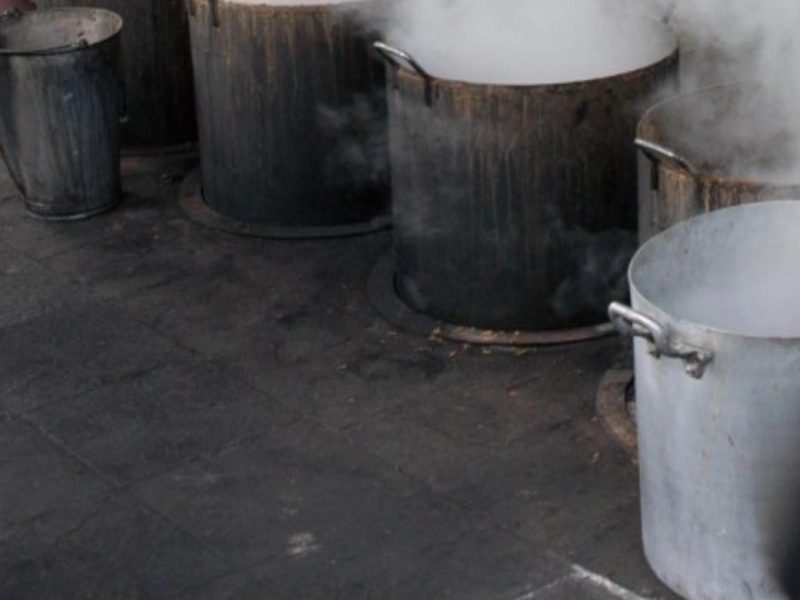
Hoasca prepared in the núcleo’s Casa de Preparo from mariri and chacrona, which members began planting on the land before the 2003 inauguration, with mariri from Acre added for a 2006 Preparo, per the church history (unverified). Ayahuasca combines the Banisteriopsis caapi vine with a DMT-containing leaf, as Erowid explains.
📍 Location, Setting & Style
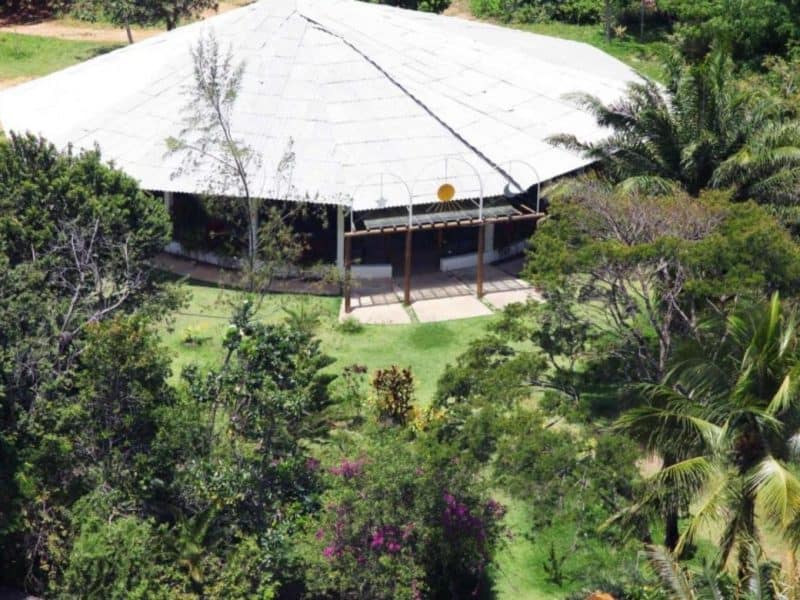
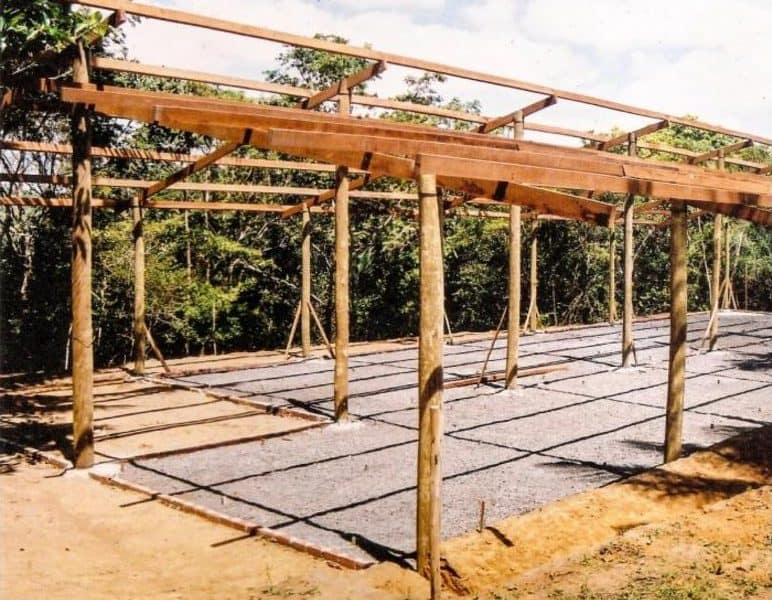
- Setting: A rural plot in the Abrantes district of Camaçari, described in 2008 as quiet, with little traffic and plenty of green space. The grounds hold the temple (2011), the Casa de Preparo, a kitchen, bathrooms, a caretaker’s house and a nursery (2009).
- Rooms: No lodging, meals or transfers; this is a local congregation, not a retreat.
- Style: A members’ church with sessions, tea preparation, anniversary solemnities and work parties, shown in a 51-photo gallery from 2003 to 2018 that includes the temple after its opening.
Practical guidance: There is no booking, lodging or transfer. Entry runs through a member’s introduction and a meeting with the Mestre Representante, according to the 2008 study, and sessions are in Portuguese. If accepted, ask for directions and when the session starts and ends, and arrange your own transport and a place to stay. No plan names a hospital; the site lies in the Salvador metropolitan region.
Should You Book?
Only after the gaps are filled. This is a church, not a retreat, and entry runs through a member and the núcleo’s leader. Ask in writing who leads the núcleo today, which medications and conditions exclude a newcomer, who on site is trained in first aid, how a medical emergency is handled, which hospital is nearest, whether minors drink the tea and from what age, and when sessions start and end. Read our guide to verifying retreat facilitators.
The Team & Story
The núcleo presents itself, in a history written by its then leader, as a brotherhood built by weekend work parties whose most important achievement is its own maturing (unverified). We did not independently verify anyone’s training.
Prep & Integration Tips
Before you go: Disclose every medication and condition in writing and plan any change with your own doctor. After you return: Arrange support from a qualified therapist at home. Our guide on how to research ayahuasca incidents can help you check any center.
Pros & Cons
| Pros | Cons |
|---|---|
| Detailed, dated church history and 51-photo gallery since 2003 | No published screening, contraindications or minimum age |
| Leaders named by the church through 2021; independent 2008 university study | No medical staff, emergency plan or hospital named |
| No guest fees; hosted a free community health camp in 2017 | No leader named since 2021 |
| No incidents on record | Members only; entry rules known only from a 2008 study |
Book Your Ceremony
Information is on its website. Best Retreats does not take bookings; learn more about our mission.
Last reviewed November 2026.
This article is for informational purposes only and is not medical advice. Consult a qualified medical professional.