
UDV Núcleo Águas Claras
Researched by The Retreat Safety Project, a 501(c)(3) nonprofit, combining field research with compliance-grade due diligence. Meet the team →
Atmosphere
Features
Atmosphere and feature ratings above are based on Best Retreats research (November 2026). They will be updated if UDV Núcleo Águas Claras submits its own information.
UDV Núcleo Águas Claras: An In-Depth Review of the União do Vegetal’s Forest Temple in Rural Manaus, Brazil
UDV Núcleo Águas Claras is a congregation of the Centro Espírita Beneficente União do Vegetal in the rural north of Manaus, Amazonas, founded by members of the city’s original Núcleo Caupuri, who held a first session in a plastic-covered shed on December 8, 2000 and opened the pré-núcleo on February 25, 2001, and its volunteer leaders serve Chá Hoasca (ayahuasca) to members in religious sessions, per its 20th anniversary history. The church names its founding and current leaders, publishes a dated history and 35 captioned photos from 2000 to 2020, hosts one of its mother-plant banks for the tea’s two plants on the site and charges no fee, and the núcleo’s two Google Maps entries rate it 4.8 and 4.3 stars. Against that, no screening rules, contraindications, minimum age, medical staff, emergency plan or newcomer process are published for a distant forest site where children and young people take part, its 24 Google ratings say little about sessions, and the church has published nothing dated about the núcleo since April 2021.
🎯 At a Glance
- Locations: A forest site beside a stream in the rural area of Manaus, Amazonas, Brazil, set up in 2000 for members living in the north of the city, in the UDV’s 2nd Region. Google Maps places it beside a highway in the rural north of Manaus; no district or address is published.
- Approach: UDV religious sessions in which members drink Chá Hoasca made from mariri and chacrona. The núcleo prepares its own tea, and no other medicines are served.
- Suitable For: Adults drawn to the União do Vegetal as a long-term religious community who can follow sessions in Portuguese, not visitors seeking a single ceremony. Not suitable for people taking antidepressants or with heart or psychiatric conditions.
- Costs: No fee is published. No lodging, meals or transfers are sold, and no deposit or refund terms apply.
- Overall Assessment: A documented 25-year history, named founding and current leaders, volunteer leadership and Google ratings of 4.3 and 4.8, offset by no published screening, medical safeguards, age rules or newcomer process at a remote forest site and no church update on the núcleo since 2021. Directory evaluation: C+.
💬 What Guests Are Saying
Google Maps lists the núcleo twice. An entry under the CEBUDV name rates it 4.8 from 14 reviews (12 five-star, one four-star and one three-star), and a second entry under the church’s full name, categorized as a church, rates it 4.3 from 10 reviews (seven five-star, two three-star and one two-star). Between them they include a review from around 2016 and one posted in November 2026. The praise is short: one five-star reviewer describes feeling more connected to nature and the divine (unverified). Reviews of 3 stars or lower: the two-star, from around 2016, has no text; the three-star on the first entry, from around 2019, calls the núcleo good and well cared for; and a three-star posted in November 2026 only asks whether visitors can come (all unverified). Apart from these, the only first-hand accounts are the church’s own posts and congratulatory reader comments on them. If you have attended, we encourage you to share your experience through our submission form.
🚩 Incident Report
We searched review platforms and English and Portuguese-language news for reports involving UDV Núcleo Águas Claras, the União do Vegetal in Manaus and its Mestre Representante, Antônio Cavalcante de Albuquerque Jr.
- Deaths and serious injuries: None found.
- Sexual misconduct: No allegations found.
- Theft and fraud: None found.
- Legal action: No lawsuits, police action, or land or environmental licensing disputes were found; the church’s history mentions none.
The record rests mostly on church sources and a small number of Google reviews, so it offers limited assurance. Church-wide press reports, including claims the UDV denies, are covered in our União do Vegetal listing; none found names this núcleo.
If you have experienced or witnessed an incident with this center, please report it confidentially.
🔍 Critical Notes
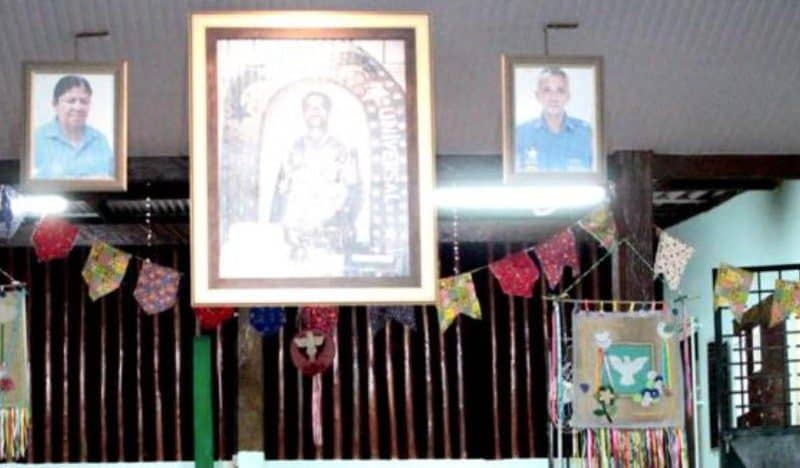
Who runs it. The núcleo belongs to the UDV, founded on July 22, 1961 by José Gabriel da Costa (Mestre Gabriel), per the UDV’s about page. Its Mestres Representantes and local boards are volunteers elected every three years, per its organization page. Águas Claras belongs to the 2nd Region. Its founding mestre, Mestre Antônio Cavalcante de Albuquerque, whom the church also calls Mestre Antônio Albuquerque, was chosen in 2000 to guide the new work and received the Representação from the Mestre Central on February 25, 2001. The same day, Mestre Antônio Cavalcante de Albuquerque Junior took on the role of president of the new board, per the church. In February 2021 the church named Antônio Cavalcante de Albuquerque Jr. as Mestre Representante, and he signed an April 2021 church post with that title. No other Mestre Representante, between 2002 and 2021 or after April 2021, appears in church sources, and with three-year terms the current leader may have changed. Captions in the núcleo’s photo gallery also show a body of mestres (Quadro de Mestres) and departments for planting, spiritual guidance, beneficence, and memory and communication, which publishes the núcleo’s posts and photos.
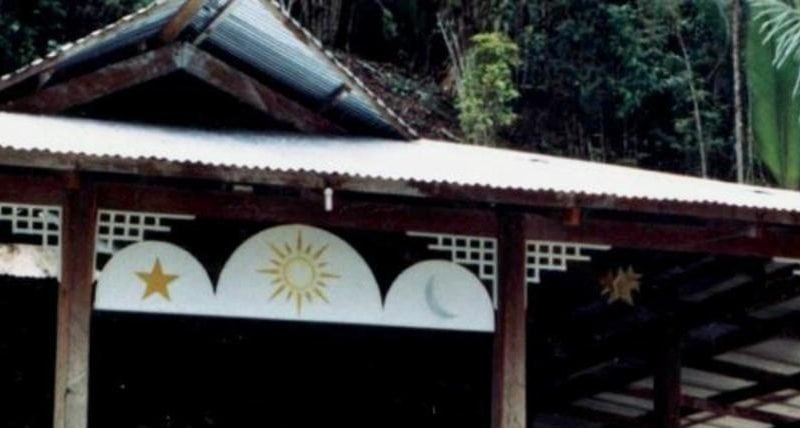
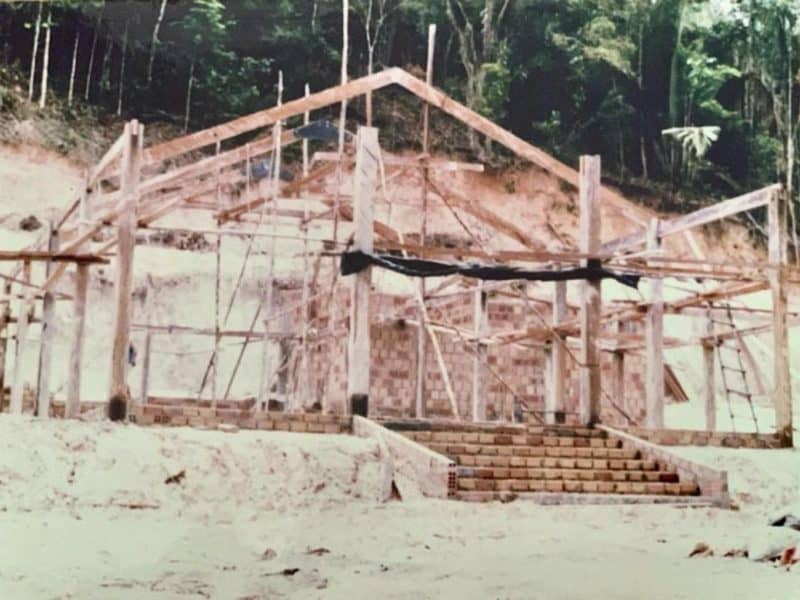
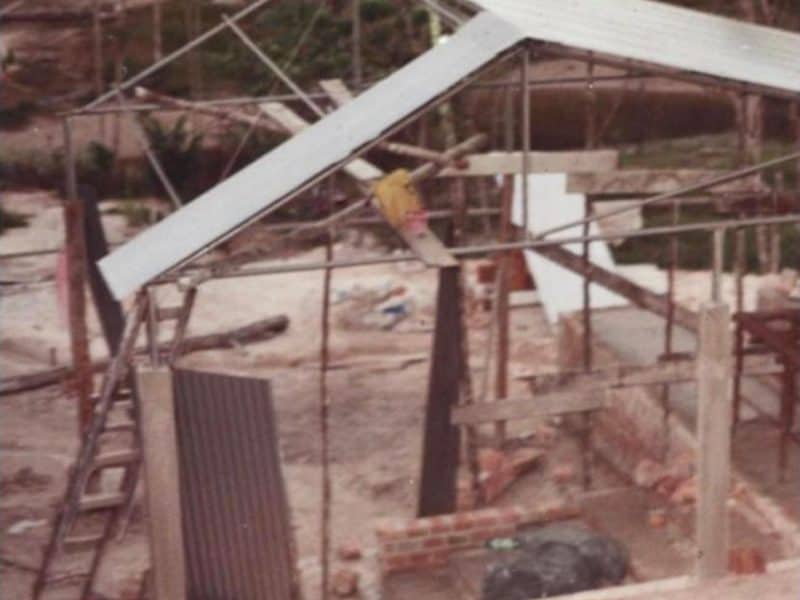
History and lineage. UDV work in Manaus began on July 29, 1967, per Wikipedia (unverified), and the city’s first congregation, once called the Núcleo de Manaus, is today Núcleo Caupuri, per a 2021 church tribute post signed by the Águas Claras Mestre Representante. From 1997 Caupuri had so many regular members that its then Mestre Representante, José Maria Evangelista, raised the idea of a pré-núcleo for people living in the north of the city, and early in Hamilton Carvalho’s term as Caupuri’s Representante, in 2000, the plan was confirmed. Land was bought in the rural area of Manaus and work began in September 2000, led by Mestre Geraldo Neves, then Caupuri’s president, with two communal work parties (mutirões) by Caupuri members; 37 members committed to join the new núcleo (unverified). The first Sessão de Vegetal took place on December 8, 2000 in a plastic-covered shed, directed by the 2nd Region’s then Mestre Central, Francisco Soares de Jesus; the same shed served as kitchen, dining area, session hall and gathering space in the early months, per the gallery. Members raised the temple’s walls and roof, and at midday on February 25, 2001 the pré-núcleo was inaugurated with a flag-raising, the installation of its board and a session in which the Mestre Central served the tea and handed over the Representação. After work on the planting area, a preparation house (shown under construction in 2002), a serving kitchen, a garden and its departments, it became a full núcleo on July 22, 2002, the UDV’s own founding anniversary. The same tribute post credits one long-time member with helping found both Núcleo Jardim do Norte and Águas Claras. No núcleo or distribution founded from Águas Claras appears in church posts.
How sessions work. No session calendar for this núcleo is published. Church captions record an extra session with Mestre Francisco Herculano in 2006, a São João session on June 23, 2019, an annual Escala Anual session marking the núcleo’s 19th anniversary in 2020, and a session on July 22, 2020 attended by the 2nd Region’s central administration and the núcleo’s mestres. Members are shown sharing a lunch on a commemorative date in 2002, celebrating after the anniversary session and preparing the post-session snack themselves. Sessions are in Portuguese.
Screening and medical support. No medical questionnaire, contraindications for SSRIs, MAOIs, heart or psychiatric conditions, minimum age, medical staff or emergency plan are published by the núcleo or on the UDV’s Brazilian pages about the church, its organization or the tea. No procedure for first-time guests, invitations, interviews or membership is published either. Children and young people take part in núcleo life: the church counted them alongside the 78 regular members in 2021, and captions show 2019 activities with children, young people and parents. No minimum age for drinking the tea is published, including on the church’s adolescence research page, and whether children drink the tea at this núcleo is not stated. Manaus has full hospital services, but the church describes the site as distant, and travel time to a hospital is not published.
Status. Likely active. The latest public sign of activity is a Google review posted in November 2026, although it only asks whether visitors can come; the two Google entries also include a review from around 2016. The church listed the núcleo in its February 2019 anniversary list, marked its 20th year in February 2021 and published a post by its Mestre Representante in April 2021; the latest gallery photo is dated December 19, 2020. No later church post about the núcleo appears on the UDV blog, including at its 25th anniversary in February 2026, and no closure or move has been announced.
Legal context. Brazil has recognized religious use of the tea since 1987, and CONAD Resolution 1 of January 25, 2010 declared that use incompatible with commercialization, religious tourism, therapeutic use and advertising of its effects, per the UDV’s legal history page and Wikipedia. The same page records that the US Supreme Court unanimously upheld the UDV’s free exercise of its religion in the United States on February 21, 2006.
🆘 Screening & Mental Health Risks
Ask the leaders in writing which conditions and medications exclude a participant, how a first-time guest is invited and interviewed, at what age children may drink the tea and who responds if someone becomes unwell at this distant forest site. ICEERS notes that ayahuasca’s MAOI component makes it dangerous with SSRIs and other serotonergic drugs and that it is contraindicated for people prone to psychosis. Never stop a psychiatric medication to qualify for a ceremony without your prescriber’s guidance.
🧪 Brew Substance
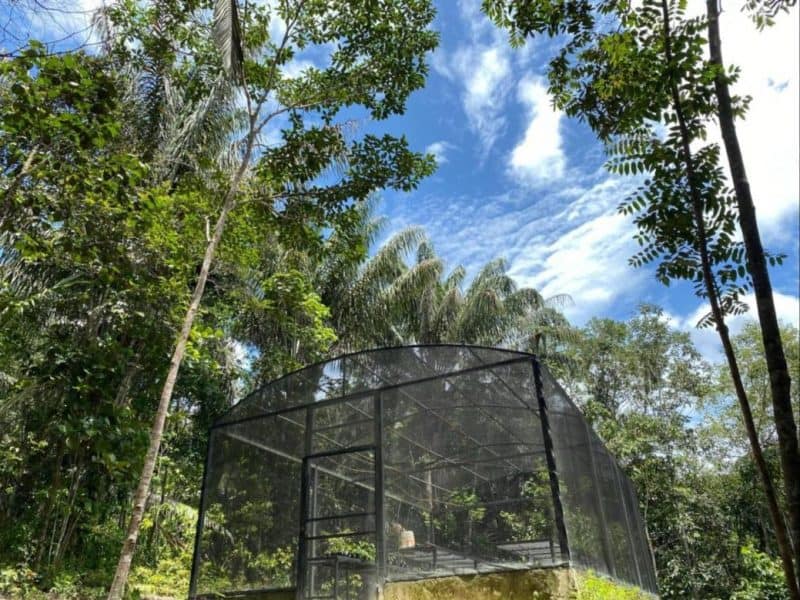
Chá Hoasca prepared at the núcleo, which began building its own preparation house in 2002, records preparations such as those of January 6 and September 5, 2020, and hosts on its land one of the UDV’s networked mother-plant banks (Bancos de Matrizes em Rede), set up for the genetic conservation of mariri and chacrona, per the church (unverified). Ayahuasca combines the Banisteriopsis caapi vine with a DMT-containing leaf, as Erowid explains.
📍 Location, Setting & Style
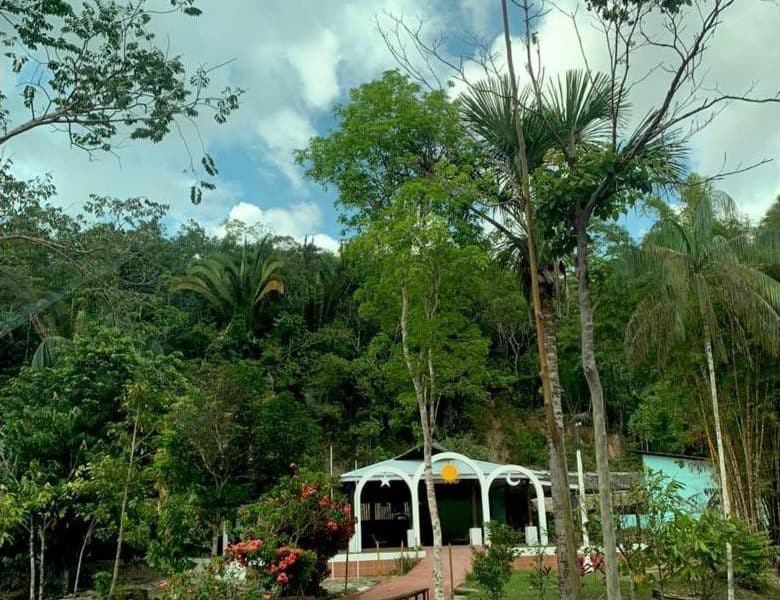
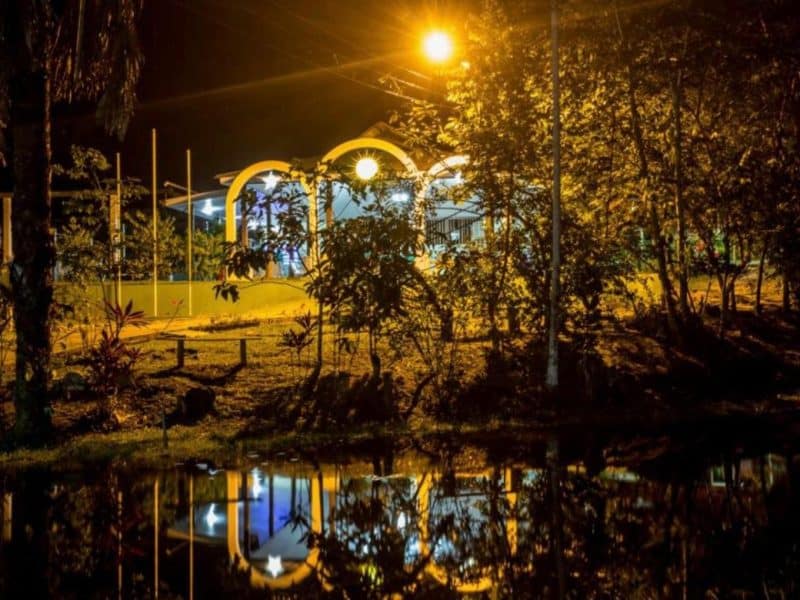
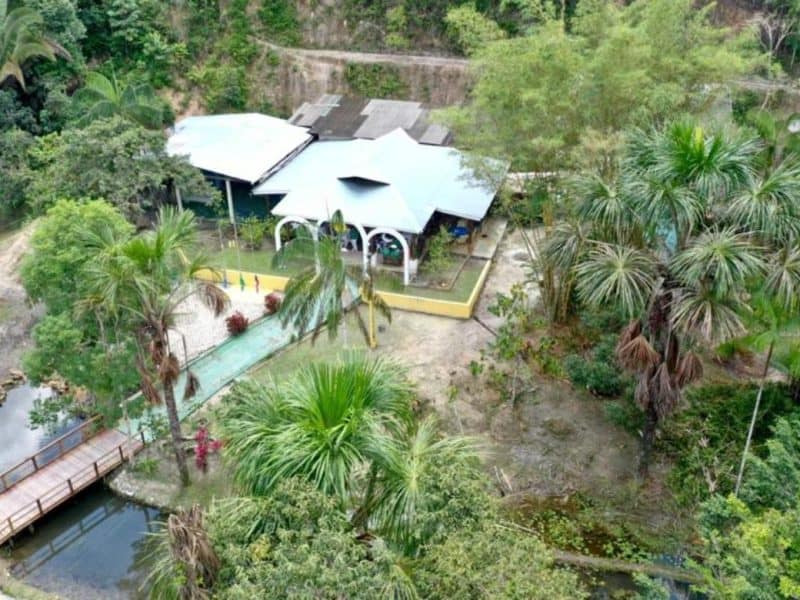
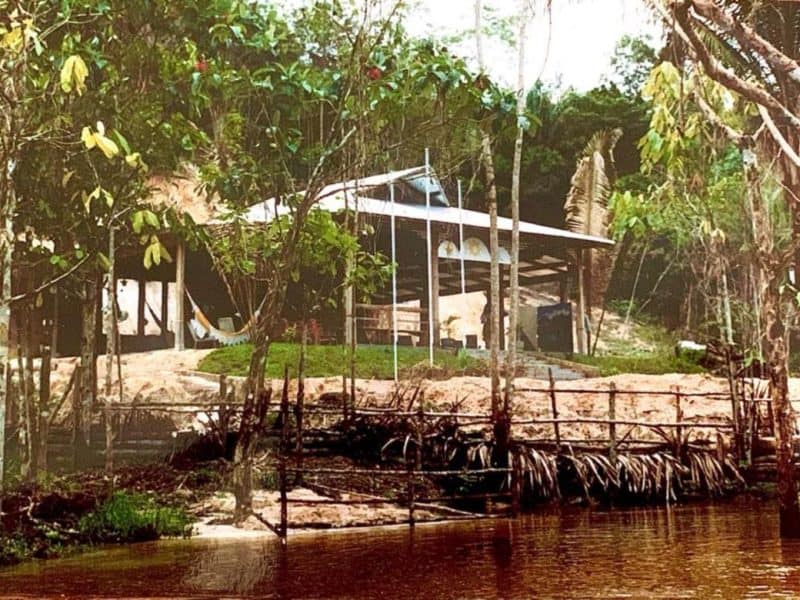
- Setting: A forest site beside a stream (igarapé) in the hot, humid rural area of Manaus, which the church describes as distant and surrounded by forest and reached by road. Google Maps places both of its entries beside a highway in the rural north of the city. Members raised the temple by communal work in 2000 and 2001, per the church’s photo gallery.
- Rooms: None; this is a place of worship, not lodging. The grounds hold the temple, a preparation house, a serving kitchen, a garden, planting areas and the mother-plant bank, per church sources; the first sessions were held in an open shed that also served as kitchen and gathering space.
- Style: Formal sessions in Portuguese following Mestre Gabriel’s teachings, in a family congregation of 78 regular members plus children and young people in 2021 (unverified), with communal meals, children’s and youth activities and charity drives.
Practical guidance: No transfers, lodging or meals are offered, and the church publishes no visitor process, so contact the UDV before planning a visit; its contact page lists only the Brasília head office and a press office. Manaus has several núcleos, including Caupuri, Tiuaco, Princesa Sama and Jardim do Norte, and Google Maps lists Águas Claras under two names, so confirm which congregation invites you and where it meets. The site lies outside the city in the forest, so arrange road transport both ways, bring insect protection and rain gear, and know the route to a hospital in Manaus before you go.
Should You Book?
Only after the gaps are filled. Ask in writing how a newcomer is invited and interviewed and whether non-members may attend, who leads the núcleo today, what medical and medication rules apply, the minimum age for drinking the tea, who on site is trained in first aid, how someone would reach a hospital from the site and whether any contribution is expected. Read our guide to verifying retreat facilitators.
The Team & Story
The UDV presents Águas Claras as a point of light raised in the heart of the forest by the work of its brotherhood, beside the clear waters of a stream, where those who arrive are enchanted by the strong presence of nature. Church captions also show its family and charity work: a Bandeira do Divino activity with children, young people and members on February 10, 2019; a planting-area activity for children, young people and parents in 2019; a 2019 food, clothing and toy drive run by its beneficence department with the Novo Encanto and spiritual guidance groups; a members’ get-together on January 5, 2020; food baskets delivered to the local community on December 12, 2020; and an activity of its first arts festival on December 19, 2020. We did not independently verify anyone’s training.
Prep & Integration Tips
Before you go: Disclose every medication and condition in writing and plan any change with your own doctor. After you return: Arrange support from a qualified therapist at home. Our guide on how to research ayahuasca incidents can help you check any center.
Pros & Cons
| Pros | Cons |
|---|---|
| Documented history since 2000 with named leaders | No published screening, contraindications or medical staff |
| No fee; volunteer leaders | No published age policy though children take part in núcleo activities |
| Mother-plant bank conserving mariri and chacrona on site | Remote forest site; hospital travel time not published |
| Google ratings of 4.3 and 4.8; no incidents found | Few reviews; no church update on the núcleo since 2021 |
Book Your Ceremony
Information is on the UDV’s website. Best Retreats does not take bookings; learn more about our mission.
Last reviewed November 2026.
This article is for informational purposes only and is not medical advice. Consult a qualified medical professional.