
Céu da Mãe Divina (CEFLUMMAR)

Researched by The Retreat Safety Project, a 501(c)(3) nonprofit, combining field research with compliance-grade due diligence. Meet the team →
Atmosphere
Features
Atmosphere and feature ratings above are based on Best Retreats research (November 2026). They will be updated if Céu da Mãe Divina submits its own information.
Céu da Mãe Divina (CEFLUMMAR): An In-Depth Review of a Santo Daime Church in Benevides, Pará, Brazil
Céu da Mãe Divina, also called CEFLUMMAR, is a small Santo Daime church in rural Benevides, near Belém in the Brazilian state of Pará, where its president Rogério José Parreira leads uniformed members in ayahuasca ceremonies called works, per its blog. A Federal University of Pará master’s dissertation (about 2012) records it as a CEFLURIS núcleo from 2002, formed by members who stayed behind when Céu de Belém moved, and the church says all its works are free. No deaths, abuse allegations or legal cases involving it were found. Against that, it publishes no screening, minimum age, medical support or emergency plan, children attend its ceremonies, it has called itself independent since 2014, and its blog has been silent since July 2017.
🎯 At a Glance
- Locations: Rural Benevides, in the Taiassuí area about 5 km south of the town center and roughly 25 km from Belém, Pará, Brazil, per the dissertation, its blog and its Google Maps listing (Maps position unverified). No address is given here.
- Approach: Santo Daime works in Padrinho Sebastião’s line, in which uniformed members called fardados drink Daime (ayahuasca) and sing hymnals called hinários: healing works held in cycles, seated concentrations, festival works, forest works and hymn studies. It was a CEFLURIS (now ICEFLU) affiliate in 2010 and 2011 and has described itself as independent since 2014.
- Suitable For: People with a personal connection to the community who can arrange their own medical clearance. Not suitable for people taking antidepressants or with heart or psychiatric conditions.
- Costs: Free. In 2014 the church said participation in all its works is free of charge. No fee or suggested contribution is published, and no retreats, lodging or tourist programs were found.
- Overall Assessment: An identifiable small church with named leaders, a documented history, free works and no incidents found, offset by no published screening, minimum age, medical support or emergency plan, and no church record since July 2017. Directory evaluation: C-.
💬 What Guests Are Saying
No reviews were found on Tripadvisor, Retreat Guru, BookRetreats, AyaAdvisors, Trustpilot, Facebook or other review platforms. On Google Maps, a listing named CMD Céu da Mãe Divina, in rural Benevides, Pará, holds 5.0 stars from 4 ratings, none with written text, two from about 2022 and two from about 2025 (unverified). No reviews of 3 stars or lower were found. If you have attended, we encourage you to share your experience through our submission form.
🚩 Incident Report
We searched review platforms and English and Portuguese-language news for reports involving Céu da Mãe Divina, CEFLUMMAR and its president and vice-president.
- Deaths and serious injuries: None found.
- Sexual misconduct: None found.
- Theft and fraud: None found.
- Legal action: None found.
No news, police or court record involving the church or its leaders was found, though its public record is thin beyond its own blog and one dissertation.
If you have experienced or witnessed an incident with this center, please report it confidentially.
🔍 Critical Notes
Who runs it. Rogério José Parreira signs the church’s blog posts as president of CEFLUMMAR from 2010 to 2017, and the dissertation names him as the centre’s director. Christiano Ricardo Parreira co-signed a 2014 statement as vice-president, per the August 2014 post. A March 2012 post says Padrinho Alex Polari de Alverga, a senior figure of the CEFLURIS line, was named honorary president (unverified). Neither local leader uses the title padrinho or comandante. The dissertation says Céu de Belém moved to another rural property for about a year and then returned to its first site; some members chose to stay, and Céu da Mãe Divina formed there. It began as a núcleo, a small house, in 2002 and by February 2011 was a centro of about 20 fardados, close to becoming a church. Its formal name honors Maria Marques Vieira Damião, a disciple of Mestre Irineu whom it takes as its historical matron. The blog’s 2010 launch post called it a CEFLURIS affiliate, the network now called ICEFLU, whose mother church is Céu do Mapiá. In 2014 its leaders described it as an independent, self-managed centre in Padrinho Sebastião’s line and a family-based group since its origin; no source says whether it still belongs to ICEFLU. It works closely with CICLUJUR, a Daime center in Belém, where its members joined works in 2010 and 2014. No company or CNPJ registration was found.
Screening and medical support. No interview process, medical questionnaire, contraindications for SSRIs, MAOIs, heart or psychiatric conditions, minimum age, medical staff or emergency plan is published. The dissertation says Daime groups in the Belém area have visitors meet an experienced member beforehand to explain a diet kept three days before and after each work, with no sex or alcohol. ICEFLU’s mental health page asks its centers to interview newcomers, take a medical history and hold a presentation work before regular participation, but this church has called itself independent since 2014, so it is not clear those rules apply. A December 2013 post raised money for a hammock shelter for “our children during the ceremonies” and said the grounds had no bathroom; whether minors drink Daime is not stated. No nearest hospital is named, and the dissertation puts Benevides about 25 km from Belém.
Status. Unconfirmed. The blog, the church’s only public channel, last posted on July 31, 2017, about a forest concentration. Two Google Maps ratings from about 2025 suggest the site still exists (unverified). No closure, move or new name has been announced.
Legal context. Religious use of ayahuasca is legal in Brazil. ICEFLU’s legal history page says a 1985 ban was suspended in 1987 and that ethical principles for religious use were published in the federal Diário Oficial in January 2010; Wikipedia cites CONAD Resolution No. 1 of January 25, 2010. The church’s March 2012 post welcomed that recognition and urged members to work within the law, and its free works fit a religious, non-commercial model.
🆘 Screening & Mental Health Risks
Ask the church’s leaders, through a member you know, whether newcomers are interviewed and screened for medications and health conditions, whether minors drink Daime, and who handles a medical emergency at a rural site with no published medical support. ICEERS notes that ayahuasca’s MAOI component makes it dangerous with SSRIs and other serotonergic drugs and that it is contraindicated for people prone to psychosis. Never stop a psychiatric medication to qualify for a ceremony without your prescriber’s guidance.
🧪 Brew Substance
The church built its own feitio house, where Daime is brewed, and held its first feitio there in 2010, per a December 2010 post; it held a small internal feitio for eligible fardados in December 2014, and an October 2014 post credits CICLUJUR with supporting the production of its sacrament. Ayahuasca combines the Banisteriopsis caapi vine with a DMT-containing leaf, as Erowid explains.
📍 Location, Setting & Style
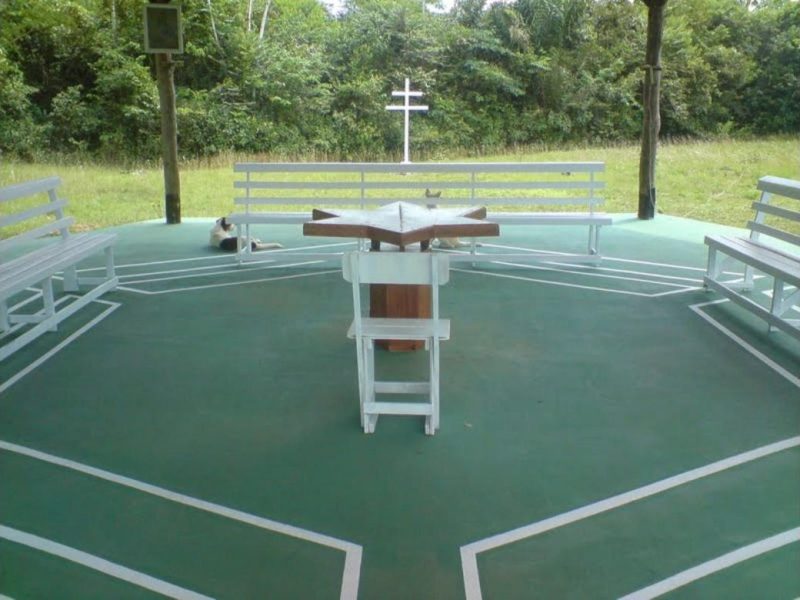
- Setting: Rural land of about five hectares in Benevides, part of greater Belém in the lowland Amazon, with about two hectares set aside for spiritual work and an open hexagonal hall, per the dissertation. The church also holds works in the forest.
- Rooms: No lodging is offered. In December 2013 the church was raising money to build its first bathroom and a hammock shelter for children.
- Style: A small Santo Daime community, not a retreat center. Works are free and held in Portuguese, and major works can last about twelve hours, per the dissertation.
Practical guidance: There is no booking, published contact or address beyond the dormant blog. Arrange an introduction through a member, confirm that works are still held, expect the preparatory diet and plan your own transport from Belém.
Should You Book?
Only after the gaps are filled. This is a church, not a retreat, and entry comes through its members. Ask in writing whether works are currently held and who leads them, how newcomers are screened for medications and health conditions, whether minors drink Daime and who handles medical emergencies. Read our guide to verifying retreat facilitators.
The Team & Story
Céu da Mãe Divina presents itself as CEFLUMMAR, a centre keeping the legacies of Mestre Irineu and Padrinho Sebastião Mota and offering its works free of charge. We did not independently verify anyone’s training.
Prep & Integration Tips
Before you go: Disclose every medication and condition in writing and plan any change with your own doctor. After you return: Arrange support from a qualified therapist at home. Our guide on how to research ayahuasca incidents can help you check any center.
Pros & Cons
| Pros | Cons |
|---|---|
| President and vice-president named on its own blog | No published screening, minimum age or emergency plan |
| History since 2002 documented in a university dissertation | Children present at ceremonies; no age policy published |
| All works free; no retreats or tourist packages | No church record since July 2017 |
| No incidents in news or court records | Independent since 2014; no legal entity found |
Book Your Ceremony
We do not recommend booking until the gaps above are addressed. Best Retreats does not take bookings; learn more about our mission.
Last reviewed November 2026.
This article is for informational purposes only and is not medical advice. Consult a qualified medical professional.