
Willka Hampi
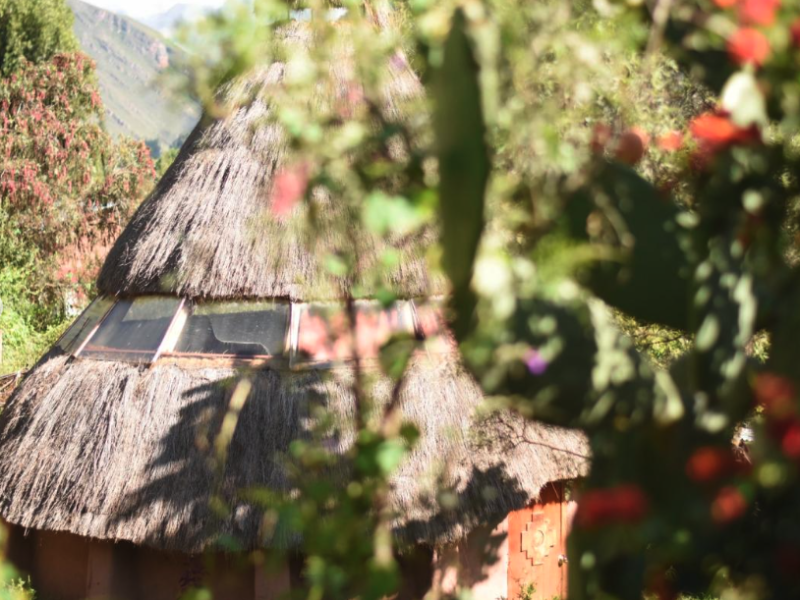
Atmosphere
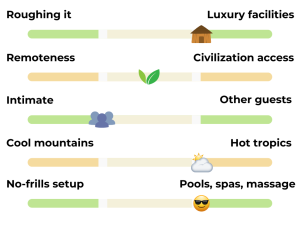
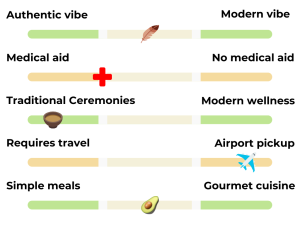
Features
Willka Hampi Sacred Plant Community in Peru
Willka Hampi, meaning “Sacred Medicine” in Quechua, is an intentional community and self-described “comunidad, centro de medicina y de formación de líderes” (community, medicine center, and project-leader formation center) located in the Sacred Valley of Peru. According to their own website, the collective holds four properties across two regions of Peru: Choquepata and Huayllaquen near Pisac in the Cusco region, and Huayopata and Caballerayoc in the Quillabamba region near Santa María. The community states that two of these four sites have been fully developed and active for 25 years, with the third acquired about a year ago and the fourth held for more than a decade. They consider themselves a center of formation rather than a retreat center, and that framing is reflected here. Per a notice on their current website, the community has voluntarily withdrawn from social media platforms. They continue to actively accept visitors, publish program dates through the end of 2026, and invite the public to attend Saturday introductory meetings at their Choquepata site.
🎯 At a Glance
- Location: Four sites total. Choquepata is the main coordination site, located about 10 minutes from the town of Pisac by mototaxi, near the village of Taray. Huayllaquen is in the mountains above Choquepata, near Paullo Grande, dedicated to medicine work. Huayopata is between Huyro and Santa María in the Quillabamba region, focused on self-sufficiency and agro-food projects. Caballerayoc is the most remote site, in the heights above Santa María, on the former grounds of a coffee plantation.
- Approach: Communal living rooted in what the community calls “circle consciousness” or “the Sacred Wheel,” drawing on the Andean concept of the Ayllu, alongside elements of Vaishnava Hindu tradition (the community follows the bi-monthly Ekadasi fast, uses ghee in food preparation as offering, and several members use Vaishnava-style names). The current medicine program is centered on Yopo, conducted in collaboration with members of the Piaroa community of Venezuela. Other sacred plants worked with include Mama Coca, Tobacco, Huachuma (San Pedro), and Ayahuasca. Programs combine ceremony with daily community participation, philosophical discussions based on text readings, sacred chanting circles, and Temazcal sweat lodge.
- Suitable For: Long-stay visitors comfortable with strict community rules, a vegetarian-only diet, and a structured spiritual framework that blends indigenous Andean and Vaishnava elements. Not suited for short-stay seekers wanting a discrete ceremony weekend, or anyone uncomfortable with environments that combine ceremony work with extended communal living.
- Costs: A minimum donation of approximately $95 or 310 soles per week for volunteer stays at the main community near Pisac was published on their prior willkahampi.org site, and $55 or 175 soles per week for stays at their Quillabamba properties. Specific program pricing is not publicly displayed on the current willkahampi.com site, which directs interested parties to contact the community directly for current rates. The community refers to its pricing as a “system of reciprocation” with several tiers based on length of stay and level of involvement.
- Overall Assessment: An unusual long-running community that operates as a residential immersion model rather than a standard retreat center. No verified safety incidents have been identified across the community’s operating history. Prospective visitors should review the community’s own materials and policies carefully to determine fit.
💬 What Guests Are Saying
The community’s own website currently features three brief testimonials: from Sarah P (Germany), who stayed two months and described the experience as enriching; Shawn D (Canada), who praised the philosophical discussions, evening singing circles, and Temazcal rituals; and Leah B (USA), who described the community as offering an authentic immersion.
Until recently, longer-form positive testimonials were publicly available on Retreat Guru, where the community held listings under both “Willka Hampi” and “Muyol Willka Hampi.” Frequently-cited testimonials described a visitor who planned a two-week stay and remained for seven and a half months, and another who described “much more than personal healing” after six years of involvement. Several reviewers contrasted the community favorably with indigenous-style jungle settings, praising its structured approach to working with teacher plants.
Historically, two anonymous negative reviews on Aya Advisors raised concerns about community dynamics. Those reviews are no longer publicly accessible at the source, and the source platform itself is unavailable for verification. The reviews were anonymous and did not include legal action or independent corroboration.
No reviews specific to Willka Hampi were identified on Reddit, Tripadvisor, or Google during research for this listing.
We encourage sharing your perspective through our submission form to maintain current insights.
🚩 Incident Report
Following a thorough review of online sources including Reddit subreddits r/Ayahuasca and r/Psychonaut, Quora, the NewAgeFraud.org forum, news outlets, ICEERS resources, court records, and dedicated cult-watch sites, no verified incidents of guest death, theft, sexual misconduct, or violent crime have been identified in connection with Willka Hampi.
- Theft: No verified accounts of stolen belongings or in-community theft were identified in any reviewed source.
- Sexual Misconduct: No allegations of sexual misconduct against Willka Hampi members or leadership were identified across reviewed sources.
- Crime: No arrests, police actions, legal proceedings, or violent incidents linked to Willka Hampi appeared in news databases, retreat forums, or ICEERS documentation.
The primary historical concerns on the public record were two anonymous reviews on Aya Advisors, which were publicly accessible for an extended period and have since been removed at the source. The community’s published policies, available on their current website, describe a lacto-vegetarian community diet (no meat, fish, eggs, alcohol, onion, or garlic) and behavioral expectations for visitors consistent with their long-form residential model.
🔍 Critical Notes
Willka Hampi is unusual but not uncommon among the operations Best Retreats catalogs. It is not a retreat center in the conventional sense, it is a residential community with sacred plant ceremony integrated into a broader formation framework. The community has been operating in the Sacred Valley for approximately 25 years at its two primary sites.
Several features of the community are worth noting for prospective visitors:
- The community blends Andean and Vaishnava Hindu traditions, drawing from the Andean Ayllu concept while also incorporating Vaishnava practices like the bi-monthly Ekadasi fast, the offering of ghee in food preparation, and the use of yogic-style names among some members. The community’s medicine leader was Sri Gopal Das, who according to the community has passed away and now “guides from another plane.”
- The community has voluntarily withdrawn from social media and third-party platforms, as stated on their current website footer: “Por elección, no estamos más presentes en las redes sociales” (“By choice, we are no longer present on social media”). Direct contact through willkahampi.com is the primary channel.
- The community has previously operated under variant names including “Muyol Willka Hampi” (Retreat Guru) and “The Sacred Wheel Project” (willkahampi.org), both of which are now defunct in favor of the current willkahampi.com.
- Visitors are expected to participate in community life including weekly singing circles, sacred text readings, and at least one weekly shared lunch. The lacto-vegetarian diet is observed at all sites, and visitors are asked to remain within the community’s framework during their stay.
🆘 Screening & Mental Health Risks
The community’s current website describes ceremony as preceded by a preparation period including discussion meetings on the shamanic tradition, philosophical discussion sessions, and participation in community life. No formal psychiatric screening process or list of medical contraindications is published on the current website. Cached content from now-removed third-party listings indicated a minimum one-week stay was required to enter into ceremony with the community. No on-site medical professional has been identified, and Best Retreats was not able to identify any healthcare credentials on the community’s medicine team. Their qualification is described in terms of years of work with the plants, lineage transmission from Sri Gopal Das and Don Bolívar of the Piaroa community, and time within the community structure.
🧪 Brew Substance
According to the community’s current Spanish-language website, sacred plants worked with include Yopo (currently the primary focus of their medicine program), Mama Coca, Tobacco, Huachuma (San Pedro), and Ayahuasca. The community’s prior English-language site content also referenced Amanita. Temazcal sweat lodge ceremonies are offered alongside plant ceremony. The current medicine program is conducted in collaboration with Don Juan and his clan of the Piaroa community in Venezuela, descendants of Don Bolívar and Doña Elena, with whom Sri Gopal Das maintained a 25-year relationship. No public information is available about brew preparation methods, dosing protocols, or sourcing.
📍 Location, Setting & Style
- Peru — Cusco region: Choquepata (valley, main coordination site near Taray, 10 minutes from Pisac) and Huayllaquen (mountain site above Choquepata, near Paullo Grande, dedicated to medicine work).
- Peru — Quillabamba region: Huayopata (valley site between Huyro and Santa María, focused on self-sufficiency) and Caballerayoc (most remote, in the mountains above Santa María, 20 minutes by vehicle followed by a 45-minute uphill hike).
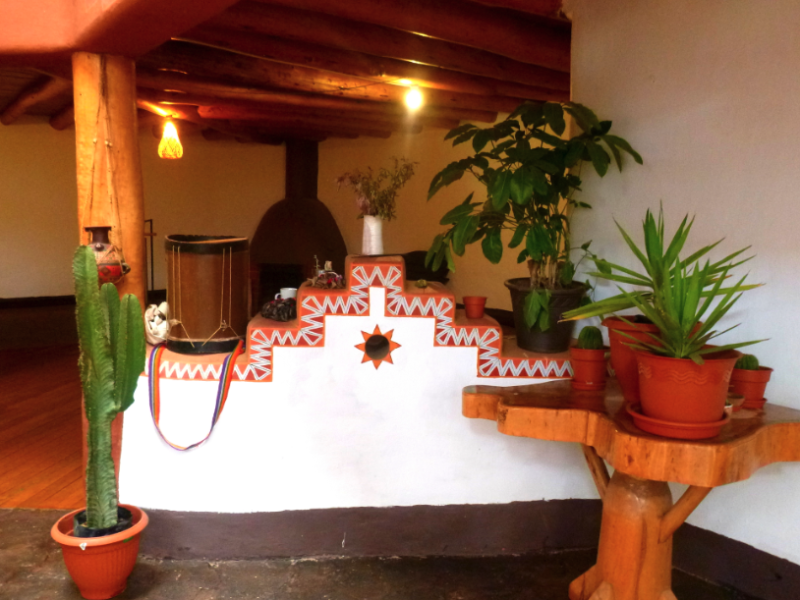
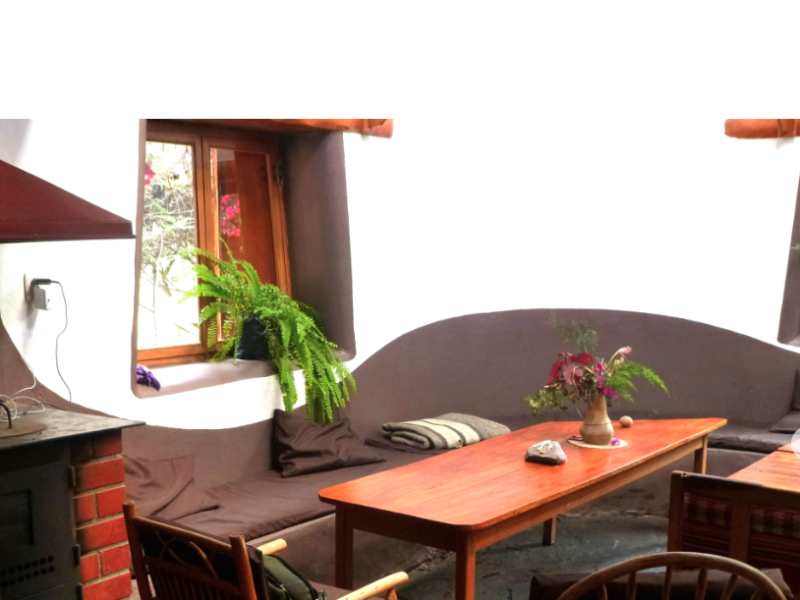
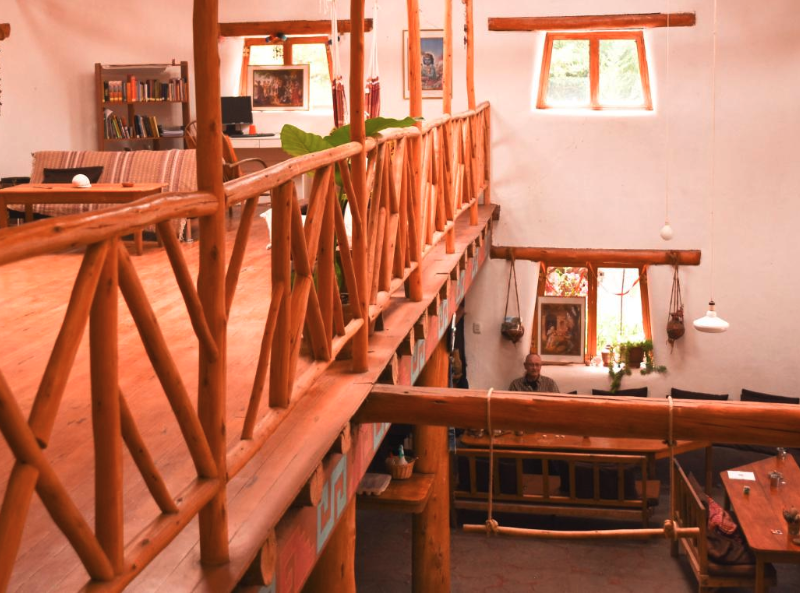
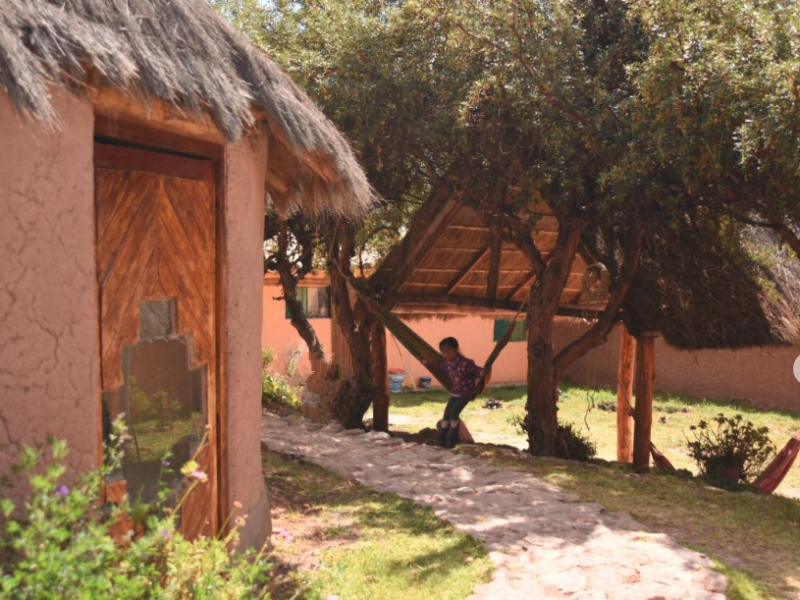
- Setting: Each site has different infrastructure. Choquepata includes “la casa grande” with 6 single rooms and 3 non-mixed double rooms, garden cottages, a small standalone “casita,” gardens, two temples, a Temazcal, and a recording studio. Huayllaquen has a central patio with rooms, two temples, a Temazcal, a library, and a medicinal plant laboratory. Huayopata includes a multi-purpose room, equipped kitchen, shared bedrooms, and a temple-Temazcal. Caballerayoc is the most rustic, with limited structures.
- Style: Intentional community living. Strict lacto-vegetarian diet, no alcohol or substances of any kind on the properties. Limited internet. Daily participation expected. The community describes their meal-preparation system as rotating teams.
Practical guidance: this is not a serviced retreat. Visitors participate in community life as a condition of their stay. The closest town for supplies near the Pisac sites is Pisac. Near the Quillabamba sites, the closest town is Santa María.
Should You Book?
This depends on what you’re looking for.
If you want a deep, extended residential immersion in a community whose framework blends Andean and Vaishnava traditions with sacred plant work, and you are comfortable with strict community rules, a fully vegetarian diet, and daily participation expectations, Willka Hampi offers something genuinely uncommon. Long-stay visitors who have written publicly about their experiences tended to describe transformation in terms of life direction rather than peak ceremony moments.
If you want a clear, time-bounded ayahuasca retreat with explicit boundaries between the program and your personal autonomy, this is not the place. Historical anonymous reviews raised concerns that have not been independently verified or corroborated elsewhere. Prospective visitors should weigh those alongside the community’s own published materials and the absence of any verified safety incidents.
Approach with clear expectations. If at all possible, speak directly with both current visitors and people who have previously stayed at the community.
The Team & Story
The community describes itself on its current website as a “spirit family” of approximately a dozen people from various countries living communally across their four sites. The medicine leader was Sri Gopal Das, who according to the community has passed away and now “guides from another plane.” Sri Gopal Das first met Don Bolívar, the Piaroa medicine leader in Venezuela, approximately 25 years ago, and received transmission of the Yopo lineage from him in ceremonies held both in Peru’s Sacred Valley and in Venezuela. According to the current site, Sri Gopal Das formed and authorized several community members to serve the Yopo medicine following his path.
The current medicine program is conducted in collaboration with Don Juan, Don Bolívar’s son, and three members of the Piaroa community in Venezuela. Funds generated by these programs are described as primarily destined to support the Piaroa clan in Venezuela, including the launch of a first intercultural Amazonian school.
The community’s broader stated mission goes beyond hosting medicine programs. Their published manifesto, originally written in April 2020 and reshared in 2026, positions Willka Hampi as part of a movement to build a “new society” through self-sufficient rural communities. The current website lists three program tracks: a Medicine Program, a Leaders Program, and a Practical Program.
No formal credentials, certifications, or training backgrounds are provided on public materials for any member of the medicine team. Qualifications are described in terms of years of plant work and lineage transmission.
Prep & Integration Tips
Per cached content from the community’s prior program listings on third-party platforms, visitors were asked to begin a diet free of meat, poultry, fish, eggs, alcohol, marijuana, and drugs at least 7 days before arrival. The community’s current Spanish-language website confirms a lacto-vegetarian community diet (no meat, fish, eggs, alcohol, onion, or garlic) at all of their sites. Programs are conducted at specific announced dates; the community’s current site lists 2026 program dates beginning in May. Day of arrival is typically Monday. Saturday introductory meetings at the Choquepata site (12:30pm shared lunch followed by a 2-hour introduction) are open to those who are already in the area and free of charge, with Temazcal participation available for an additional cost.
Integration is structured into the community’s stay model through optional accompaniment by community members and collective debriefing. Be aware that during your stay you will be expected to follow community rules including participation in daily life. After leaving, sleep, journal, talk to a trusted person or therapist familiar with psychedelic integration, and avoid major life decisions for at least a few weeks.
Pros & Cons
| Pros | Cons |
|---|---|
| Approximately 25 years of community operation at two primary sites | Two historical anonymous reviews on Aya Advisors raised concerns (now removed at source) |
| No verified safety incidents (theft, sexual misconduct, violent crime) identified | Voluntarily withdrawn from third-party platforms and social media |
| Real, traceable indigenous lineage relationship with the Piaroa of Venezuela | Strict published behavioral expectations may not suit all visitors |
| Long-form positive testimonials previously available from people who stayed for months | Most public information is available through the community’s own website |
| Multiple sacred plant medicines available through a collective rather than a solo facilitator | No credentialed medical or mental health professionals identified on the team |
| Funds from medicine programs reportedly directed to support Piaroa community projects | Pricing is not publicly displayed on the current website |
| Four sites with distinct functions and infrastructure | |
| Open Saturday introductory meetings allow low-commitment first contact |
Book Your Ceremony
Direct contact is the primary channel. Email willkahampi@gmail.com or phone +51 900 578 630. The community publishes 2026 program dates on willkahampi.com and welcomes inquiries about Leaders Program dates (typically two weeks, with arrival on Mondays). Saturday 12:30pm introductory lunches at the Choquepata site near Pisac are open to people already in the area. The community has voluntarily withdrawn from social media platforms; direct contact through their website is the established channel. Willka Hampi describes itself as a center of formation rather than a retreat center.