
Temple of the Way of Light
Researched by The Retreat Safety Project, a 501(c)(3) nonprofit, combining field research with compliance-grade due diligence. Meet the team →
Atmosphere
Features
Atmosphere and feature ratings above are based on Best Retreats research (October 2026). They will be updated if Temple of the Way of Light submits its own information.
Temple of the Way of Light: An In-Depth Review for Sessions in Iquitos, Peru
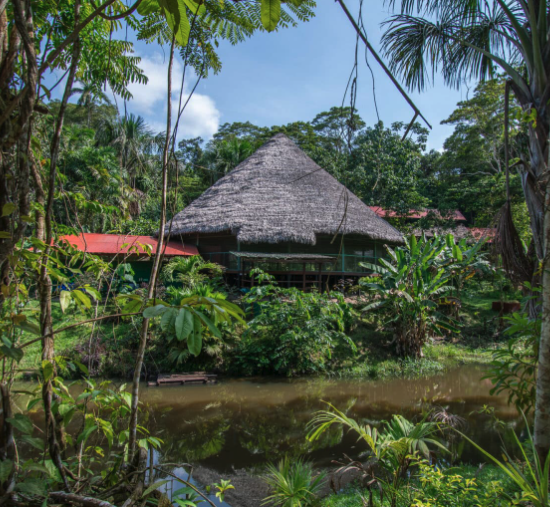
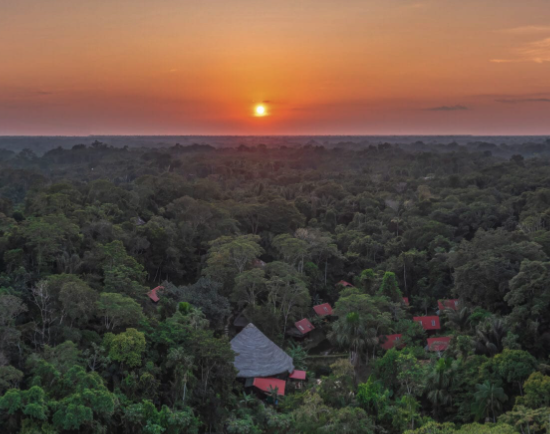
Temple of the Way of Light is one of the best-known ayahuasca centers in the Amazon: a Shipibo-led retreat on about 200 hectares of jungle outside Iquitos, founded in 2007 and running 8- and 12-day retreats for up to 23 guests at a time. Its reputation on booking and review platforms is close to perfect, with 4.97 from 125 reviews on Retreat Guru and 4.8 from 94 on AyaAdvisors, and we found no deaths, lawsuits or police action. The critical record is narrower but real: complaints about group size and refunds, a founder’s own account of a healer whose “sexually inappropriate” behavior led to the center closing in 2008, no on-site doctor, and no published code of conduct for healers. Several claims in our earlier profile were wrong or out of date, including its Retreat Guru rating and its “no 2025 dates” note.
🎯 At a Glance
- Locations: About 200 hectares of jungle outside Iquitos, Loreto, Peru, about 1 to 1.5 hours by river depending on water levels, according to its safety page. No exact address is published.
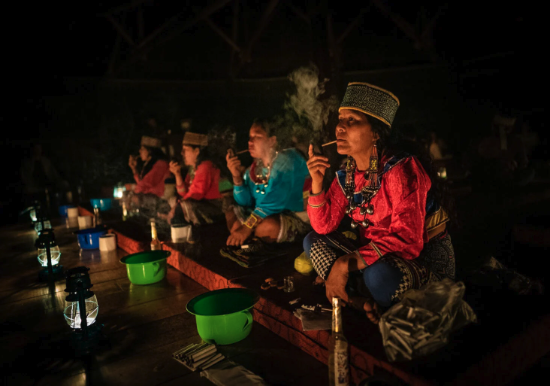
- Approach: Traditional Shipibo ceremonies led by four healers per retreat, two women and two men, supported by three Western facilitators and two assistants, according to its FAQ. Retreats include six ayahuasca ceremonies (four on the 8-day), floral and vapor baths, plant remedies, energetic massages, healer consultations, daily Yin Yoga and a three-month online integration program.
- Suitable For: People who want an established, highly structured Shipibo retreat with long preparation, private accommodation and strong integration support, and who are comfortable in a group of around 20. Less suited to anyone wanting a small private circle, on-site medical staff or a short stay.
- Costs: $4,440 for the 12-day “Living in Alignment” retreat, $5,700 with a five-day integration extension, $5,500 for the 12-day healthcare practitioners’ retreat and $3,330 for the 8-day retreat, per the FAQ. A $100 application deposit, then 50% within 24 hours of approval. Cancellation fees run from $300 to $700, with no refund inside two weeks. Our earlier profile listed “4,400” with no currency.
- Overall Assessment: A mature, well-documented operation with detailed screening, a published evacuation route and an outstanding guest record, offset by no on-site doctor or nurse, no published healer conduct or sexual-abuse policy, large groups, strict refunds and safety-record claims that are self-reported. Directory evaluation: B.
💬 What Guests Are Saying
Here is how the Temple rates across review platforms in October 2026:
| Platform | Rating | Reviews | Notes |
|---|---|---|---|
| Retreat Guru | 4.97 / 5 | 125 | All visible reviews five stars |
| AyaAdvisors | 4.8 / 5 | 94 | 85 five-star, 4 one-star; the center replies to criticism |
| Tripadvisor, Google, Trustpilot, BookRetreats, Facebook | Not found | n/a | No business listings or readable ratings surfaced |
The positive picture. Reviewers on both platforms describe facilitators who made them feel safe, healers whose icaros (ceremonial songs) they found powerful, a program that stays true to Shipibo tradition, attentive staff, good food and an integration program that continues after they go home. One AyaAdvisors reviewer called the facility “basic” but fine. Our earlier profile also cited a 2017 Reddit post calling the 12-day retreat “profoundly healing” and a Quora post describing seven ceremonies (both unverified); the center’s materials list six ceremonies.
The critical reviews. AyaAdvisors carries a one-star review saying the group was about 30 people rather than the 12 advertised and that the center refused a refund after the reviewer left early, calling it “unethical.” The center’s public reply says ceremonies run in groups of 12 within a retreat of 24, that it does not overbook, and that it offered a partial refund. Our earlier profile dated that review to 2015, which we could not confirm. It also cited a 2022 Reddit post alleging that a shaman offered paid private ceremonies that facilitators had advised against, and guest comments about village and construction noise; those claims remain unverified.
Who is writing the reviews. Both platforms show the polarized pattern typical of ayahuasca centers: on AyaAdvisors, 92% of reviews are five stars and 4% one star, with almost nothing between. Retreat Guru gives the Temple a “Staff Pick” placement. A guide titled “Ethical Ayahuasca Tourism” appears on both the Temple’s site and Psychedelic Times, which suggests company content running on a media site. We found no affiliate program or review incentives. If you have attended, we encourage you to share your experience through our submission form.
🚩 Incident Report
We searched review platforms, Peruvian and English-language news and legal sources for reports involving Temple of the Way of Light and its named staff.
- Deaths and serious injuries: None found. The center says on its safety page that “no serious issues (physically or psychologically) have ever arisen”; that is a self-reported claim.
- Healer conduct, 2007 to 2008: In a 2016 Psychedelic Times interview, founder Matthew Watherston described the center’s first healer, a mestizo, as manipulative and “sexually inappropriate,” and said “increasingly dark situations” with the male shamans led him to close the Temple in October 2008. It reopened in January 2009 with Shipibo healers, mostly women at first. No specific incident or legal action is described.
- Sexual misconduct by current healers or staff: No allegations found.
- Group size and refunds (unverified): One AyaAdvisors review alleges a group far larger than advertised and a refused refund; the center disputes it publicly.
- Paid private ceremonies (unverified): A 2022 Reddit post cited in our earlier profile alleges that a shaman offered paid private ceremonies that facilitators had advised against.
- Theft, crime, legal action: None found. The center says it has had no intrusions or violent incidents since opening.
If you have experienced or witnessed an incident at the Temple, please report it confidentially.
🔍 Critical Notes
No published conduct policy for healers. Given the founder’s own account of sexual misconduct by an early healer, it is notable that the Temple’s FAQ, safety page and team page publish no healer code of conduct or sexual-abuse policy. Its retreat agreement covers guest behavior only. The center’s move to Shipibo healers, initially mostly women, and its pairing of two female and two male healers per retreat are the main safeguards it describes. Ask how complaints about a healer are handled. For background, see Chacruna’s community guide on sexual abuse awareness; we did not find evidence that the Temple has adopted it.
Self-reported safety record and scale. The center says it has “the most rigorous medical screening and safety protocols in the Amazon,” that it is “trusted by 10,000+ guests,” and that “not a single guest has experienced a serious heart issue during retreat.” It also says it holds all required Peruvian licenses, is registered with the Ministry of Tourism as an eco-lodge and returns “100% of our profit” to the Amazon. We did not verify these claims against any registry. A 2015 to 2019 study with ICEERS and the Beckley Foundation is described on its homepage.
Nonprofit ties. The Chaikuni Institute, founded by Watherston in 2012 per its team page, is described as the Temple’s sister organization, and the Temple says its revenue funds Chaikuni’s work. Chaikuni’s legal status is not stated. The Temple refers guests to the Shipibo Rao Diea Center near Pucallpa for 14-day dietas at $2,000 but says it does not run them.
Inconsistencies. Retreat Guru advertises “thirteen Shipibo Onanyabo (master healers)”; the team page lists nine healers and two herbalists. Retreat Guru’s amenities list shows air conditioning, Wi-Fi, a pool and a spa, while its own text says “No electricity. No wifi.” The Temple’s team page lists Debbie Rivett as a coordinator and senior facilitator, and Chaikuni’s calls her the Temple’s general manager.
Corrections to our earlier profile. Retreat Guru rates the Temple 4.97 from 125 reviews, not 3/5. The 12-day retreat costs $4,440. Retreats are scheduled through October 2026, so our “no 2025 dates” note was out of date. The center now gives the trip from Iquitos as about 1 to 1.5 hours, not two.
🆘 Screening & Mental Health Risks
The Temple screens with a medical questionnaire developed with ICEERS, reviewed with an off-site doctor and psychologist, with interviews or video calls where needed, and asks applicants not to book flights until approved, according to its safety page and FAQ. It lists SSRIs and MAOIs as contraindicated, says medical staff decide whether a safe taper is possible, excludes serious heart conditions and tells guests not to stop medication without their prescriber. It does not state a washout period. There is no on-site doctor or nurse; two medical advisors are listed, both also trainee facilitators, and many staff have Red Cross first-aid training, with an AED and blood pressure monitor on site. Evacuation is by hammock to the port of Santa Clara, where an ambulance arrives in 30 to 45 minutes, with a contract with a private clinic in Iquitos. ICEERS notes that combining ayahuasca’s MAOI component with SSRIs or other serotonergic medications is contraindicated, and that ayahuasca is contraindicated for people prone to psychosis. Erowid warns of extreme, possibly fatal reactions with some prescription drugs, and DanceSafe notes a higher risk of psychological distress for people with a personal or family history of mood or psychotic disorders. Ask for the washout period that applies to your medication. Never stop a psychiatric medication to qualify for a retreat without your prescriber’s guidance.
🧪 Brew Substance
The Temple serves ayahuasca made from the “cielo” variety of the Banisteriopsis caapi vine and chacruna, with no other admixtures, sourced from its own cultivation or from the Shipibo Rao Diea Center, according to its materials. As Erowid explains, the vine’s MAO inhibitors make the DMT in chacruna orally active. Healers use mapacho (jungle tobacco); it is optional for guests. Floral and vapor baths and plant remedies are part of each retreat. A pre-retreat dieta starts at least two weeks before arrival, and parts continue for at least a month after. We found no kambo or rapé in the program.
📍 Location, Setting & Style
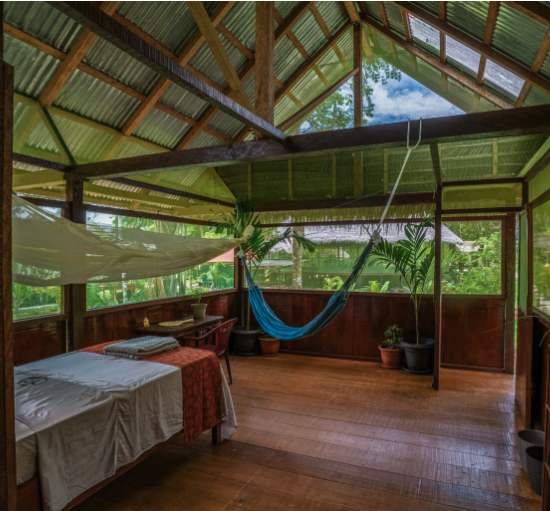
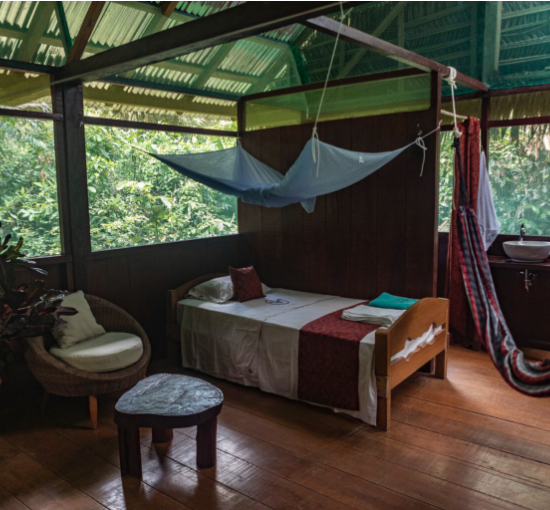
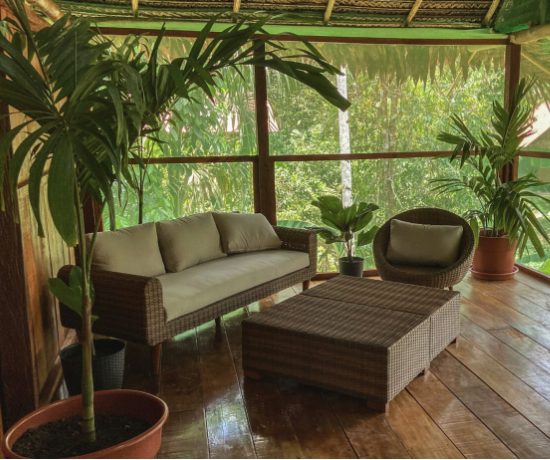
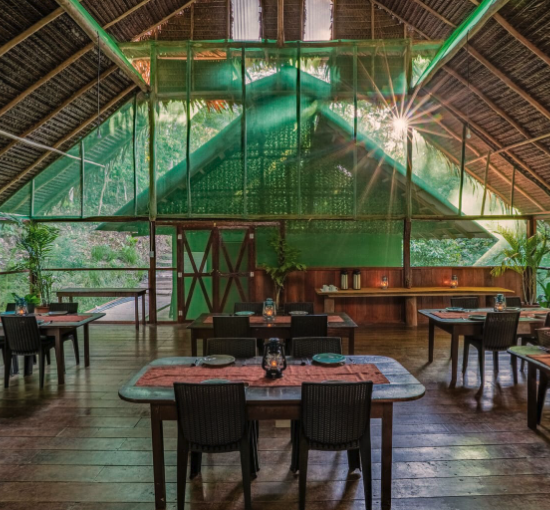
- Peru: A 200-hectare jungle property outside Iquitos, reached by river. Each guest gets a private tambo (hut) with a bed, hammock, desk, toilet and sink; sharing is possible at the same price. There is no electricity or Wi-Fi in guest areas, per Retreat Guru’s own description. Hot, humid lowland rainforest. Jungle Traditional.
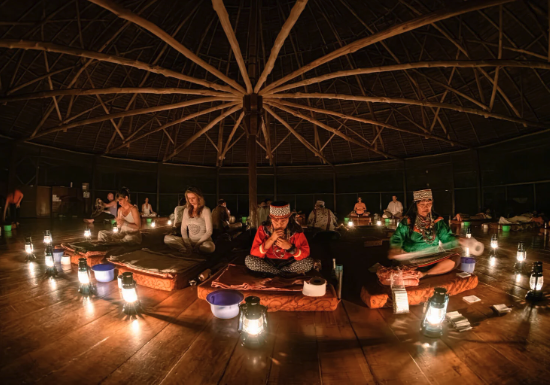
- Style: Large, structured and tradition-led. Expect ceremonies in a maloca (ceremony house) with four Shipibo healers, daily Yin Yoga, baths and consultations, three dieta meals a day and a schedule run by more than 50 local staff, according to the FAQ. Retreats run in English.
Practical guidance: Fly to Iquitos via Lima and arrive a day early. The group is collected in central Iquitos on the first morning and returned by about 2pm on the last day; airport transfers and hotels are not included.
Should You Book?
The Temple may suit you if you want an established Shipibo retreat with long preparation, detailed screening, private huts and an integration program that lasts three months, and you accept a group of up to 23 and strict refund rules. Its guest record is among the strongest in this directory. The trade-offs: no on-site doctor, no published policy on healer conduct despite the founder’s own account of past misconduct, safety and licensing claims that are self-reported, and limited independent coverage beyond booking platforms. If you go, ask how complaints about healers are handled, confirm your medication washout in writing, and read our guide to verifying retreat facilitators.
The Team & Story
Matthew Watherston came to the Amazon in January 2007 and built the Temple around a mestizo healer before closing it in October 2008 and reopening with Shipibo healers in January 2009, by his own account in Psychedelic Times. His wife, Klara Soukalova, is listed as co-founder. The current team page lists Jose Castaneda as administrative director, Sascha Alexander Thier as operations director and facilitator, Allen Banick for bookings and communications, Levi Estela Rodriguez as operations manager and Debbie Rivett as coordinator and senior facilitator. It names male healers Jorge Vasquez Barbaran, José Lopéz Sanchez and Urias Garcia Junta; female healers including Laura Lopez Sanchez, Teresa Rojas Toesta and Olinda Vasquez Amaringo; and two herbalists. Our earlier profile described “many thousands of guests” and an “exemplary track record of safety,” both from the center’s own materials. We did not independently verify anyone’s credentials.
Prep & Integration Tips
Before you go: Start the dieta at least two weeks ahead as instructed, complete the medical questionnaire fully, and discuss any medication taper with your own doctor well before travel. Pack for heat, rain and insects, and bring a headlamp. After you return: Use the three-month online integration program and community, follow the post-retreat dieta, and arrange support from a qualified therapist at home. Our guide on how to research ayahuasca incidents can help you check any center.
Pros & Cons
| Pros | Cons |
|---|---|
| Retreat Guru 4.97 (125) and AyaAdvisors 4.8 (94) | No on-site doctor or nurse |
| Detailed screening developed with ICEERS; SSRIs and MAOIs listed | No published healer conduct or sexual-abuse policy |
| Published evacuation route and clinic contract | Groups of up to 23 guests |
| Private tambos; three-month integration program | No refunds inside two weeks or for leaving early |
| Operating since 2007, with balanced male and female healers | Safety, licensing and profit claims are self-reported |
Book Your Ceremony
Applications are made through templeofthewayoflight.org or its Retreat Guru pages, starting with a $100 application deposit that is refunded if you are not approved. The 12-day retreat costs $4,440. Before paying the balance, confirm in writing the medication washout that applies to you, how emergencies are handled, how complaints about healers are handled, and the cancellation terms. Best Retreats does not take bookings; learn more about our mission.
Last reviewed October 2026.
This article is for informational purposes only and is not medical advice. Consult a qualified medical professional.