
Caya Shobo Ayahuasca Healing Center
Atmosphere
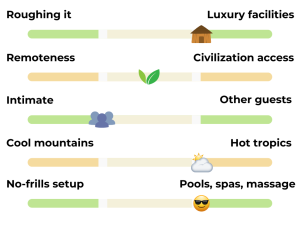
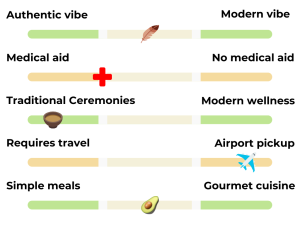
Features
Caya Shobo Ayahuasca Healing Center: An In-Depth Review for Sessions in Iquitos, Peru
Caya Shobo is a small, Shipibo-tradition ayahuasca and master plant dieta center located on an 8-hectare property roughly 20 to 45 minutes from Iquitos airport. It was founded in 2016 by a group of four friends with a combined background in Shipibo plant medicine work, runs a single program format (a 12-day retreat with eight ayahuasca ceremonies and a personalized master plant dieta), caps groups at 12 guests, and has been formally endorsed by Coshikox, the Shipibo Konibo Xetebo Tribal Council, as one of the few Western-operated centers recognized for the authenticity of its maestros and adherence to the traditional Shipibo medicine path. The center has built up a strong reputation across AyaAdvisors, Tripadvisor, and Retreat Guru, where it currently ranks #4 of 85 specialty lodging options in Iquitos. There is also one detailed and severe negative review on AyaAdvisors that needs to be presented carefully alongside the center’s documented response, because the credibility picture is more complicated than the old version of this listing made it out to be.
🎯 At a Glance
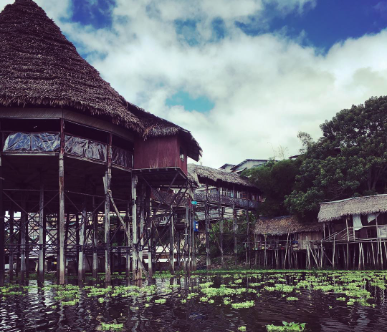
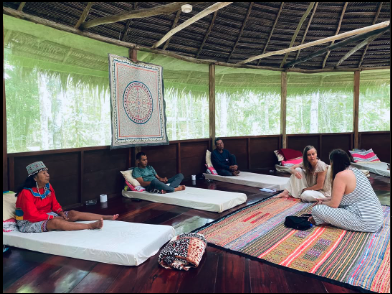
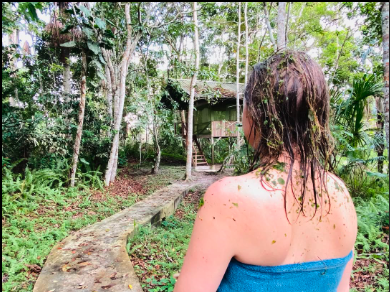
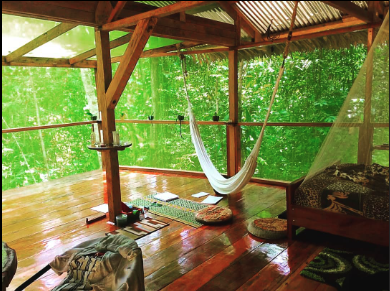
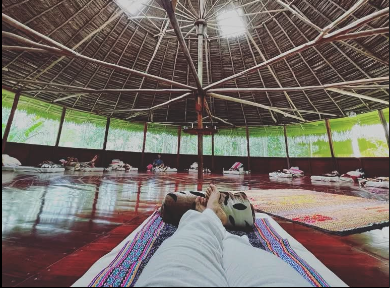
- Locations: A single 8-hectare property in the Amazon rainforest about 20 to 45 minutes by road from Iquitos airport, depending on which Caya Shobo source you read. The property includes a large ceremonial maloka, an open-plan dining hall, three accommodation types (standard rooms with private bathrooms, hardwood jungle tambos with shared bathrooms, and deluxe tambos with private bathrooms), and well-tended gardens with ponds and Amazonian wildlife.
- Approach: Strict Shipibo traditional medicine model centered on personalized master plant dieta (Pinon Blanco, Bobinsana, Albahaca, Ajo Sacha, Suelda con Suelda, Marosa, and others) combined with ayahuasca ceremonies. The center deliberately does not offer shorter retreats and turned this into a published policy: their stated view is that anything under 12 days is too short to deliver real Shipibo healing and is disruptive to other guests on intensive dietas. Eight ayahuasca ceremonies over 12 days, group size capped at 12.
- Suitable For: People specifically seeking authentic Shipibo lineage and master plant dieta work, who can commit to a full 12-day program, who want a small-group container with significant individual attention, and who are comfortable with a structured, traditionally-grounded approach that prioritizes the medicine over comfort or hospitality theater. Less suited to people looking for a short introductory retreat, those wanting a multi-medicine menu (ayahuasca plus bufo plus kambo plus peyote), or those who need a more Western-style program structure.
- Costs: Around $2,450 USD for a standard room with private bathroom, $2,650 for a jungle tambo with shared bathroom, all-inclusive of ceremonies, plant dieta treatments, accommodation, meals, and airport transfers. Pricing has been consistent across multiple recent retreat listings.
- Overall Assessment: A well-established, traditionally-grounded Shipibo medicine center with rare Coshikox endorsement, high review volume, mandatory medical screening, and no documented safety incidents. There is a notable detailed negative review on AyaAdvisors alleging serious problems, which the center has responded to in detail and which has credibility issues worth flagging. Directory evaluation: B (notable for the Coshikox endorsement, the master plant dieta specialization, and the screening rigor; flag for one severe negative review whose credibility is contested).
💬 What Guests Are Saying
The volume of positive reviews on Caya Shobo is substantial and consistent across platforms going back to 2016. On Tripadvisor the center is ranked #4 of 85 specialty lodging in Iquitos with around 77 reviews and a 4-star average. On Retreat Guru it carries a 5-star average across 37+ reviews. On AyaAdvisors it has a long-running thread of mostly positive testimonials. Returning guests are common, with several reviewers reporting two, three, or even five visits over multiple years. A teacher of shamanic programs publicly states she has been bringing graduates of her programs to Caya Shobo for nine years.
The themes that come up repeatedly across positive reviews: the Shipibo maestros are described as the real article rather than performative, the master plant dieta personalization is treated as a meaningful differentiator from ayahuasca-only centers, the Western facilitators (Becky, Miguel, Iryna, Charlie, Angela, Julien, Katia, Franzi, and others over the years) are described as knowledgeable and present, the property is well-maintained with capable on-site staff, and the food is honest and well-prepared within the constraints of the strict ayahuasca and dieta diet. Several reviews note that the center is intentionally not a luxury hotel and that the rooms are basic in the jungle-appropriate sense, but clean and comfortable. Solo female travelers consistently report feeling safe.
The negative reviews require careful handling because the picture is contested. There are essentially two negative voices on the public record, both worth describing in full:
The first is a long, detailed AyaAdvisors review alleging cult-like structures, harassment, misogyny, brujeria, and “danger of sexual abuse” at Caya Shobo. The reviewer describes being asked to share their reasons for attending in front of the team and then being met with what they characterize as facetious questioning, malicious smirks, and snide remarks until they cried. They describe the overall vibe as control-through-fear and the integration talks as full of doctrine, including a claim that facilitators told guests to stay away from other humans after the retreat to preserve their post-ayahuasca state, and that women on their period were treated as energetic hazards. Caya Shobo’s owners responded in detail and noted three things that need to be on the public record alongside the original review. First, the same reviewer posted three negative reviews on the same day attacking three separate well-regarded Shipibo healing centers (Caya Shobo, Nihue Rao, and Santuario Healing) and has not posted a positive review of any Amazonian healing center anywhere. Second, the reviewer referenced “swine screaming all day long” at a neighboring property, but the center stated there had been no pigs at any neighboring property for at least 18 months prior to the review. Third, the center addressed the “shamans were dismissive and arrogant” framing by noting that the maestros are native Shipibo speakers from a culture with significantly different conversational norms than Western expectations, and that translation and cultural difference can create awkward moments that read as dismissiveness when they aren’t intended that way. None of this proves the original review is false. It does materially affect how a careful reader should weigh it. Best Retreats presents both the allegation and the response and lets readers draw their own conclusions.
The second negative is a Tripadvisor review consisting essentially of the assertion that the staff are difficult to deal with, the rooms and food are bad, the ayahuasca had no effect, and “all the reviews saying how good it is are fake.” The same review explicitly directs readers to a competing center, Nihue Rao, by name. The reviewer also alleges that Caya Shobo staff phoned the next retreat the reviewer had booked to try to prevent them from attending. The center responded publicly. This is the kind of review pattern (named competitor recommendation, sweeping fake-review accusation, no specific verifiable details) that often signals either a competitor-influenced post or a severely dissatisfied guest with limited credibility, and it should be weighed accordingly.
The honest summary is that Caya Shobo has a deep, multi-year, multi-platform positive track record and two contested negative reviews, one severe and one dismissive. We encourage sharing your own experience through our submission form so this picture stays current.
🚩 Incident Report
Following a thorough review of online sources including Reddit subreddits like r/Ayahuasca, r/Psychonaut, and r/RationalPsychonaut, Quora threads, the NewAgeFraud.org forum, Facebook groups including Psychedelic Healing and Ayahuasca Experiences, news outlets, retreat discussion boards, ICEERS safety reports, the ICEERS list of deaths misattributed to ayahuasca, court records, and TripAdvisor and AyaAdvisors review threads, no confirmed cases of guest death, sexual misconduct, criminal activity, or ICEERS-investigated incidents directly tied to a Caya Shobo ceremony have been documented across the center’s nine-year operating history.
- Theft: No verified accounts of stolen guest belongings or in-camp theft surfaced in forums, ICEERS data, news searches, or review threads.
- Sexual Misconduct: No specific allegations, complaints, legal actions, or court filings involving Caya Shobo shamans, facilitators, or staff in connection with ceremony surfaced in any of the sources reviewed. The 2025 AyaAdvisors review describes a generalized “danger of sexual abuse” framing in its warning language, but the same review does not contain any specific allegation of sexual misconduct by any named person, no incident is described, and the credibility considerations addressed in the Guests Say section above apply.
- Crime: No arrests, police actions, or violent incidents linked to Caya Shobo ceremonies appear in Google News, Peruvian media, retreat forums, or ICEERS documentation.
The 2025 AyaAdvisors review’s broader allegations of cult-like structure, harassment, brujeria, and misogyny are on the public record and have been addressed in detail above. Caya Shobo’s response is also on the public record. No third-party investigation, news report, or formal complaint has corroborated those allegations as of the date of this listing. Update as of April 2026: No new safety incidents identified.
🔍 Critical Notes
Caya Shobo presents one of the more structurally credible setups in the Iquitos region. The Coshikox endorsement is meaningful: Coshikox is the recognized political body of the Shipibo Konibo Xetebo people, and very few Western-run ayahuasca centers have received its formal recognition for adherence to traditional Shipibo healing practice. The center’s commitment to a strict 12-day program built around master plant dieta rather than just ayahuasca is also unusual in the market and reflects a more traditional understanding of how Shipibo healing actually works. Most centers in the Iquitos area run shorter ayahuasca-only retreats and do not engage with master plant dieta in any serious way. Caya Shobo’s deliberate refusal to accommodate shorter stays, even when prospective guests ask for them, is a meaningful signal about what the center is trying to do.
The Shipibo maestros are real people with traceable village origins, family lineages, and decades of practice. Maestro Arturo Izquierdo Valles was born in a small Shipibo community downriver from Atalaya, started his first plant dieta around age 8, and now carries over 25 years of experience. Maestro Walter Martinez was born in Nuevo Loreto in the Imiria National Forest, started his dieta path at 15, and is now in his 60s. Maestra Lucinda Mahua Campos is the eldest daughter of the renowned Shipibo maestro Pascual Mahua Ochavano from the village of Paoyhan north of Pucallpa. Maestra Dominga Valles, who is Maestro Arturo’s aunt, has over 40 years of experience and specialized knowledge of higher-altitude Andean plant medicines. The team also includes Maestra Maricela Rios Inuma and her husband Maestro Francisco (“Pancho”), Maestro Rafael (“Kesin Ronin”), and Maestra Margarita. These are not invented credentials. They are people with verifiable communities, families, and specific Shipibo-language names, and the center’s claim of “175 years combined facilitator experience with Shipibo shamanism” is plausible against this team profile.
The screening process is also more rigorous than the regional norm. Caya Shobo’s published policy is that confirmation of a stay is conditional on review of the guest’s medical situation and may require a preliminary psychological evaluation or written doctor’s approval. The center explicitly states that more serious cases may not be accepted. This is the right direction for a plant medicine operation working with vulnerable populations, and most Iquitos-area centers don’t go this far on intake.
The harder questions are about scale and recourse. With a single small center, group sizes capped at 12, and a strict 12-day-only format, Caya Shobo cannot serve many guests per year, which keeps the model intimate but also means the operation depends heavily on the consistent quality of a small Western facilitation team that has been described in older reviews as warm and present and in the contested 2025 review as condescending and doctrinal. Anyone considering booking should weigh that single negative review honestly, contact the center directly, ask about facilitator turnover and the current lead team, and read the response to the AyaAdvisors review in full before making a decision. Peru’s regulatory framework for ayahuasca centers is essentially nonexistent at the operational level, so directories like this one and prospective guests are the only meaningful oversight.
🆘 Screening & Mental Health Risks
Caya Shobo’s published policy makes screening a real gate rather than a formality. Prospective guests are required to submit a detailed health form covering medical history, current medications, mental health history, and personal goals. The center reviews the form before confirming a booking and reserves the right to require a preliminary psychological evaluation or a written doctor’s approval before accepting a guest. The published policy explicitly states that more serious healing cases may require a unique treatment plan or in some cases may not be able to be treated at the center at all. This is meaningfully more conservative than the regional norm and reflects the center’s claim that its model is healing-oriented rather than tourism-oriented.
Ayahuasca and master plant dieta both carry real psychological risk. The Global Ayahuasca Survey, an academic study of more than 10,000 ayahuasca users, found that around 56 percent of participants reported some form of acute or short-term mental health adverse effect (anxiety, intrusive thoughts, sleep disruption, dissociation) in the weeks following ceremony, with about 12 percent seeking professional support and a smaller subset reporting persistent effects that interfered with daily life. Most participants frame these as part of a positive growth process, but the rate is non-trivial. People with personal or family history of psychotic-spectrum conditions, bipolar disorder, severe trauma, dissociative disorders, or who are taking SSRIs, SNRIs, MAOIs, lithium, tramadol, stimulants, or any of several other contraindicated medications should be especially cautious. Caya Shobo’s intake is supposed to catch these, and based on published policy it goes further than most. But no intake process is foolproof. Anyone considering this retreat or any other should consult a healthcare provider familiar with both their personal medical history and the pharmacology of ayahuasca before booking, not after arriving.
🧪 Brew Substance
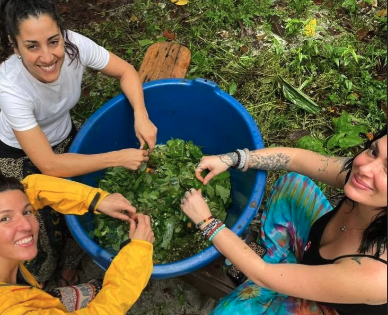
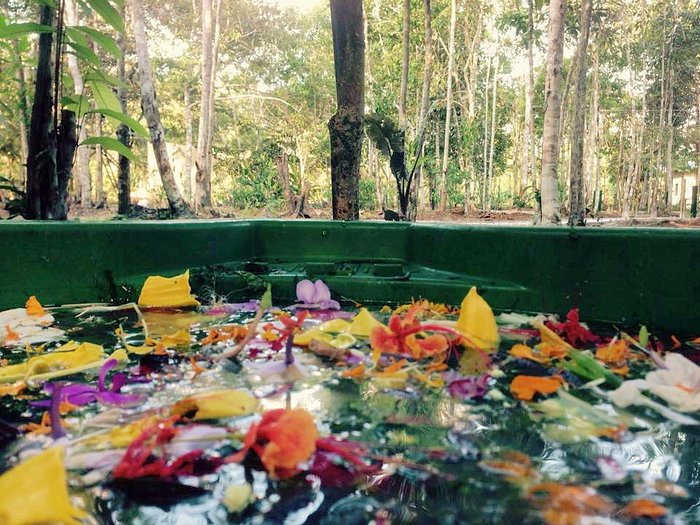
Caya Shobo’s ayahuasca is prepared in the traditional Shipibo style by the maestros themselves from Banisteriopsis caapi (the MAOI-containing vine) and Psychotria viridis (chacruna, the DMT-containing leaf). The center also incorporates personalized master plant dieta, where each guest is matched with one or more master teacher plants (Pinon Blanco, Bobinsana, Albahaca, Ajo Sacha, Suelda con Suelda, Marosa, and others) selected by the maestros based on the guest’s intentions and healing needs. This is real ayahuasca prepared in a real Shipibo lineage, not the mimosa-and-Syrian-rue substitute that some lower-tier operations pass off as the same thing. Wilder, the center’s medicine maker and pharmacist, has been mentioned by name in multiple reviews as the person responsible for preparing the brew and the individual plant medicines for guests on dieta, as well as the floral plant baths used in the Shipibo cleansing tradition.
📍 Location, Setting & Style
- Peru: Iquitos sits in the Loreto region of the Peruvian Amazon and is the largest city in the world with no road access, reachable only by air or boat. It has been the unofficial capital of ayahuasca tourism since the 1990s, with dozens of retreats operating in and around it.
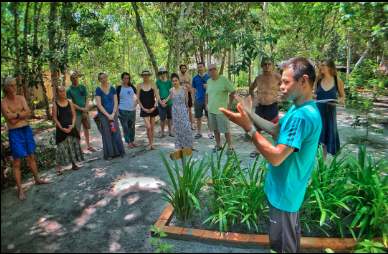
- Setting: Caya Shobo is on an 8-hectare property in the rainforest about 20 to 45 minutes by road from Iquitos airport, depending on traffic and which page of the center’s site you read. The property is built around an open-style ceremonial maloka, an open-plan dining hall with high roof and chill area, hand-crafted entrance gates, and a series of ponds and gardens planted with medicinal flowers. Three accommodation types: standard rooms (private bathroom, simple adobe or concrete construction designed for airflow in the jungle heat), hardwood jungle tambos (shared bathroom, more immersive forest setting), and deluxe tambos (private bathroom, the higher comfort option).
- Style: Strict 12-day program structure with eight ayahuasca ceremonies and personalized plant dieta. No multi-medicine menu, no add-on optional ceremonies of bufo or kambo, no shorter stays. Daily structure includes ceremony nights, integration talks, plant therapies, flower baths, and rest. Wi-Fi is available in the dining hall but not in rooms. Translation support is available in English, Spanish, and sometimes Russian, German, and French depending on the facilitator team for a given retreat.
Practical guidance: Fly into Lima, then connect to Iquitos via LATAM, Sky, or one of the other domestic carriers (about 90 minutes flight time). Caya Shobo provides airport transfers as part of the package. A security deposit is required on arrival, either via credit card or $300 USD cash refunded at the end of the stay. Pre-arrival health intake is mandatory and may require additional medical or psychological clearance. Book several months in advance for popular dates.
Should You Book?
Caya Shobo is a defensible choice for someone who wants real Shipibo lineage, who specifically values the master plant dieta tradition over an ayahuasca-only experience, who can commit to a full 12-day program, who wants a small group (no more than 12) and personal attention from named facilitators rather than rotating Western staff, and who appreciates a center that is honest about the fact that it is healing-oriented rather than hospitality-oriented. The Coshikox endorsement is the strongest external signal of authenticity available in this market, and very few centers have it.
It is a less defensible choice for people who want a short introductory ayahuasca experience (the center does not accommodate stays under 12 days as a matter of published policy), for people seeking the multi-medicine menu approach (this is an ayahuasca and master plant dieta center, not a bufo and kambo and peyote and ayahuasca buffet), for people prioritizing luxury accommodations, or for people who find the contested 2025 AyaAdvisors review serious enough to override the center’s much larger positive track record. If that review weighs heavily on you, the responsible thing is to read both the review and the center’s response in full at AyaAdvisors and decide for yourself rather than relying on a single line of summary in any directory, including this one.
The Team & Story
Caya Shobo was founded in 2016 by four friends with a combined 45 years of Shipibo plant medicine experience at the time of opening, who had spent the years from around 2009 onward studying Master Plant Dieta with Shipibo maestros at various other Peruvian healing centers before deciding to open their own. Two of the original co-founders are publicly named on the center’s site. Becky has been on the Shipibo plant medicine path since 2008, has dieted multiple master plants under high-level Shipibo Onányas, and now works as a teacher and integration coach within the center’s community. Miguel, originally from Chile, started working with Amazonian plant medicines in 1997, initially with maestros in the Quechua-Lamista and Mestizo traditions including Don Jose Campos, Ronnie Rengifo, and Don Solon Tello Lozano, and shifted his focus to the Shipibo tradition in 2009 after his own health issues led him there. The other two original co-founders are not publicly named on the site I reviewed.
The Shipibo maestro team includes Maestro Arturo Izquierdo Valles (born in a small village downriver from Atalaya, started his medicine path before age 10 under his parents who are both Onánya healers, was holding ceremonies for university professors in Lima by age 18 while studying Teaching, now over 25 years of experience), Maestro Walter Martinez (from Nuevo Loreto in the Imiria National Forest, opened his first dieta at age 15, now in his 60s, lives near Iquitos with his wife and five children), Maestra Lucinda Mahua Campos (eldest daughter of the renowned Shipibo maestro Pascual Mahua Ochavano from the village of Paoyhan), Maestra Dominga Valles (over 40 years of experience, specializes in Andean master plants, and is Arturo’s aunt), Maestra Maricela Rios Inuma and her husband Maestro Francisco “Pancho” (works in the more traditional Shirobehua icaro style), Maestro Rafael “Kesin Ronin” (33, lives near Tamshiyacu in Loreto with three children), and Maestra Margarita. Western facilitators have included Becky, Miguel, Iryna, Charlie, Angela, Julien, Katia, Franzi, Flor, Arin, and others over the years, and Wilder serves as the center’s medicine maker and pharmacist.
Prep & Integration Tips
Begin the dietary protocol at least two weeks before arrival: no aged cheeses, fermented foods, alcohol, recreational drugs, red meat, pork, processed foods, citrus, excess salt or sugar, caffeine, or sex. No SSRIs, MAOIs, or any medication on the ayahuasca contraindication list (verify with your prescriber, not just with the retreat). Sleep more than usual. Hydrate. Bring lightweight long-sleeved clothing, insect repellent, a headlamp, an eye mask, a refillable water bottle, a notebook, and any prescription medications you have been cleared to keep taking. Master plant dieta in the Shipibo tradition has its own additional dietary and behavioral restrictions during and after the retreat that the maestros and facilitators will explain in detail on arrival. Caya Shobo offers ongoing group integration sessions on Zoom, free for recent retreat guests and $35 for others. Remote at-home dieta treatments and continued guidance are also available. Real integration is on you. Sleep, journal, talk to a trusted person or therapist familiar with psychedelic integration, and avoid making major life decisions for at least a few weeks. The come-down from a 12-day Shipibo dieta retreat can be a vulnerable period.
Pros & Cons
| Pros | Cons |
|---|---|
| Endorsed by Coshikox, the Shipibo Konibo Xetebo Tribal Council, one of the few Western-run centers to receive this recognition | One detailed 2025 AyaAdvisors review alleging cult-like behavior, misogyny, and harassment, with the credibility caveats noted above |
| Real multigenerational Shipibo lineage shamans with verifiable village origins and 25 to 40+ years of practice each | Strict 12-day-only format means no shorter introductory option for newcomers |
| Mandatory health intake plus optional psychological evaluation and doctor’s approval for higher-risk guests | Single small property and small facilitator team means consistent quality depends heavily on a small group of people |
| Real ayahuasca brewed in traditional Shipibo style by the maestros themselves, with personalized master plant dieta | Single-program model offers no flexibility for guests who want a different format |
| Group sizes capped at 12 with high facilitator-to-guest ratio | One competitor-mentioning Tripadvisor negative claiming the positive reviews are fake |
| Nine years of operating history with no documented safety incidents, deaths, or ICEERS-investigated cases | Pricing is not the cheapest in the Iquitos market, though comparable for the lineage and screening offered |
Book Your Ceremony
Bookings are handled through Caya Shobo’s website at cayashobo.com, with a detailed health form required as part of the application and possible additional medical or psychological clearance before confirmation. The standard 12-day Ayahuasca Retreat with Plant Dieta runs $2,450 USD for a standard private room with private bathroom, $2,650 USD for a hardwood jungle tambo with shared bathroom, with deluxe tambo options at higher pricing. All pricing includes ceremonies, master plant dieta treatments, accommodation, meals, laundry, and airport transfers from Iquitos. A $300 USD security deposit (or credit card hold) is required on arrival. Subscribe to the center’s mailing list for retreat dates and information sessions on Zoom.