
Blue Morpho
Atmosphere
Features
Blue Morpho Ayahuasca Retreats: An In-Depth Review for Sessions in Iquitos, Peru
Blue Morpho is one of the most heavily marketed ayahuasca retreats in the world, founded in 2002 by Hamilton Souther, a California-born anthropology graduate who became one of the first Westerners to be granted the title of Maestro Ayahuasquero in the Peruvian Amazon. The center has been featured in National Geographic, the New York Times, Time, and Oprah Daily, and operates from Heliconia Amazon River Lodge roughly 80km downriver from Iquitos. Behind the polished media presence sits a more complicated picture: Souther’s two original teachers are gone, his longtime co-leader died by suicide in 2018, the operation has shifted away from traditional Amazonian shamanism toward Souther’s own “Universal Spiritual Philosophy,” and a paper trail of older complaints and academic critiques deserves a closer look than most directories give it.
🎯 At a Glance
- Locations: Heliconia Amazon River Lodge in Yanamono Communal Reserve, about an 80km boat trip from Iquitos. Blue Morpho also runs Sacred Valley retreats out of the Lizzie Wasi Hotel near Cusco for combined ayahuasca and Huachuma (San Pedro) workshops. The original Blue Morpho jungle camp on the Iquitos-Nauta Road has been the center’s roots since 2005, though current retreats appear to operate primarily out of Heliconia.
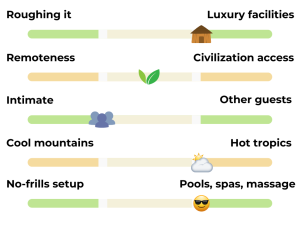
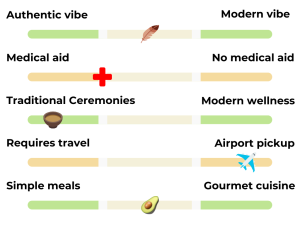
- Approach: Marketed as “traditional Amazonian shamanism” but in practice reframed by Souther around what he now calls Universal Spiritual Philosophy. Groups of up to 12, usually four ayahuasca ceremonies in a six-day program, supplemented by integration circles, Q&A sessions, jungle excursions, and bodywork. Brew is prepared on-site by Souther.
- Suitable For: Westerners who want a turn-key, comfort-forward, English-language experience and are willing to pay a premium for production value and a charismatic Western lead. Less suited to people specifically seeking indigenous-led ceremony, budget travelers, or anyone wanting full transparency on lineage and staffing changes.
- Costs: Roughly $2,500 to $2,700 for a six-day Iquitos retreat with four ceremonies, with periodic discount promotions advertised on the booking page. This sits at roughly four to eight times the going rate for many comparable Iquitos-area centers, a markup the center has been criticized for since at least 2007.
- Overall Assessment: Long-running operation with a clean public record on guest deaths, sexual misconduct, and crime, but with serious unresolved questions around lineage continuity, founder turnover, refund practices, and the gap between its marketing and what some former participants describe. Directory evaluation: C+ (notable for longevity and screening rigor, flag for staff turnover, the 2018 manager suicide, the lineage break, and a documented pattern of older refund disputes).
💬 What Guests Are Saying
Public sentiment about Blue Morpho is sharply bimodal. The center has more than 500 written and video testimonials across its own properties, plus dozens of high-rating entries on Retreat Guru and AyaAdvisors, and the modal review is enthusiastic to the point of devotional. Returning guests describe Souther as a once-in-a-lifetime teacher, the food and accommodations as far above other Iquitos options, and the ceremonies as the most meaningful experiences of their lives. Multiple reviewers report visiting five, nine, or even fifteen times. Hamilton’s media presence, including a long-running podcast and appearances on Aubrey Marcus and other outlets, reinforces this loyalty pipeline.
The other side of the ledger is harder to find but consistently present going back almost twenty years. On the Tribe.net ayahuasca forum, on NewAgeFraud.org’s Modern Shamanism thread (a contested but widely cited watchdog site), and in scattered Reddit and Tapatalk posts, former participants describe a different experience: Hamilton handing ceremonies off to overwhelmed apprentices, advertised activities like soul retrieval and birding not actually happening, brief and emotionally checked-out one-on-ones, a “cult-like” atmosphere, and the sense that the operation is structured to extract maximum revenue from spiritually hungry foreigners. A 2008 commenter on Tribe.net documented a refund dispute in which Blue Morpho allegedly offered to return their money only if they signed a contract barring them from ever speaking about Souther or the center publicly or privately. Both Tribe.net and the NAFPS thread are now archival, but the complaints they preserve are first-person and detailed.
A 2011 academic paper analyzing the Blue Morpho website (Holman, Arizona State; later cited by Holman 2010 dissertation work) used the operation as a case study in cyber-imperialism and the commodification of indigenous practice, noting how the marketing centered Souther over local healers in a way that obscured the actual structure of authority on site. None of this constitutes a safety incident, but it’s a meaningful counterweight to the testimonial-heavy public presence and worth weighing if you’re considering a retreat in this price bracket. We encourage sharing your own experience through our submission form.
🚩 Incident Report
Following a thorough review of online sources including Reddit subreddits like r/Ayahuasca, r/Psychonaut, and r/RationalPsychonaut, Quora threads, the NewAgeFraud.org forum, the archived Tribe.net ayahuasca forum, Facebook groups including Psychedelic Healing and Ayahuasca Experiences, news outlets, retreat discussion boards, ICEERS safety reports, the CBC News investigation into ayahuasca tourism deaths, and public records, no confirmed cases of guest death, sexual misconduct, or criminal activity directly tied to a Blue Morpho ceremony have been documented. There is, however, one major staff incident that has been quietly downplayed in most directory listings.
- Theft: No verified accounts of stolen guest belongings or in-camp theft surfaced in forums, ICEERS data, or news searches.
- Sexual Misconduct: No allegations, complaints, or legal actions involving Blue Morpho staff or facilitators in connection with ceremonies were found across Reddit, Facebook, news databases, court records, or ICEERS documentation.
- Crime: No arrests, police actions, or violence linked to Blue Morpho ceremonies appear in Google News, Peruvian regional outlets, retreat forums, or ICEERS documentation. However, in 2018, longtime Blue Morpho center manager and co-leading facilitator Malcolm Rossiter was found dead in Lima, Peru, after posting a suicide note to his Facebook page. Rossiter, an Australian who had been with Blue Morpho since 2010 and co-founded the Modern Shamanism online course with Souther, was running day-to-day operations and co-leading ceremonies at the time of his death. Blue Morpho has not publicly addressed his death in detail, and most directory listings, including the previous version of this one, mention it in passing or not at all. It is not a guest incident and has no direct bearing on participant safety, but the suicide of the operational lead at a center that markets itself on healing trauma and depression is information any prospective guest deserves to weigh.
Beyond the Rossiter incident, the broader pattern of older refund disputes documented on Tribe.net and NAFPS deserves a mention here even though it falls short of “crime.” Multiple former guests reported leaving retreats early due to dissatisfaction and being asked to sign non-disclosure agreements as a condition of refund. These complaints date primarily to the 2007 to 2011 era and may not reflect current practice, but they have never been publicly addressed by the center, and Blue Morpho has not posted a transparency or accountability statement since.
Update as of April 2026: No new safety incidents identified. Don Alberto Torres Davila, Souther’s primary teacher and the maestro who actually held ceremonial authority at Blue Morpho for roughly 17 years, left the center in 2020 to found his own retreat, Casa Del Maestro, near his hometown. He no longer works at Blue Morpho. Don Julio Llerena Pinedo, the other half of Souther’s traditional lineage, died in 2007. The center’s public claim of an unbroken seven-generation lineage warrants scrutiny in light of these departures.
🔍 Critical Notes
There is a real version of Blue Morpho that is good. The screening process is rigorous on paper, the Heliconia property is genuinely beautiful, the food is well-prepared and ayahuasca-compliant, the brew is real Banisteriopsis caapi and Psychotria viridis cooked on site rather than the mimosa-and-Syrian-rue substitute some sketchier operations use, and the center has built integration practices that more bare-bones jungle ceremonies skip entirely. The 23-year operating history with no documented guest death is meaningful in a regulatory environment where deaths at other Iquitos-area retreats have been reported.
The harder version is that Blue Morpho is now a personality-driven brand built around one Western lead who has, by his own admission, retired the title of Master Shaman granted by his original maestros and pivoted to what he calls Universal Spiritual Philosophy. Both teachers who actually trained him within the indigenous lineage are no longer present, one through death and one through a deliberate departure to found a competing operation. The longtime co-facilitator who held the room with him died by suicide in 2018. The marketing still leans on the seven-generation lineage framing and the National Geographic and New York Times mentions from over a decade ago, while the actual practice on the ground has shifted in ways that are hard to verify from the outside.
Souther has also branched into Blue Morpho Cannabis Shamanism (a 2014 venture promoting cannabis ceremonies as equivalent to ayahuasca work), the Modern Shamanism online course, the Blue Morpho Academy (a “first standardized certification program” for plant medicine facilitators), Source Independent Entertainment, Sizzle.media, and One Energy Global. Some of these are dormant or pivoted. The cumulative pattern is of a charismatic founder running multiple parallel ventures, which is not inherently disqualifying but does shift how a prospective guest should think about who is actually running the ceremony and whether the center’s attention is on you. Peru’s regulatory framework for ayahuasca centers is essentially nonexistent at the operational level, so directories like this one and prospective guests are the only meaningful oversight.
🆘 Screening & Mental Health Risks
Blue Morpho’s intake process is one of the more developed in the Iquitos market. Prospective guests fill out a written application covering health history, current medications and supplements, mental health conditions, personal goals, and reasons for participating. The team reviews applications and schedules a follow-up call when something needs clarification. The center claims no medical emergencies in over twenty years of operation, which if accurate is a strong record, though this is self-reported and not externally audited. They have a registered nurse on site, two emergency vehicles, antivenom, and an emergency satellite communication system.
Ayahuasca carries real psychological risk. Research summarized by ICEERS and others suggests a meaningful minority of participants experience acute psychological distress during or after ceremony, and people with personal or family history of psychotic-spectrum conditions, bipolar disorder, or severe trauma should be especially cautious. SSRIs, MAOIs, lithium, tramadol, and a long list of other medications create dangerous interactions with ayahuasca. Blue Morpho’s screening is supposed to catch these, but no intake process is foolproof, and the responsibility ultimately rests with the participant and their personal physician. Anyone considering this retreat or any other should consult a healthcare provider familiar with both their personal medical history and the pharmacology of ayahuasca before booking, not after arriving in Iquitos.
🧪 Brew Substance
Blue Morpho serves a brew prepared on site from Banisteriopsis caapi (the MAOI-containing vine) and Psychotria viridis (chacruna, the DMT-containing leaf), the traditional Amazonian combination. They also incorporate barks and roots from medicinal trees including Ayahuma, Capirona, Chullachaki Caspi, and others, depending on the intention of the ceremony, in the older palero tradition where multiple plants are combined rather than the simpler vine-and-chacruna preparation. This is real ayahuasca, not the sketchy mimosa-hostilis-and-Syrian-rue substitute that some lower-tier operations pass off as the same thing. Souther personally oversees the cooking, which has been a marketing point since the early years. Sacred Valley retreats also incorporate Huachuma (San Pedro), the mescaline-containing cactus traditional to the Andes, in dedicated ceremonies separate from the ayahuasca work.
📍 Location, Setting & Style
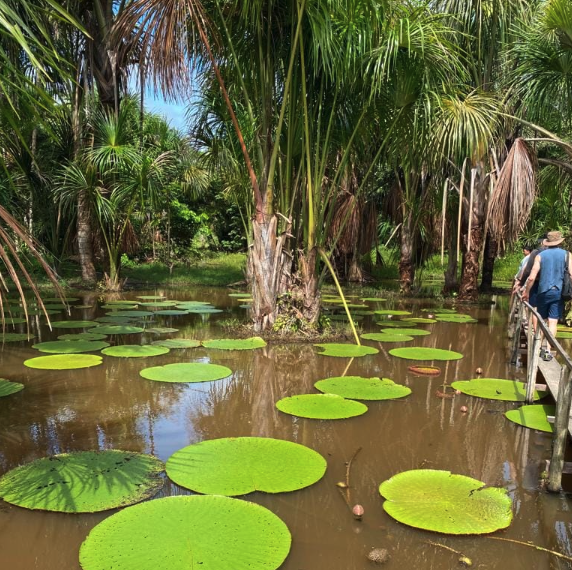
- Peru: Iquitos sits in the Loreto region of the Peruvian Amazon and is the largest city in the world with no road access, reachable only by air or boat. It has been the unofficial capital of ayahuasca tourism since the 1990s, with dozens of retreats operating in and around it. Blue Morpho’s current main location is Heliconia Amazon River Lodge, about 80km downriver in the Yanamono Communal Reserve, requiring a roughly 90-minute boat ride from Iquitos.
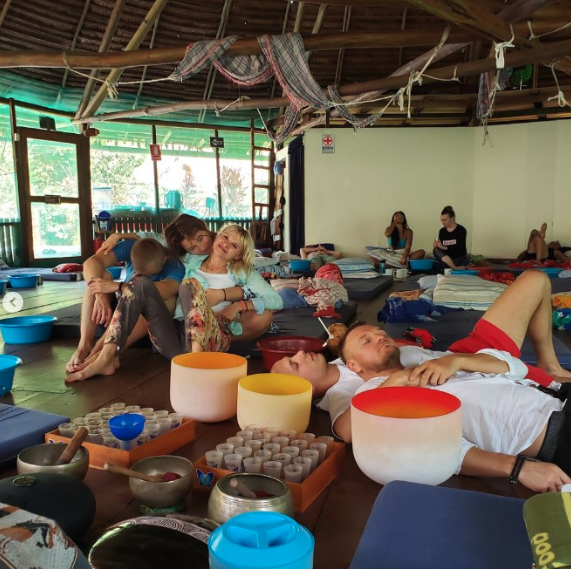
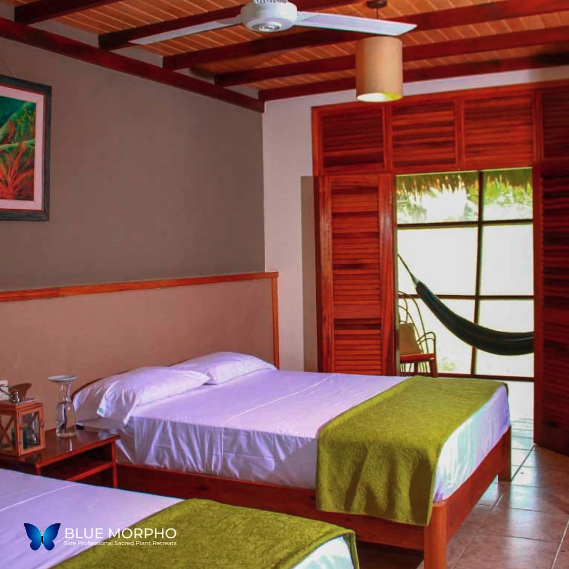
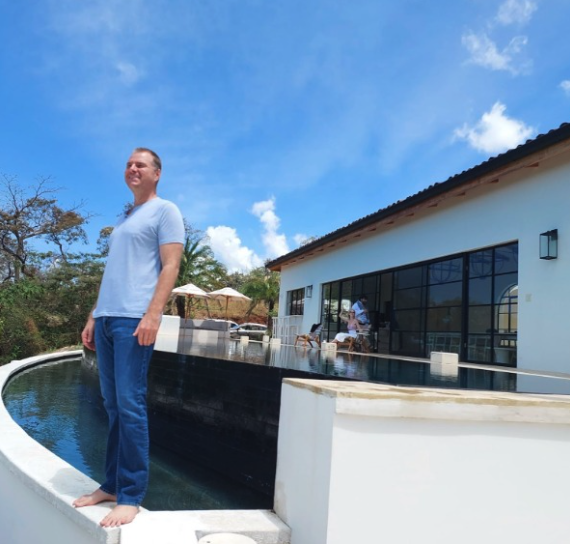
- Setting: Heliconia is an established eco-lodge, not purpose-built for ayahuasca retreats but partnered with Blue Morpho for accommodations. Elevated bungalows connected by covered boardwalks, screened porches with hammocks, modern bathrooms, no road access, and recently installed Starlink for internet. The ceremony space is screened to the jungle. The original Blue Morpho center on the Iquitos-Nauta Road sits on roughly 180 acres of private reserve and is purpose-built for ceremony, with multiple bungalows, a ceremony house, meditation huts, hiking trails, and a swimming lake.
- Style: Six-day program structure with four ayahuasca ceremonies, daily integration circles, Q&A sessions led by Hamilton, optional jungle excursions including dolphin watching, jungle walks, and visits to local communities. Meals are prepared by Heliconia chefs and follow the ayahuasca dietary protocol. Days off between ceremonies. Group size capped at twelve, though some past guests have reported being part of significantly larger groups, particularly during peak periods.
Practical guidance: Fly into Lima, then connect to Iquitos via LATAM, Sky, or one of the other domestic carriers (about 90 minutes flight time). Blue Morpho includes airport pickup and ground or river transfer to Heliconia. Book at least a few months in advance for popular dates. Bring lightweight long-sleeved clothing, insect repellent, an eye mask, a notebook, and a flashlight. Two-week pre-retreat dietary preparation is required.
Should You Book?
Blue Morpho is a defensible choice for a specific kind of guest: someone who wants the most polished, English-language, comfort-forward ayahuasca retreat experience available in Iquitos and is willing to pay a premium for it; who values a charismatic Western lead with a long media trail; who is not particularly concerned about the gap between traditional indigenous lineage and the operation’s current “Universal Spiritual Philosophy” reframe; and who has done their own homework on the operational history. For that guest, the screening, the brew quality, the physical comfort, and the integration support are real and worth something.
It is a less defensible choice for a guest seeking authentic indigenous-led ceremony, for budget-conscious travelers (Iquitos has many capable operations at a fraction of the price), for anyone uncomfortable with personality-driven retreats built around a single founder, or for anyone troubled by the uncombined picture of Don Alberto’s departure, Malcolm Rossiter’s death, the cannabis shamanism pivot, and the older refund-NDA reports. If you’ve read this far and any of those points sit poorly with you, there are other retreats in the Iquitos area, including Casa Del Maestro (run by Don Alberto himself since 2020), that may serve you better.
The Team & Story
Hamilton Souther entered the Peruvian Amazon in 2001 at age 23 with a background in cultural anthropology from University of Colorado Boulder. He apprenticed first with Don Alberto Torres Davila and then with Don Julio Llerena Pinedo, two respected Ucayali-region curanderos, and was granted the title of Maestro by Don Julio in December 2004 (Don Julio passed away in 2007 at 89). Blue Morpho was founded in 2002 and grew rapidly after a 2006 Kira Salak feature in National Geographic Adventure Magazine drew international attention. Souther himself has acknowledged in interviews that his apprenticeship lasted somewhat over a year before he was granted Maestro status, which is on the very short end for the tradition.
Don Alberto co-led ceremonies at Blue Morpho for approximately seventeen years, providing the actual indigenous ceremonial authority that anchored the operation’s claims of traditional practice. He left in 2020 to found Casa Del Maestro near his hometown, where he now works alongside his son Eliseo. Malcolm Rossiter, an Australian former school principal and racing driver who joined Blue Morpho staff in 2010 and rose to center manager and co-facilitator, died by suicide in Lima in 2018. The current ceremonial team includes Hamilton along with rotating apprentices and assistant facilitators whose names and credentials are less consistently published. Blue Morpho continues to claim active operations and runs both Iquitos and Sacred Valley retreats on a regular schedule through 2026.
Prep & Integration Tips
Begin the dietary protocol two weeks before arrival: no aged cheeses, fermented foods, alcohol, recreational drugs, red meat, pork, processed foods, excess salt or sugar, and no SSRIs, MAOIs, or any medication on the ayahuasca contraindication list (verify with your prescriber, not just with the retreat). No sex for the same period. Sleep more than usual. Hydrate. Bring lightweight clothing you can layer, insect repellent (DEET or picaridin), a headlamp, an eye mask, a refillable water bottle, a notebook, and any prescription medications you’re cleared to keep taking. After the retreat: Blue Morpho provides a video integration package and email follow-ups, but real integration is on you. Sleep, journal, talk to a trusted person or therapist familiar with psychedelic integration, and avoid making major life decisions for at least a few weeks. The come-down from a multi-ceremony retreat can be a vulnerable period, particularly for guests who arrived carrying significant trauma.
Pros & Cons
| Pros | Cons |
|---|---|
| 23-year operating history with no documented guest deaths | Both original maestros gone (one deceased, one departed to found competing center) |
| Rigorous written intake and on-site medical resources | Longtime co-facilitator Malcolm Rossiter died by suicide in 2018 |
| Real ayahuasca brewed on site, no shortcut substitutes | Premium pricing well above the Iquitos market median |
| Comfortable accommodations and capable kitchen at Heliconia | Documented older complaints of NDA-conditioned refunds and dismissive 1-on-1 sessions |
| Integration support and post-retreat resources | Marketing relies heavily on a 2006 National Geographic feature and an indigenous lineage that no longer functions on site |
| English-language operation with experienced Western lead | Founder has pivoted to “Universal Spiritual Philosophy” and runs multiple parallel ventures including the dormant Cannabis Shamanism project |
Book Your Ceremony
Bookings are handled through Blue Morpho’s own website at bluemorpho.org, with an application form, deposit, and balance due before arrival. The standard six-day Iquitos retreat runs around $2,500 to $2,700 per person and includes airport pickup, transport to Heliconia, accommodations, meals, four ayahuasca ceremonies, integration sessions, and excursions. Sacred Valley retreats with combined ayahuasca and Huachuma run separately and at similar pricing. Periodic discount promotions appear on the booking page. Read the refund and cancellation terms carefully before paying any deposit.