
Ayahuasca Foundation
Atmosphere
Features
Atmosphere and feature ratings above are based on Best Retreats research (October 2026). They will be updated if the Ayahuasca Foundation submits its own information.
Ayahuasca Foundation (Riosbo and Kesten Rono): An In-Depth Review for Ayahuasca Retreats near Iquitos, Peru
The Ayahuasca Foundation is one of the longest-running ayahuasca operators in the Peruvian Amazon. American founder Carlos Tanner started it in 2009 with the Lopez family, Shipibo healers from the Roaboya community near Pucallpa. It runs 10-day, 18-day and four-week retreats at Riosbo, a riverside center opened in 2017 in the Mishana community inside the Allpahuayo-Mishana National Reserve, about two to two and a half hours from Iquitos, and an eight-week “Curandero Initiation Course” at Kesten Rono, a jungle school owned by the healer Don Enrique. Prices run from $2,950 to $6,850. Retreat Guru reviews are nearly perfect (4.86 from 115 reviews), and a peer-reviewed King’s College London study was conducted there. In July 2025, however, an independent investigation by the writer Jules Evans reported that a participant died of an apparent heart attack during the first ceremony of a January 2025 initiation course, with no defibrillator on site, and described an alleged sexual assault between guests in April 2025 and sexual boundary violations by facilitators, one of which Tanner acknowledged. Four of seven Tripadvisor reviews, all posted since September 2025, are one or two stars. No credentialed medical staff are named, the Foundation says its centers are about 90 minutes from the nearest medical clinic, and its website claims a “100% success rate” for anxiety. We list it with serious reservations.
🎯 At a Glance
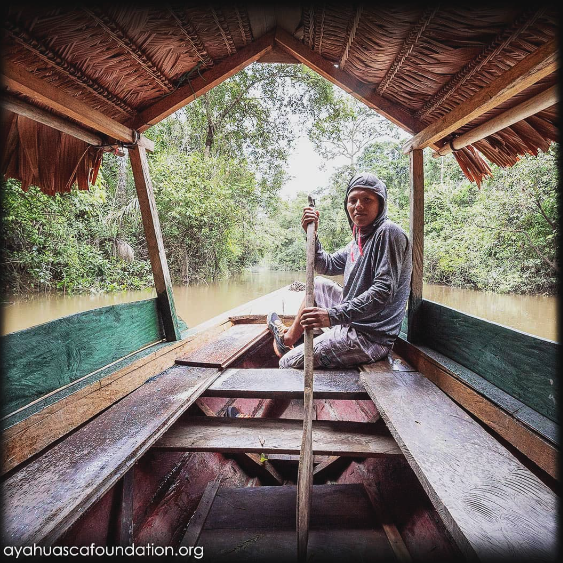
- Locations: Riosbo Ayahuasca Retreat Center, on the Nanay River (a tributary of the Amazon) in the Mishana community, Allpahuayo-Mishana National Reserve, San Juan Bautista district, Loreto, reached by about an hour by bus from Iquitos to the village of Nina Rumi and about an hour by boat, according to the Foundation’s Riosbo page. Kesten Rono, the initiation school, is about 90 minutes from Iquitos, ending with a 45-minute jungle hike, according to its school page. Directories list a city office in Urbanización Santa Sofía, Iquitos. Earlier sites were the Inkan Kena (Inkankana) school, described in a 2015 article, and a Chamisal center used in 2016 and 2017.
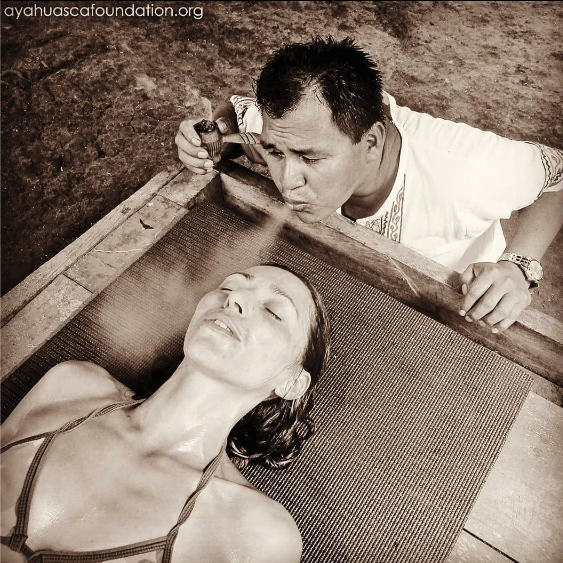
- Approach: Shipibo ayahuasca ceremonies with icaros led by the Lopez family, plant dietas, daily plant remedies, vapor, smoke and “love” baths and purges, alongside yoga, meditation, breathwork, a cacao ceremony, art and music therapy and massage. The Foundation says it uses only the ayahuasca vine and chacruna, with no other admixtures, and we found no kambo, bufo, San Pedro or psilocybin on any of its pages.
- Suitable For: Medically healthy adults with no heart or blood-pressure condition who want a small Shipibo program with a dieta and accept that emergency care is hours away. Not suitable for anyone with cardiovascular disease, a history of psychosis or bipolar disorder, or a need for on-site medical cover.
- Costs: $2,950 for the 10-day retreat and the 10-day women’s retreat (5 ceremonies), $4,250 for the 18-day retreat and dieta (8 ceremonies), $5,550 for the four-week Healing Empowerment Course (11 ceremonies) and $6,850 for the eight-week initiation course (21 ceremonies), according to the official schedule. Sharing a room saves $250, $450 or $650 each on the retreats and the four-week course. Retreat Guru bookings take a $450 deposit, fully refundable 60 or more days ahead and 50% refundable 30 to 59 days ahead, with nothing stated for later cancellations; the official site asks $850 for course deposits. Evans reports that initiation fees were paid in cash, and a 2026 Tripadvisor reviewer said they were uneasy at being asked to bring cash.
- Overall Assessment: Seventeen years of operation, an established Shipibo healer family, private rooms, all-inclusive logistics and a published research partnership, outweighed by a participant death in 2025 with no defibrillator, independently reported allegations of sexual assault and facilitator misconduct that leadership was slow to act on, screening that reportedly failed in practice, no credentialed medical staff, emergency care about 90 minutes or more away, unsupported medical claims and a sharp split between Retreat Guru and Tripadvisor reviews. Directory evaluation: C-.
💬 What Guests Are Saying
| Platform | Rating | Reviews | Notes |
|---|---|---|---|
| Retreat Guru (center) | 4.86 / 5 | 115 | Visible reviews from 2026, all five stars |
| Retreat Guru (event pages) | 4.87 / 5 | 119 | Visible reviews May to September 2026; “Staff Pick” badge |
| Tripadvisor | 2.9 / 5 | 7 | Three five-star, one two-star, three one-star; all four negative reviews posted since September 2025 |
| Third Wave directory | No score | 1 | Favorable, 2021 stay |
| HealingMaps, Psychable, The Guide | No rating | 0 | Listings only; Psychable shows a stale “from $1,650” price |
| Google, Trustpilot, AyaAdvisors | No rating | 0 | No listings found |
The positive picture. Retreat Guru reviewers praise caring staff, the healers Doña Angela and Don Ronor, the private rooms and the cleaning and laundry service. Positive Tripadvisor reviewers describe moving icaros, small groups of about ten and a clean riverside lodge. Our earlier profile said guests on the Foundation’s website called the 10-day retreat “transcendent,” that a guest said Don Miguel’s icaros at Riosbo “transported me to other worlds,” that a reviewer called Carlos Tanner’s pre-retreat counseling “incredibly detailed,” that Retreat Guru reviewers praised Don Miguel’s ceremonies for their authenticity, and that reviews in a Facebook group called “Ayahuasca Experiences” described the setting as “perfect.” Those quotations remain unverified. Its description of spacious rooms, river views and hammocks matches the Foundation’s own description of Riosbo.
The negative feedback. Four Tripadvisor reviews posted between September 2025 and July 2026 are sharply critical. A one-star review describing an April 2025 stay says facilitators flirted inappropriately, leadership repeatedly dismissed complaints and the reviewer was uneasy at being asked to bring cash. A two-star review of a July 2025 stay says the reviewer felt unsafe, doubted the facilitators’ training, saw icaros read from a book by flashlight, was given too many medicines in quick succession and received little integration. Another one-star review of an April 2025 stay describes feeling unsafe and uncared for, poor food and no proper integration guide, and a fourth, posted in July 2026, calls the space “not safe” and says money came before healing. Our earlier profile reported that Reddit users cited the steep price and gaps in integration support; those posts remain unverified, though similar integration complaints appear on Tripadvisor and in reader comments on the Evans investigation.
Who is writing the reviews. The two platforms tell different stories. Retreat Guru shows only five of its 115 to 119 reviews, all five stars and all from 2026, and in 2026 it added a “Cameron’s Staff Pick” badge to the Foundation’s event pages, a year after the Evans investigation, without explaining the badge. Tripadvisor’s sample is small, but four of seven reviews are negative and two describe April 2025, the month of the alleged assault Evans reports. Much of the Foundation’s media presence is the founder’s own voice: Tanner has appeared on at least eight podcasts, including one hosted by Third Wave, which also runs the Foundation’s directory listing. If you have attended, we encourage you to share your experience through our submission form.
🚩 Incident Report
We searched review platforms, independent journalism and English and Spanish-language news for reports involving the Ayahuasca Foundation, Riosbo, Kesten Rono, Carlos Tanner and the Lopez family healers. The main source below is “Serious harms and a death at the Ayahuasca Foundation”, published by Jules Evans of Ecstatic Integration on July 25, 2025, based on interviews with 14 alumni and former staff and two interviews with Tanner; Evans says a lawyer reviewed it.
- Death (January 2025): Evans reports that a 39-year-old male participant had an apparent heart attack during the first ceremony of an eight-week initiation course at Kesten Rono. A facilitator sang to him; staff, Don Enrique and a guest attempted CPR for about 90 minutes; there was no defibrillator, and his body was carried out on his mattress. Tanner told Evans the man had not disclosed a heart condition; attendees said he disclosed blood-pressure medication on the first day and was allowed to continue. Evans describes it as apparently the only death in the Foundation’s 17 years. We found no police or prosecutor record.
- Alleged sexual assault (April 2025): Evans reports that a male guest with a reported history of psychosis, admitted to an initiation course despite warnings, allegedly forced sex on a female guest he had brought, saying the spirits had told him to, and later allegedly threatened her. He was removed five days before the course ended, which Don Enrique confirmed. Evans reports that Tanner then tried to charge the woman the full fee after the man’s payment for her failed. These allegations are unverified.
- Facilitator misconduct (2023 to 2025): Evans reports that a male facilitator began a sexual relationship with a 25-year-old former student about a week after an October 2023 course, which Tanner told Evans upset him and violated the Foundation’s code. Tanner said he had fired the facilitator, but Evans found him still working in 2025; Tanner said he had reconsidered. Another facilitator received a formal warning after flirting with a student, a former facilitator resigned over how complaints were handled, and Don Enrique told Evans that female students had complained about male facilitators. The relationship and the warning are acknowledged by Tanner; the rest is unverified.
- Screening failures: Evans reports that a former student with a disclosed history of psychosis was admitted to a course without being asked about it and had a psychotic episode. Unverified.
- Fatal road crash (October 2023): Evans reports that a truck driven by Don Enrique struck and killed a woman and her child, that no criminal charges were filed and that the Foundation gave about 10,000 soles. We found no local news coverage; unverified.
- Older allegations: Reader comments on the Evans article, from people describing themselves as past participants or staff, allege that a suicidal participant was left unattended in 2017 or 2018, that a staff member had sexual relations with a young participant, that a staff member hit a participant during a psychotic episode, and that staff lacked emergency training. These are anonymous and unverified.
- Company statement: The Foundation’s FAQ says it has had four emergencies since 2009, each taken to a hospital in Iquitos; it is not clear whether that count includes the 2025 death.
- Theft and fraud: No reports of stolen belongings or fraud found.
- Legal action: No lawsuits, arrests, raids or regulatory actions found.
A separate death should not be confused with this operator: in June 2025 a 41-year-old US citizen died after taking ayahuasca at a lodge in Santa María de Ojeda, in the Alto Nanay district about five hours upriver from Iquitos, and the provincial prosecutor opened an investigation, as Swissinfo reported. The Foundation was not named.
Our earlier profile, last updated before the Evans investigation was published, found no incidents of theft, sexual misconduct or crime, no police reports and an online reputation “free of such incidents,” and suggested that any incidents had not been publicly reported. That no longer holds, although we still found no stolen-item reports and no legal action.
If you have experienced or witnessed an incident with the Ayahuasca Foundation, please report it confidentially.
🔍 Critical Notes
Emergency readiness. The Foundation’s FAQ says its centers are about 90 minutes from the nearest medical clinic; Riosbo has a small community clinic a short walk away offering basic first aid, and serious cases go to Iquitos. No doctor, nurse or paramedic is named on any official page, and Evans found no defibrillator and no CPR requirement for staff at the January 2025 death. A reader comment says Tanner later told alumni that staff emergency training had been expanded; we found no confirmation of new equipment or medical staff. Evans writes that the only improvement Tanner cited was adding the Foundation’s code of ethics to its website.
Response to complaints. The code of ethics forbids romantic or sexual relationships with current participants and requires a six-month wait after a program, with a written warning for a first violation; it names no independent person to report to. Evans documents that a facilitator Tanner said he had fired was still working, and Tanner told Evans he had handed screening and integration calls to others and was not satisfied with their work. Tanner replied in the article’s comments that he takes the complaints seriously.
Medical claims and the research. The Foundation’s program page says its plant treatments can address “virtually any condition,” claims a “100% success rate in improving anxiety,” and reports success with parasites, Crohn’s disease and type 2 diabetes; its 18-day program offers “blood purification” to remove parasitic organisms. None of these claims has medical support. There is real research behind part of its reputation: a King’s College London team led by Simon Ruffell published a study in Frontiers in Psychiatry in 2021 conducted at the Foundation, in which 63 self-selected participants reported lower depression and anxiety scores after their retreat that held at six months. The authors note that the study had no control group, so it does not show that the retreats caused the change, and it does not support a 100% success rate or the website’s statement that research has “proven” the retreats effective. The research partner, Onaya Science, works at Riosbo.
Training new ayahuasca servers. The eight-week course trains mostly foreign students to lead ceremonies, with student-led and “possible solo ceremonies (without the curandero)” in its seventh week and certificates at the end. Evans reports about 800 graduates over roughly 50 courses and that alumni began serving ayahuasca soon after returning home, which Tanner denies encouraging. DMT, ayahuasca’s active compound, is illegal in the US, the UK and many other countries graduates return to, a point Roads & Kingdoms made in 2015.
Peru’s legal picture. Ayahuasca is legal in Peru, where traditional use was declared national cultural heritage in 2008, and retreat centers are not licensed or regulated, according to ICEERS. Prosecutors investigate deaths case by case. Riosbo sits inside a national reserve; we found no public record of its land or permit status.
Organization. Retreat Guru describes the Foundation as a Peruvian non-profit, but we found no registry entry or tax number. Its homepage says the US psychedelic research nonprofit MAPS has been its fiscal sponsor for more than a decade; the partial list on the MAPS fiscal-sponsorship page does not include it, so that claim remains unverified. It says Riosbo was funded by Grant Town Foundation, a US charity. Bookings run through a Retreat Guru subdomain under the name “Ayahuasca Association,” which is the same operator.
Corrections to our earlier profile. Riosbo is a lowland Amazon river lodge, not a “tranquil mountain retreat.” Current prices are $2,950 for the 10-day and women’s retreats (not $3,450), $4,250 for the 18-day retreat (not $4,650) and $5,550 for the four-week course (not $5,850), and the full range is $2,950 to $6,850. The Foundation’s current lead healers are Doña Angela, Don Ronor and Don Enrique; Don Miguel, Don Enrique’s brother, worked with the Foundation from 2012, including at Riosbo, and in 2026 is listed by a separate operator, AYA Healing Retreats. The Foundation runs an eight-week initiation course that our earlier profile omitted. In the women’s retreat description, the Nanay River, not the center, is the tributary of the Amazon. We found no current source for the 18-day Therapist Retreat with a certified psychiatrist as co-facilitator, for the program names “Harmonize Your Health” and “Embrace the Divine Feminine,” for ecstatic dance or for the statement that all treatments are optional; the Foundation lists an ATMA “Therapists Healing Retreat” only as a partner. Those details remain unverified.
🆘 Screening & Mental Health Risks
The Foundation’s medical guidelines are among the more detailed we have seen on paper. Applicants complete a registration form covering physical and mental health and every medication taken in the past year, followed by an email exchange, a call and a pre-program counseling session about two weeks before arrival. The guidelines require stopping MAOIs two weeks before, fluoxetine six weeks before and other antidepressants four weeks before and two weeks after; rule out stimulants, MDMA and DXM; say people with serious heart problems or very high blood pressure “should avoid ayahuasca”; exclude unstable diabetes; and state that people with bipolar disorder, psychosis or schizophrenia are not eligible. No reviewer with medical credentials is named, and no pregnancy or age rule appears. Evans’ reporting suggests the policy was not followed in practice: a man with a reported psychosis history was admitted in April 2025, a former student with disclosed psychosis was admitted and had an episode, and the man who died in January 2025 reportedly disclosed blood-pressure medication and was allowed to continue. A reader comment described screening as “a simple questionnaire.” ICEERS notes that ayahuasca’s MAOI component makes it dangerous with SSRIs and other serotonergic drugs and that it is contraindicated for people prone to psychosis, and its review of ayahuasca-linked deaths found heart conditions among the recurring factors. Integration is offered through pre- and post-program sessions with AyaHelp.com and email follow-up; several reviewers and commenters said they received little. Never stop a psychiatric medication to qualify for a ceremony without your prescriber’s guidance.
🧪 Brew Substance
The Foundation says it brews only the Banisteriopsis caapi vine with chacruna leaves, which supply the DMT, as Erowid explains, with “no other admixtures,” and that Riosbo has 30-year-old vines growing on site. Outside ceremonies, guests take plant remedies such as piñon colorado three times a day, sangre de grado, chiric sanango, mucura and tanti rao, and longer programs include a dieta with a teacher plant such as noya rao or bobinsana. A 2015 Roads & Kingdoms article quoted Don Enrique saying ayahuasca “can make you crazy” or “can kill you” when misused.
📍 Location, Setting & Style
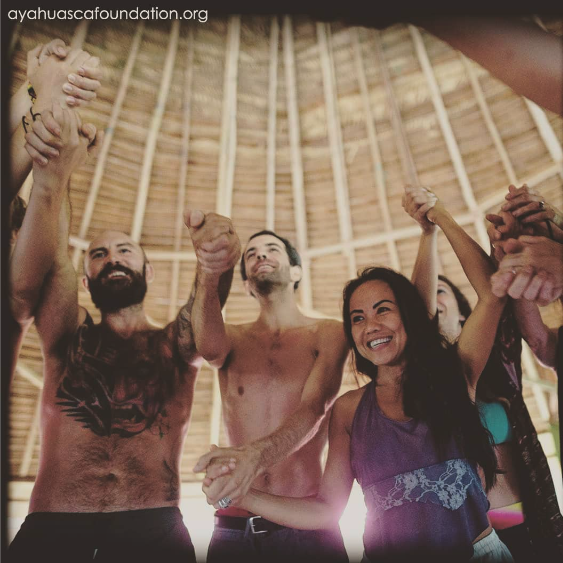
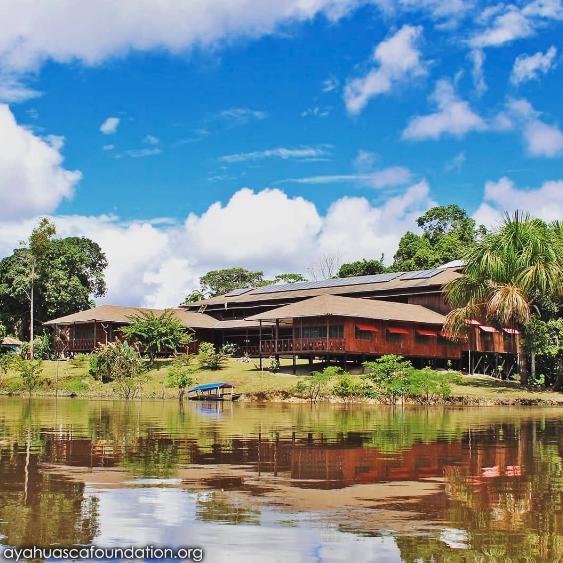
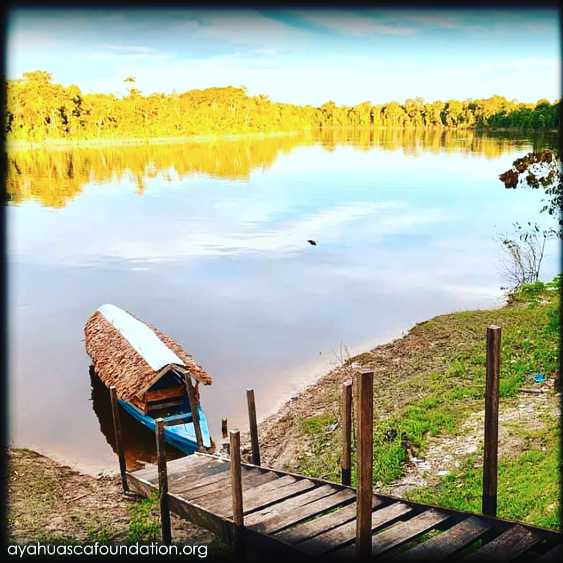
- Setting: Riosbo sits on the Nanay River beside a white-sand beach, with a 16-sided ceremonial maloca, a yoga studio, massage and consultation rooms, a hammock lounge and trails into the reserve, which the Foundation says covers more than 100,000 acres of forest. Most staff come from the Mishana community. Kesten Rono is a more rustic jungle school with individual tambos and generator power a few hours a day.
- Rooms: At Riosbo, eight screened private rooms with two twin beds, an en suite bathroom with hot and cold water, fans and solar electricity, and a shared balcony over the river. At Kesten Rono, individual huts with a bed, mosquito net, desk, hammock and private bathroom.
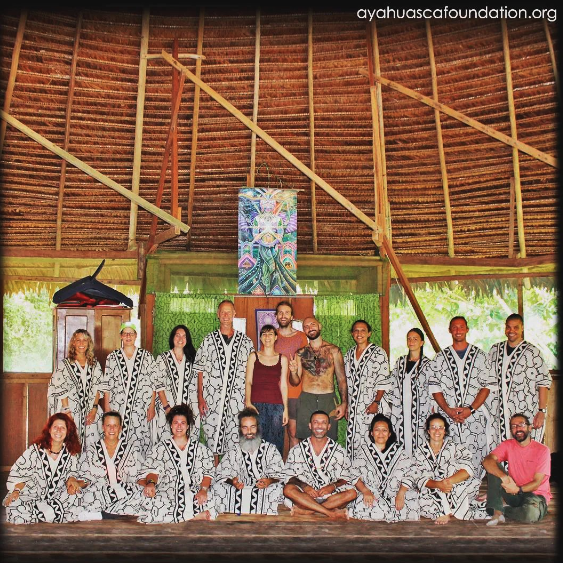
- Style: A structured Shipibo healing program in groups of up to 12 at Riosbo (usually 8 to 10) and about 15 at Kesten Rono, with English-speaking facilitators, translation of consultations, and at least two meals a day on a restrictive healing diet. The Foundation says each retreat has five assistant healers; a Retreat Guru listing says two English-speaking facilitators and two Peruvian apprentices.
Practical guidance: Airport pickup in Iquitos, two hotel nights with Wi-Fi, a group dinner and all bus and boat transfers are included. Expect little or no phone signal at the centers, and bring cash only if the terms are agreed in writing.
Should You Book?
Only with serious caution, and not if you have any heart, blood-pressure or psychiatric condition. Before paying, ask in writing who reviews your medical form and what their qualifications are, whether a defibrillator and staff trained in CPR are now on site at both Riosbo and Kesten Rono, how a medical emergency would be evacuated and to which hospital, what changed after the January 2025 death, and how complaints about facilitators are now handled and by whom. Read our guide to verifying retreat facilitators.
The Team & Story
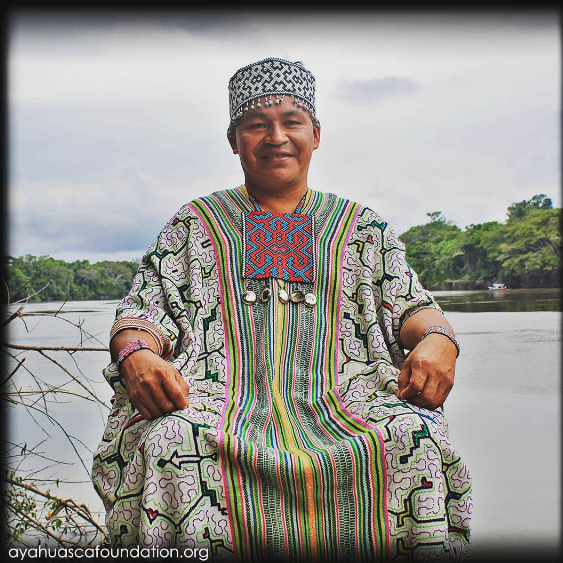
Carlos Tanner, an American who began studying curanderismo in Peru in 2003 or 2004, founded the Foundation in 2009 (Retreat Guru says it was conceived in 2008) and directs it; in 2025 he lived in the US for family reasons and spent about the first day of each course on site, according to Evans. His memoir is Finding the Path, and he appeared in the Netflix series Down to Earth with Zac Efron, according to Evans. The healers are siblings of the Lopez family from Roaboya: Don Enrique, who says he began learning from his grandfather at 11 and leads the initiation course at his own school, Kesten Rono; Doña Angela, who leads the 10-day and women’s retreats and veterans’ retreats with the Heroic Hearts Project; and Don Ronor, the youngest, who leads the 18-day retreat and four-week course. Their brother Don Miguel worked with the Foundation from 2012 and now also appears with another operator. Partners named by the Foundation include Onaya Science, the Heroic Hearts Project, MAPS and One Million Acres, which each participant’s fee supports. We did not independently verify anyone’s training.
Prep & Integration Tips
Before you go: Have your doctor check your heart and blood pressure, plan any medication change with your prescriber well in advance, and disclose every condition in writing. After you return: Arrange support from a qualified therapist at home rather than relying on remote follow-up. Our guide on how to research ayahuasca incidents can help you check any operator.
Pros & Cons
| Pros | Cons |
|---|---|
| Operating since 2009 with one Shipibo healer family | Participant death in January 2025; no defibrillator |
| Private en suite rooms; small groups at Riosbo | Alleged sexual assault and acknowledged facilitator misconduct |
| Detailed written contraindication policy | Screening reportedly not followed in practice |
| Airport pickup, hotel nights and transfers included | No credentialed medical staff; clinic about 90 minutes away |
| Peer-reviewed observational study conducted on site | Unsupported medical claims, including a “100% success rate” |
| Near-perfect Retreat Guru reviews | Four of seven Tripadvisor reviews negative; cash payments |
Book Your Ceremony
The Foundation lists dated programs from late 2026 through November 2027, including 10-day and women’s retreats in November and December 2026, an 18-day retreat in January 2027 and initiation courses in April and October 2027, bookable through its website or Retreat Guru. Before paying, get the refund terms and emergency arrangements in writing. Best Retreats does not take bookings; learn more about our mission.
Last reviewed October 2026.
This article is for informational purposes only and is not medical advice. Consult a qualified medical professional.