
Arkana Spiritual Center

Atmosphere
Features
Arkana Spiritual Center Ayahuasca Retreats: An In-Depth Review for Sessions in Peru and Mexico
Arkana Spiritual Center is one of the larger international plant medicine operations on the market today, with two retreat locations in Peru (an Amazon center on the Ucayali River and a Sacred Valley lodge near Urubamba), two in Mexico (a 16th-century hacienda in the Yucatan and a psilocybin and bufo center in Valle de Bravo), and a Costa Rica property listed as coming soon. The Amazon center is anchored by an actual multigenerational Shipibo healer family from the village of Vencedor on the Pisqui River, with matriarch Maestra Justina at its center. The operation has racked up over a thousand five-star reviews across AyaAdvisors, TripAdvisor, Google, and Retreat Guru, with no documented guest deaths, sexual misconduct allegations, or criminal incidents tied to the center across more than a decade of operation. It also has some legitimate concerns worth weighing, particularly around the founder profile, the breadth and intensity of medicines offered, and refund and cancellation terms.
🎯 At a Glance
- Locations: Four active centers. Arkana Amazon sits on the banks of the Ucayali River near the village of Libertad, accessed via Iquitos. Arkana Sacred Valley is in Urubamba, Peru, near the Andes and Urubamba River, accessed via Cusco. Arkana Yucatan is at Hacienda San Antonio Chalante, a renovated 16th-century colonial estate near Sudzal in the Mayan jungle, about three hours from Cancun. Arkana Valle de Bravo is at Khungi Espacio outside Mexico City, focused on psilocybin and bufo work. A fifth location in Costa Rica is listed as coming soon.
- Approach: Shipibo lineage ayahuasca ceremonies at the Peru locations (typically three per week), supplemented by San Pedro/Huachuma at Sacred Valley, optional Sapo (5-MeO-DMT) and Kambo, Rapé, Temazcal sweat lodges, and integration practices including yoga, breathwork, sound healing, and group sharing circles. Mexico locations rotate ayahuasca, psilocybin, peyote, and other ancestral medicines depending on the program. Group sizes of around 14 to 16 are common.
- Suitable For: Travelers who want a comfort-forward, English-language experience with a real Shipibo family lineage on the ground, who value wraparound integration support and a structured weekly schedule, and who can afford a mid-to-upper-tier price point. Less suited to people seeking minimalist village-style ceremony, those uncomfortable with large groups, or anyone wary of multi-medicine programs that combine ayahuasca with bufo, kambo, and peyote in a single week.
- Costs: $2,520 to $4,500 for a standard 7-day Amazon or Sacred Valley retreat, with longer 14-day and 21-day programs priced up to roughly $10,700 for luxury accommodations. Mexico retreats run in a similar mid-range. Sapo (5-MeO-DMT) is an additional optional fee on top of the base price. A 10 percent lifetime return discount is offered to past guests.
- Overall Assessment: A mature, well-organized operation with a clean public safety record, real indigenous lineage at the medicine end, and the highest review volume of almost any international ayahuasca brand. Directory evaluation: B+ (notable for the Shipibo family lineage, the safety record, and the depth of integration support; flag for the breadth of medicines offered, the COVID-era refund language that converts deposits into non-refundable credits, and a small number of older guest reports about hostile post-booking communication).
💬 What Guests Are Saying
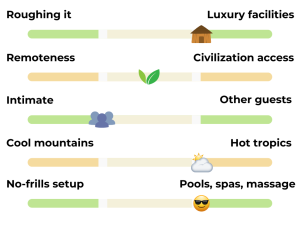
The volume of positive reviews on Arkana is genuinely high and runs back close to a decade. Guests consistently praise Maestra Justina specifically, often returning for second and third retreats and naming her as the reason. Reviewers describe the Sacred Valley property as comfortable to the point of being called “the Beverly Hills of ayahuasca experiences” by one guest, with hot showers, comfortable beds, hot water bottles delivered to rooms after night ceremonies, well-prepared meals, and a clean, well-maintained property. The Amazon location at Libertad gets similar praise, with the local village integration and the wildlife excursions (river dolphins, sloths, monkeys, jungle hikes) showing up in many accounts. Founder Jose is described in many reviews as personally present at retreats, sitting in on integration circles and sharing his own story.
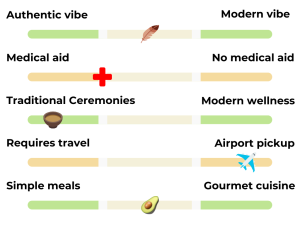
Themes that appear in more reflective reviews: the food is good but vegetarian and quite plain by design, owing to the ayahuasca dietary protocol; group sizes can feel large (some guests report 14 to 16 participants per week); facilitators appear to rotate frequently and skew young and Western, which a few reviewers have noted as something the property could improve on; and the property could benefit from a more visible single on-site lead during weeks when Jose isn’t present. One reviewer described the atmosphere as “a bit of a hippie place” in a way that landed positively for them but might not for everyone.
The harder-to-find negatives are limited but worth naming. A 1-star TripAdvisor review describes a guest whose experience of the room differed significantly from the videos on Arkana’s website, who reports the booking administrator was friendly before payment and “very hostile” afterward, who never received the promised post-retreat integration email, and who emailed Jose directly without receiving a reply, sarcastically referencing the center’s “saving one heart at a time” tagline. This is one review against well over a thousand positive ones, but it is on the public record. Another AyaAdvisors review notes that during their week in the Sacred Valley, an incident occurred in ceremony where another guest acted inappropriately while under ayahuasca; the reviewer says the facilitators handled it well but flagged that the experience was scary in the moment. We encourage sharing your own experience through our submission form.
🚩 Incident Report
Following a thorough review of online sources including Reddit subreddits like r/Ayahuasca, r/Psychonaut, and r/RationalPsychonaut, Quora threads, the NewAgeFraud.org forum, Facebook groups including Psychedelic Healing and Ayahuasca Experiences, news outlets in Peru, Mexico, and the US, retreat discussion boards, ICEERS safety reports, the ICEERS list of deaths misattributed to ayahuasca, court records, and TripAdvisor and AyaAdvisors review threads, no confirmed cases of guest death, sexual misconduct, criminal activity, or ICEERS-investigated incidents directly tied to a ceremony at Arkana Spiritual Center have been documented across more than a decade of operation.
- Theft: No verified accounts of stolen guest belongings or in-camp theft surfaced in forums, ICEERS data, news searches, or review threads.
- Sexual Misconduct: No allegations, complaints, legal actions, or court filings involving Arkana shamans, facilitators, or staff in connection with ceremony surfaced in any of the sources reviewed.
- Crime: No arrests, police actions, or violent incidents linked to Arkana ceremonies appear in Google News, Peruvian media, Mexican media, retreat forums, or ICEERS documentation. A guest-on-guest incident involving inappropriate behavior during a Sacred Valley ceremony was described in one AyaAdvisors review and was reportedly handled appropriately by facilitators, but does not involve any allegation against Arkana staff or any criminal report.
A note on context: a number of high-profile ayahuasca incidents have happened in the broader Iquitos region over the past 15 years, including the 2015 Phoenix Ayahuasca stabbing death, the 2012 Kyle Nolan death at a different center, the 2014 Matthew Dawson-Clarke death at Kapitari Lodge from a tobacco purge reaction, and the 2024 death of a guest at the Ayahuasca Foundation’s initiation course. None of these involve Arkana, and the public record on Arkana itself remains clean. Update as of April 2026: No new safety incidents identified.
🔍 Critical Notes
Arkana presents a relatively strong set of structural positives compared to most plant medicine operations. The Amazon center is anchored by an actual Shipibo healer family from Vencedor on the Pisqui River, with Maestra Justina (over 45 years of practice and from a Meraya lineage, the highest-ranking Shipibo curanderos) leading alongside her husband Maestro Cesar (over 50 years of practice), their sons Maestro Eligio and Maestro Luis, daughter Maestra Ada at the Sacred Valley location, and additional Shipibo healers from extended family and neighboring communities. This is multigenerational, family-based lineage rather than a Western lead borrowing indigenous credentials, which is a meaningful distinction in this market. The Vencedor village is also where the center grows its own ayahuasca, which Cesar maintains.
The medical intake process involves a video call with Arkana’s medical screener to review health history, medications, and family psychiatric history, with documented ineligibility criteria for certain conditions (notably bufo/sapo is restricted for those with family history of schizophrenia). The 24-hour facilitator coverage during ceremonies, the integration package, and the post-retreat email sequence are more developed than what bare-bones jungle operations offer.
The harder questions center on the breadth of medicines and the founder’s profile. Arkana offers ayahuasca, San Pedro, bufo (5-MeO-DMT), kambo, rapé, peyote, and psilocybin across its locations, sometimes within a single week-long program, often with optional add-on ceremonies that compound the intensity. Each of these medicines carries its own contraindications, risk profile, and integration demands, and stacking them in close succession is a choice the prospective guest should think about carefully rather than treat as a feature. Bufo in particular has documented cardiac risks and a much shorter but more abruptly intense profile than ayahuasca, and the recent jury award against Soul Quest in Florida over a death involving combined ayahuasca and kambo is a reminder that combined ceremonies are where things tend to go wrong when they go wrong.
Founder Jose (last name not published on the team page; the bio describes him as a Mexican-born former Wall Street investment banker with a Harvard MBA and a real estate development background, who came to ayahuasca in 2012 after his personal life and business “spiraled out of control” and later trained as a Bwiti practitioner in Gabon) holds the title “Chief Dharma Officer” rather than CEO. The founder profile is unusually corporate for this space: a finance and real estate executive who turned his ayahuasca healing experience into an international wellness brand with global expansion ambitions. This is not inherently disqualifying. Plenty of successful operations are founded by professionalized outsiders. But it does mean prospective guests should think about who is structurally in charge of growth decisions, pricing, and marketing language at this center, separately from who is running the actual ceremonies.
Finally, the published terms and conditions convert deposits into non-refundable credits in the event of cancellation (originally framed as a COVID-era policy, but the language remains current), and refunds for early departure from a retreat are not provided. A small number of older guest reviews describe difficulty getting responses to refund or complaint emails. None of this is unique to Arkana, but it is worth knowing before paying a deposit.
🆘 Screening & Mental Health Risks
Arkana’s intake process involves a written application followed by a scheduled video call with the center’s medical screener. The conversation covers health history, current medications, mental health history, family history (particularly for psychotic-spectrum and bipolar conditions), and the participant’s goals and intentions. Certain medications and conditions disqualify a participant from specific medicines: SSRIs and other serotonergic drugs are absolute contraindications for ayahuasca due to serotonin syndrome risk, and family history of schizophrenia disqualifies guests from sapo. The center publishes an extensive contraindication list in its FAQ.
Ayahuasca, bufo, peyote, and psilocybin all carry real psychological risk. The Global Ayahuasca Survey, an academic study of more than 10,000 ayahuasca users, found that around 56 percent of participants reported some form of acute or short-term mental health adverse effect (anxiety, intrusive thoughts, sleep disruption, dissociation) in the weeks following ceremony, with about 12 percent seeking professional support and a smaller subset reporting persistent effects that interfered with daily life. Most participants frame these as part of growth, but the rate is non-trivial and the trajectory is highly individual. People with personal or family history of psychotic-spectrum conditions, bipolar disorder, severe trauma, dissociative disorders, or who are taking SSRIs, SNRIs, MAOIs, lithium, tramadol, stimulants, or any of several other contraindicated medications should be especially cautious. Arkana’s screening is supposed to catch these, but no intake process is foolproof. Anyone considering this retreat or any other should consult a healthcare provider familiar with both their personal medical history and the pharmacology of the specific medicines involved before booking, not after arriving.
🧪 Brew Substance
Arkana’s Amazon ayahuasca is prepared in the traditional Shipibo style from Banisteriopsis caapi (the MAOI-containing vine) and Psychotria viridis (chacruna, the DMT-containing leaf), grown on the family’s plantation in Vencedor and brought to the center for cooking. This is real ayahuasca, not the mimosa-and-Syrian-rue substitute that some lower-tier operations pass off as the same thing. The brew is prepared by the Shipibo healers themselves rather than by Western staff, and reviews consistently describe it as potent and well-controlled, with shamans starting first-time guests on smaller doses and building over the course of the week. San Pedro at the Sacred Valley location is the traditional Andean Trichocereus pachanoi cactus preparation. Sapo, when offered as an optional ceremony, is 5-MeO-DMT extracted from Bufo alvarius (the Sonoran Desert toad) and is administered separately from ayahuasca, not combined.
📍 Location, Setting & Style
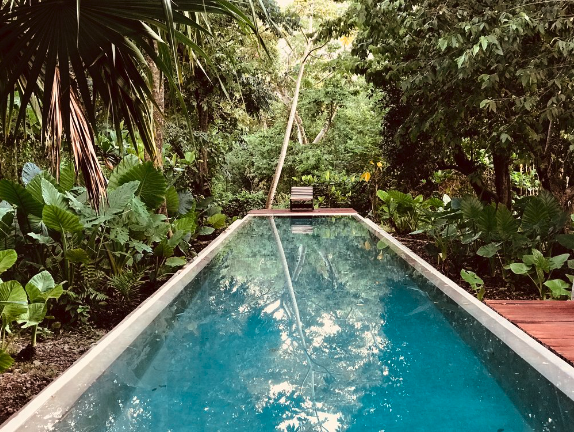
- Peru (Amazon): The Amazon center sits on the banks of the Ucayali River near the small village of Libertad, accessed via the city of Iquitos. The property is a built-out eco-lodge with bungalows, a ceremony maloca, common spaces, a small swimming area, and integration with the adjacent Libertad community. The 2.2-million-hectare Pacaya Samiria National Reserve is nearby, and excursions to see river dolphins, monkeys, and other Amazon wildlife are part of the standard program.
- Peru (Sacred Valley): The Sacred Valley center is near Urubamba, between Cusco and Machu Picchu, in the Andean foothills along the Urubamba River. Reviewers describe it as more comfortable than the jungle property, with hot showers, comfortable beds, well-maintained gardens, and an optional day trip to Machu Picchu built into the week. San Pedro/Huachuma ceremonies are typically held here.
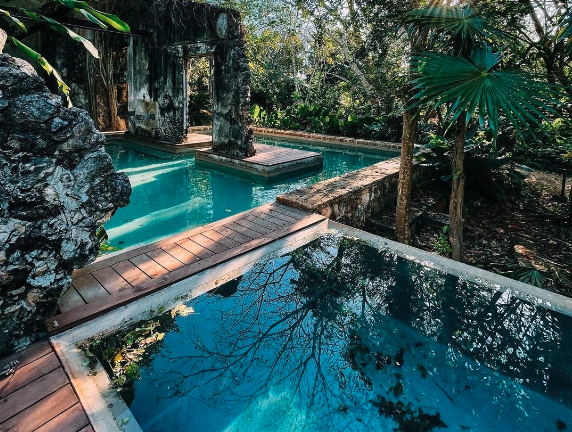
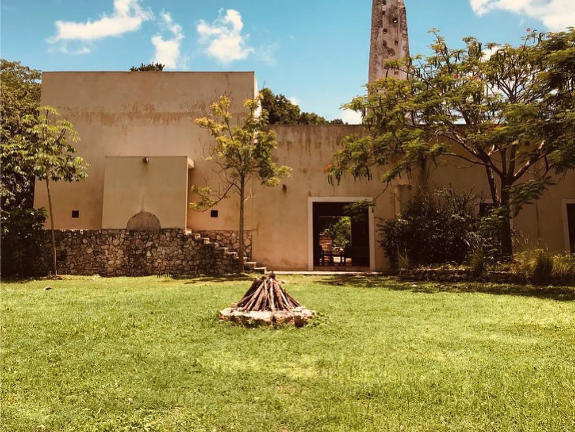
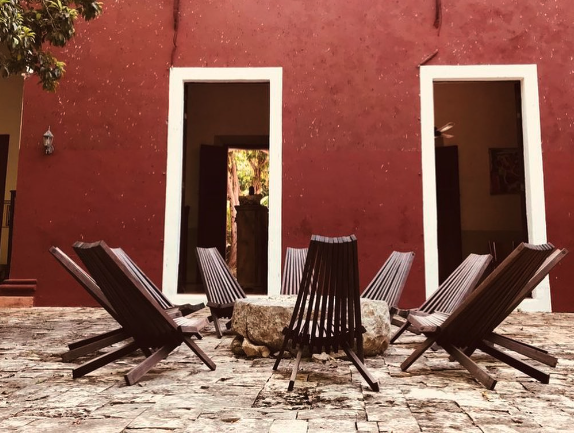
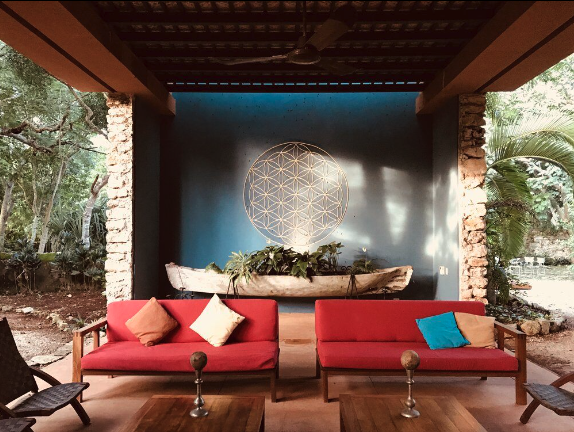
- Mexico (Yucatan): Hacienda San Antonio Chalante is a renovated 16th-century colonial estate near Sudzal in the Mayan jungle, about three hours by car from Cancun. The property has multiple swimming pools, botanical gardens, colonial architecture, an on-site farm-to-table kitchen called Milpa, and excursions to nearby Mayan ruins. Ayahuasca, peyote, and sapo are the primary medicines offered here, with shamans flown in or rotated in from the Wirrarika and Mazatec traditions.
- Mexico (Valle de Bravo): Khungi Espacio is the newer Mexico location, focused primarily on psilocybin mushroom and bufo work led by Maestra Jazmin Pineda (Mazatec, daughter of the late Abuela Julieta Casimiro of the Council of the 13 Indigenous Grandmothers). About two hours from Mexico City.
Practical guidance: For Peru, fly into Lima then connect to Iquitos (for the Amazon) or Cusco (for the Sacred Valley). For Mexico, fly into Cancun (for Yucatan) or Mexico City (for Valle de Bravo). Arkana arranges shuttles from designated pickup hotels in each city. Book at least a few months in advance, particularly for popular dates. Read the cancellation and refund policy carefully before paying a deposit, especially the language converting cancelled bookings into non-refundable credits.
Should You Book?
Arkana is a defensible choice for someone who wants a polished, multi-location, English-language ayahuasca operation with real Shipibo lineage on the ground, structured integration support, comfortable accommodations, and a long track record with no documented guest harms. For first-time participants who want the comfort end of the market without giving up authenticity in who is actually leading ceremonies, the Amazon center with Maestra Justina and her family is one of the more legitimate options in the Iquitos region.
It is a less defensible choice for people who specifically want minimalist, village-based ceremony with a single curandero rather than a structured retreat program; for people uncomfortable with the multi-medicine model that mixes ayahuasca, bufo, kambo, peyote, and other plants in a single week; for budget travelers (the Iquitos region has many capable operations at a fraction of the price); for people who want full transparency and easy refunds in case of cancellation; or for anyone whose risk profile makes any of the contraindicated conditions a concern. If any of those points sit poorly with you, look elsewhere. If they don’t, this is probably one of the better-run options on the international ayahuasca market right now.
The Team & Story
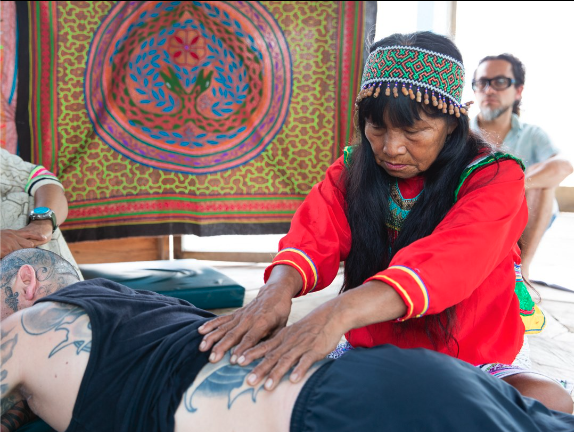
The actual ceremonial authority at Arkana sits with the Shipibo healer family from Vencedor, a small fishing village on the Pisqui River in the Ucayali region. Maestra Justina is the matriarch, a Meraya-lineage healer with over 45 years of practice who began her training as a teenager under her uncle, started with a two-year Camalonga plant dieta, and has since dieted more than 50 plants and trees. Maestro Cesar (“Paparahua”), her husband, is 66 and has practiced for over 50 years, with his own lineage from the Merayas. Their sons Maestro Eligio and Maestro Luis both began their training as children and now work alongside their parents. Their daughter Maestra Ada leads ceremonies at the Sacred Valley location. Additional Shipibo healers in the family or extended community include Maestro Grimaldo (Justina’s nephew), Maestro Herminio, Maestra Margarita (Cesar’s daughter), and Maestro Idael (apprenticing under Justina). Mexico ceremonies are led by Maestra Jazmin Pineda (Mazatec, mushrooms), Marakame Juan (Wirrarika, peyote), and Pepino (Sonoran, multi-tradition). Maestro Alcides leads Wachuma ceremonies in the Sacred Valley.
The founder is Jose (last name not published on the team page), originally from Mexico, a self-described former Wall Street investment banker and real estate developer with an MBA from Harvard Business School. His bio says he came to ayahuasca in 2012 after his personal life and business “spiraled out of control,” found his way to the Peruvian Amazon for healing, and subsequently founded Arkana. He has also trained as a Bwiti practitioner in Gabon. He is described as a father of five and holds the title “Chief Dharma Officer.” He appears at retreats periodically and sits in on integration circles when present. Liliana Aguilar runs guest services and operations, Valeria leads integration support, and the facilitator team rotates between locations and includes both Western and Peruvian staff.
Prep & Integration Tips
Begin the dietary protocol two weeks before arrival: no aged cheeses, fermented foods, alcohol, recreational drugs, red meat, pork, processed foods, citrus, excess salt or sugar, caffeine, or sex. No SSRIs, MAOIs, or any medication on the ayahuasca contraindication list (verify with your prescriber, not just with the retreat). Sleep more than usual. Hydrate. Bring lightweight long-sleeved clothing for the jungle locations, insect repellent, a headlamp, an eye mask, a refillable water bottle, a notebook, and any prescription medications you have been cleared to keep taking. After the retreat, Arkana provides email follow-ups, a private community group, and access to integration support, but the real work of integration is on you. Sleep, journal, talk to a trusted person or therapist familiar with psychedelic integration, and avoid making major life decisions for at least a few weeks. The come-down from a multi-ceremony, multi-medicine retreat can be a vulnerable period, particularly for guests who arrived carrying significant trauma.
Pros & Cons
| Pros | Cons |
|---|---|
| Multigenerational Shipibo family lineage anchored by Maestra Justina, grown on family’s own ayahuasca plantation | Multi-medicine model stacks ayahuasca, bufo, kambo, rapé, peyote, and other medicines in close succession |
| Clean public safety record across more than a decade and four locations | Group sizes around 14 to 16 are larger than what some guests prefer for ceremony |
| Real medical screening with video call, written intake, and contraindication policies | Cancellation terms convert deposits to non-refundable credits rather than refunds |
| Comfortable accommodations and capable kitchens at all locations | Founder profile is unusually corporate (Harvard MBA, ex-Wall Street, ex-real estate developer) |
| Structured integration support, lifetime return discount, post-retreat email sequence | Optional sapo (5-MeO-DMT) and combined ceremonies carry their own elevated risk profile |
| Real ayahuasca brewed in traditional Shipibo style, no shortcut substitutes | Facilitators rotate frequently and skew young and Western, with no consistent on-site visible lead other than Jose when he’s present |
Book Your Ceremony
Bookings are handled through Arkana’s website at arkanainternational.com, with an application form, a video call with the medical screener, and a deposit due before arrival. Standard 7-day Amazon retreats start around $2,520 for shared accommodations and run higher for private rooms; Sacred Valley pricing is similar; Mexico pricing varies by program. Longer 14-day and 21-day programs range up to roughly $10,700 for luxury suites. Sapo and other optional ceremonies are billed separately. Read the refund and cancellation terms on the booking page carefully before paying any deposit, particularly the language about credits in lieu of refunds.