
PachaMama Eco Village

Atmosphere
Features
PachaMama Eco Village Ayahuasca & Plant Medicine Ceremonies: An In-Depth Review for Sessions in Costa Rica
PachaMama Eco Village is a 500-acre intentional spiritual community in the Nicoya Peninsula of Guanacaste, Costa Rica, founded approximately 22 years ago by Tyohar, an Israeli spiritual teacher inspired by the Indian mystic Osho. Unlike dedicated ayahuasca retreat centers, PachaMama is a full residential eco-village with 70+ permanent residents, a jungle school for 25+ children, and 100-250 visitors at any given time. Plant medicine ceremonies occur periodically through PachaMama’s “Red Road” pillar, where visiting indigenous medicine men and women from Mexico and South America lead ceremonies that may include ayahuasca, sweat lodge, and other traditional practices. PachaMama’s primary offerings are silent retreats, meditation, yoga, emotional healing workshops, detox cleanses, and community living. The community has an Osho-inspired philosophical foundation, and while reviews are overwhelmingly positive for the overall experience, there are documented concerns about the community’s leadership structure that prospective visitors should evaluate.
🎯 At a Glance
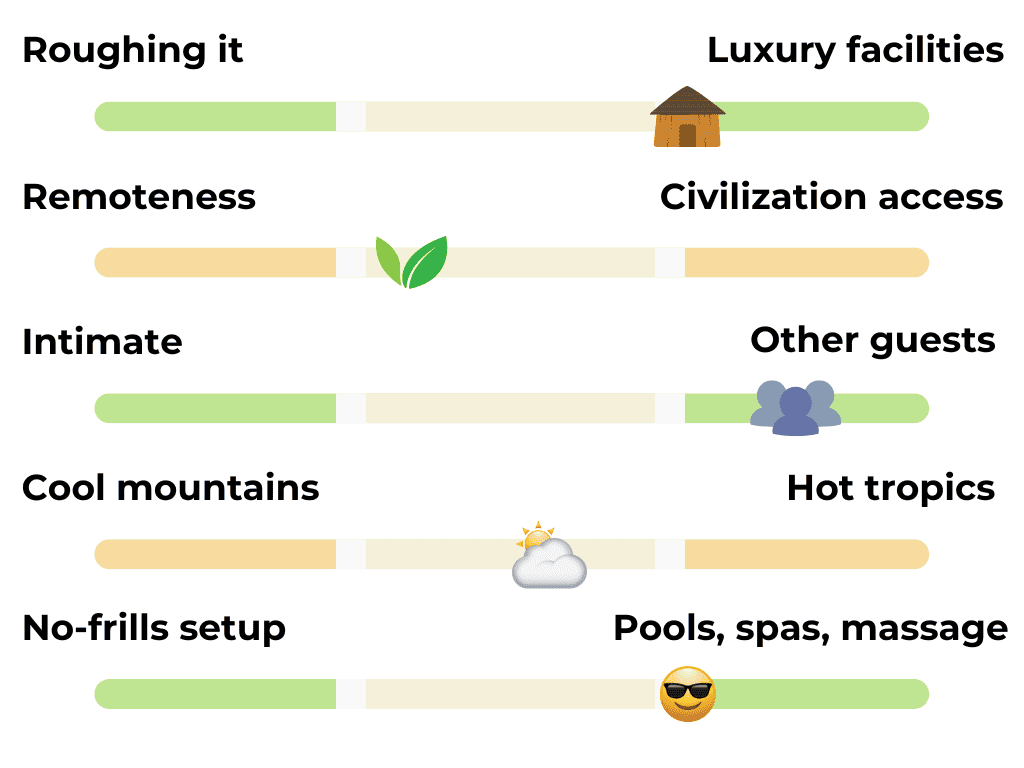
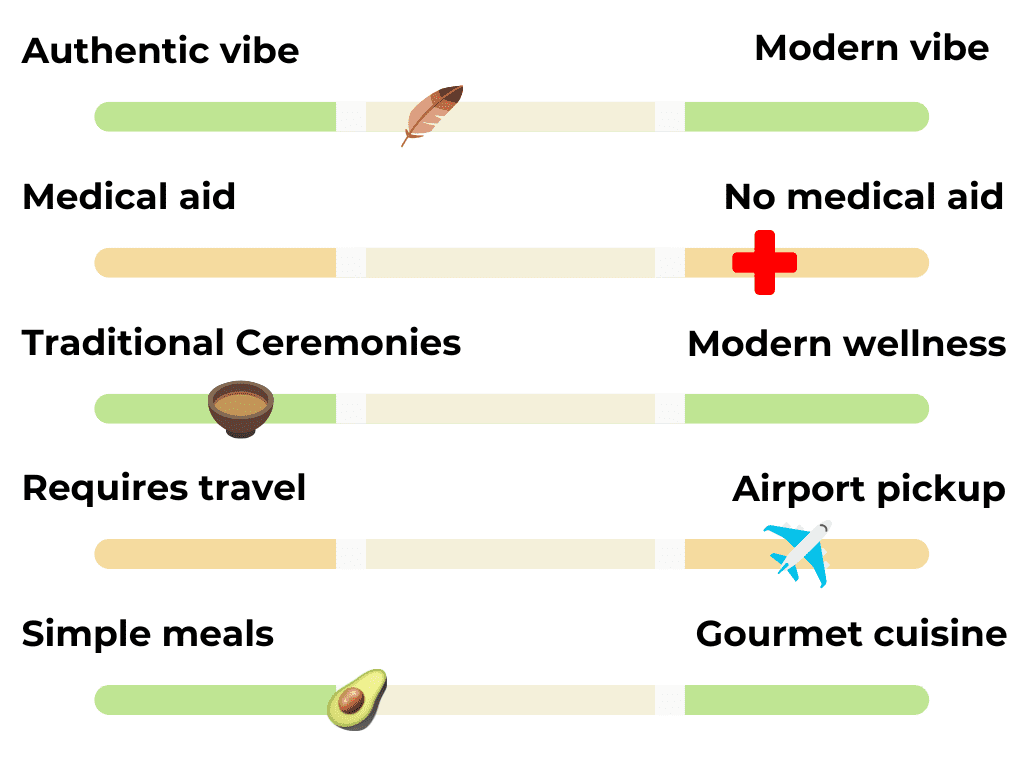
- Locations: A 500-acre off-grid eco-village near San Juanillo, Guanacaste, Costa Rica, on the Nicoya Peninsula. Approximately 30 minutes from Nosara, 2.5 hours from Liberia International Airport (LIR), and 5 hours from San Jose (SJO). Surrounded by regenerated jungle with river access and proximity to Pacific coast beaches.
- Approach: PachaMama is built on six pillars: Meditation (daily silent sittings, silent retreats, satsangs), Emotional Healing (therapy groups), Physical Rejuvenation (yoga, detox/cleanses), Red Road (indigenous ceremonies including plant medicine), Ecology (sustainable off-grid living), and Musical Journeys (community music gatherings). Plant medicine ceremonies are not scheduled on a regular calendar — they occur when visiting indigenous elders come to the community, typically a few times per year. Minimum stay is 10 days for general visitors; shorter stays possible if attending a specific workshop.
- Suitable For: Seekers interested in extended immersive community living, meditation, and personal transformation — not those looking specifically for a structured multi-ceremony ayahuasca retreat. Best for people who want weeks or months in a conscious community environment where plant medicine may be one element among many. Not suitable for short-stay ayahuasca-focused visitors.
- Costs: Accommodation ranges from $48-$58/night (open-air casita) to higher-tier bungalows, casas, and villas. 13% Costa Rican tax added. Three vegetarian meals daily at the Verde Restaurant are available separately. Workshop and ceremony fees vary. Long-term discounts of 15% for stays of 20+ days. This is not an all-inclusive package model — guests pay for accommodation and then select workshops and events à la carte.
- Overall Assessment: A well-established, ecologically impressive community with a genuinely transformative environment for those who align with its philosophy. However, plant medicine ceremonies are a secondary offering within a broader community experience, not the primary focus. The Osho-inspired leadership structure, charismatic founder model, and some documented concerns about the community’s response to criticism warrant awareness. Directory evaluation: B (impressive community and ecological achievement, significant caveats around leadership dynamics and the fact that plant medicine is not a core, regularly scheduled offering).
💬 What Guests Are Saying
Reviews on Retreat Guru (8+ reviews), Facebook (86,000+ followers), and independent blog accounts are largely enthusiastic about PachaMama as a transformative community experience. Guests consistently praise the stunning jungle setting, the quality of vegetarian food at Verde Restaurant, the depth of silent retreats and emotional healing workshops, and the sense of genuine community connection. Multiple reviewers describe PachaMama as a place that fundamentally changed their lives. One Retreat Guru reviewer who visited over four years said their life changed through the women’s workshops and the overall environment of growth.
The plant medicine ceremonies specifically — conducted through the Red Road pillar with visiting indigenous elders — receive particular praise for their authenticity and power. A detailed Medium article by a long-term visitor described the ceremonies as providing a deeply transformative container for collective healing, comparing them to putting the community through a collective purification. The Spirit Dance ceremony, a multi-night fire ceremony involving fasting and dancing, is frequently cited as a standout experience.
However, some critical perspectives exist. A blog account from a visitor who was expelled from the community describes Tyohar as not receptive to questioning or feedback, reporting they were given five hours to leave after expressing concerns about the community’s inner workings. The account alleges the community operates as a one-way street where residents and visitors are expected to change, but the leadership deflects criticism. A thread on NewAgeFraud.org has flagged concerns about Osho-connected communities selling indigenous ceremonies. These perspectives represent a minority of published accounts but are specific and detailed enough to warrant consideration.
We encourage sharing your perspective through our submission form to maintain current insights.
🚩 Incident Report
Following a thorough review of online sources including Reddit subreddits like r/Ayahuasca, r/Psychonaut, and r/WellnessHive, Quora threads, Facebook groups such as Psychedelic Healing and Ayahuasca Experiences, news outlets, retreat discussion boards, ICEERS safety reports, and public records, no confirmed cases of theft or sexual misconduct directly connected to PachaMama Eco Village have been identified. However, one serious incident requires documentation.
- Theft: No reports of stolen belongings or valuables at PachaMama appear in any public forums, ICEERS data, or news sources.
- Sexual Misconduct: No complaints, allegations, or legal actions involving PachaMama staff, Tyohar, or facilitators have been documented across Reddit, Facebook, news databases, or ICEERS resources.
- Crime/Death: A Medium article references that at a retreat led by Tyohar in Mahabaleshwar (India, not Costa Rica), a young Scottish participant reportedly died after falling from a cliff during what was described as a psychedelic process. This incident did not occur at PachaMama’s Costa Rica location but involves the community’s founder and is relevant to prospective visitors evaluating the safety culture and leadership of the organization.
Additional concerns documented online include: a detailed first-person account of being abruptly expelled from the community after questioning Tyohar’s leadership; a thread on NewAgeFraud.org raising concerns about Osho-connected communities appropriating indigenous ceremonies; and general commentary from former Osho community members drawing parallels between PachaMama’s structure and other Osho-inspired communities that have faced cult-adjacent criticism.
New update as of March 2026: PachaMama continues to operate actively with a full events calendar through August 2026. Facebook presence remains strong at 86,000+ followers with regular posting. No new safety incidents have surfaced in recent searches.
🔍 Critical Notes
PachaMama’s greatest strength is the scope and depth of what it has built over two decades. The ecological achievement alone — transforming 500 acres of dead, over-farmed land into a thriving jungle ecosystem — is genuinely impressive. The community infrastructure includes permanent housing for 70+ residents, a Waldorf-inspired jungle school, an organic restaurant, a healing arts center (Prana Clinic), and extensive ceremony spaces including the Osho Hall. The breadth of programming across meditation, yoga, emotional healing, ecological education, and indigenous ceremony creates a multi-dimensional transformation experience that no single ayahuasca retreat center can match.
For plant medicine specifically, prospective visitors should understand that ceremonies are not regularly scheduled like at dedicated ayahuasca centers. They occur when visiting indigenous elders come to PachaMama, typically a few times per year during the high season. If your primary goal is to participate in ayahuasca ceremonies, PachaMama may not be the right choice — you could visit for weeks and not encounter a scheduled ceremony. If your goal is a broader immersive experience where plant medicine may be one element of a larger transformation process, PachaMama could be exceptional.
The Osho connection deserves transparent discussion. Tyohar is openly Osho-inspired, the community’s main meditation hall is called “Osho Hall,” and the philosophical foundation draws heavily from Osho’s nondual teachings. For some, this lineage is a positive — Osho’s meditation techniques are widely respected. For others, the charismatic founder model, the documented intolerance for questioning leadership, and the broader history of Osho-connected communities raise legitimate concerns. Costa Rica has no regulatory framework specifically governing spiritual communities or plant medicine ceremonies, meaning PachaMama operates without external oversight.
🆘 Screening & Mental Health Risks
PachaMama does not appear to have a formal medical screening process comparable to dedicated ayahuasca retreat centers. The community operates more as a residential village with visiting guests than as a clinical or structured retreat program. For plant medicine ceremonies specifically, screening protocols would depend on the visiting indigenous elders who lead those ceremonies rather than PachaMama’s permanent staff.
The extended-stay format (minimum 10 days, recommended weeks to months) means guests undergo a prolonged immersion in a community with strong social norms, emotional processing workshops, and a charismatic spiritual leader. For individuals with active mental health conditions, the combination of isolation from the outside world (remote location, limited connectivity in some accommodations), intense emotional healing workshops, and potential plant medicine exposure could amplify psychological distress. The community’s documented response to guests who question the leadership structure — reported expulsion with minimal dialogue — is a concern for individuals who may need to set boundaries during a challenging experience. Consultation with a healthcare provider is essential prior to participation.
🧪 Brew Substance
PachaMama’s plant medicine ceremonies are conducted through the “Red Road” pillar and are led by visiting indigenous medicine men and women from Mexico and South America who come to the community periodically. The specific medicines used depend on the visiting elders and may include ayahuasca, San Pedro, peyote-tradition ceremonies, and sweat lodge (temazcal). PachaMama’s permanent staff and founder Tyohar do not appear to serve as ceremony facilitators for plant medicine — that role is reserved for visiting indigenous practitioners. Additional community practices include breathwork, Spirit Dance (a multi-night fire ceremony), silent retreats, and emotional healing workshops. Ayahuasca ceremonies have been described in the context of Santo Daime-inspired formats.
📍 Location, Setting & Style
- Costa Rica: Located near San Juanillo on the Nicoya Peninsula in Guanacaste province, surrounded by 500 acres of regenerated jungle. Approximately 30 minutes from Nosara, 20 minutes from the Pacific coast, and within one of the world’s designated Blue Zones (areas of exceptional longevity).
- Setting: A full eco-village with nature-integrated dwellings ranging from open-air casitas ($48/night) to private bungalows, casas, and villas. Central facilities include Osho Hall (meditation temple), Verde Restaurant (organic vegetarian buffet), Wild Treats Raw Bar, Prana Clinic (healing arts), a Jungle Shop, and multiple ceremony spaces including a tipi. The property has a river, nature trails, and proximity to beaches. Most areas are off-grid; fiber-optic internet is now available in higher-tier accommodations.
- Style: Community living with a structured daily rhythm. Daily silent meditation in Osho Hall (6:30-7:15 PM), daily yoga and movement classes, weekly satsangs with Tyohar, and rotating workshops and events. Guests are immersed in village life — this is not a hotel with a spa. The community has its own internal currency (the “choco”). Walk-in visitors are not accepted; all stays must be booked in advance. The recommended stay is one week minimum, with many guests staying 1-3 months.
Practical guidance: Fly into Liberia International Airport (LIR) — 2.5 hours by car — or Daniel Oduber Quirós Airport with a domestic connection. From Nosara, it’s 30 minutes by taxi. Roads can be rough, especially in rainy season; 4WD recommended. Book in advance through pachamama.com or retreat.guru. The community operates seasonally (roughly November through August).
Should You Book?
PachaMama is the right choice if you’re seeking an extended immersive experience in a conscious community, are drawn to meditation and emotional healing work, and view plant medicine as one potential element of a broader transformation — not the primary reason for visiting. It’s a remarkable place for the right person: someone who wants weeks or months of intentional living, daily practice, and deep community connection in a stunning ecological setting. It is not the right choice if you’re looking for a structured, multi-ceremony ayahuasca retreat with medical screening, formal integration support, and a clearly defined program. Go in with open eyes about the Osho-inspired leadership model and be prepared for a community that asks you to surrender rather than question. The free consultation and booking process through their website is the best way to assess fit.
The Team & Story
PachaMama was founded approximately 22 years ago by Tyohar, an Israeli spiritual teacher who discovered the teachings of Indian mystic Osho while traveling in India in the late 1990s. He and a small group of like-minded seekers purchased 500 acres of degraded farmland in Guanacaste and spent two decades transforming it into a thriving jungle eco-village. Tyohar leads meditation retreats, satsangs, and serves as the community’s spiritual guide. He does not personally lead plant medicine ceremonies — those are conducted by visiting indigenous elders.
The permanent community includes approximately 70 residents, many with children attending the on-site Waldorf-inspired Jungle School. The community attracts an additional 100-250 guests and work exchangers at any given time, many staying for 1-3 months. Workshops and healing sessions are led by a rotating roster of community therapists, yoga teachers, and visiting facilitators with backgrounds spanning bodywork, breathwork, hypnotherapy, and indigenous ceremony traditions.
Prep & Integration Tips
Prior to visiting: Read about PachaMama’s six pillars and Tyohar’s philosophy on their website to ensure philosophical alignment. If you plan to participate in plant medicine ceremonies, verify that ceremonies are scheduled during your visit — they are not offered on a regular calendar. Follow MAOI-compatible dietary guidelines if ayahuasca ceremonies are expected. Pack lightweight, natural-fiber clothing, insect repellent, a flashlight (off-grid areas), a reusable water bottle, and a journal. Some accommodations are fully open-air — bring a good mindset about living close to nature, insects included. After your stay: PachaMama’s extended-stay format generally provides built-in integration through continued community living. For those who attend plant medicine ceremonies, the daily meditation, yoga, and emotional healing workshops serve as ongoing integration support. Re-entry to “normal” life after weeks or months in this environment can be disorienting — allow yourself time to transition.
Pros & Cons
| Pros | Cons |
|---|---|
| Stunning 500-acre regenerated jungle eco-village with 22 years of history | Plant medicine ceremonies are periodic, not regularly scheduled |
| Comprehensive transformation programming across six pillars | Osho-inspired charismatic founder model with documented intolerance for questioning |
| Extended-stay format allows deep immersion and genuine community | A death at a Tyohar-led retreat (in India, not Costa Rica) involves the founder |
| Strong ecological commitment and Blue Zone location | Not a structured ayahuasca retreat — visitors seeking ceremony-focused programs should look elsewhere |
Book Your Ceremony
Bookings are managed through PachaMama’s website at pachamama.com or through retreat.guru. Contact the community for current events, ceremony schedules, and accommodation availability. Minimum stay is 10 days for general visitors; shorter stays available for specific workshops. Accommodation starts at $48/night plus 13% tax; meals, workshops, and ceremonies are additional. Walk-in visitors are not accepted